High-Quality Waterproof Factories & Suppliers

Next-Generation Modular Building Integrity, Structural Waterproofing & Supply Chain Engineering Whitepaper

Primary Modular Solutions & Prefabricated Systems

Featured high-grade waterproof structural enclosures, customized housing units, and industrial shelters engineered for worldwide deployment.
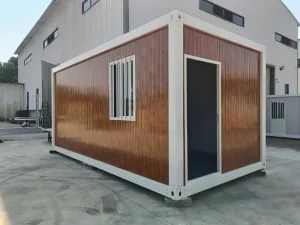
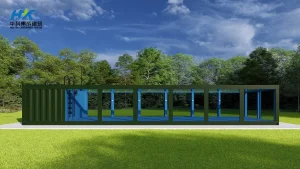
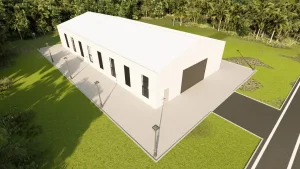
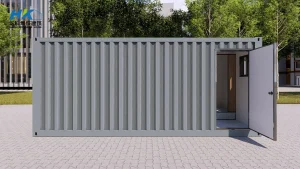
Custom Fast Construction Prefab Gas Houses /Quick Assembly Gas Houses for Mining Factory, Product

Custom Fast Construction Prefab Gas Houses /Quick Assembly Gas Houses for Mining Factory

View Product Specifications
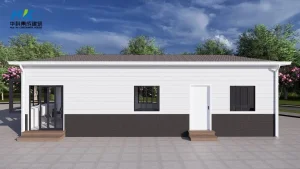
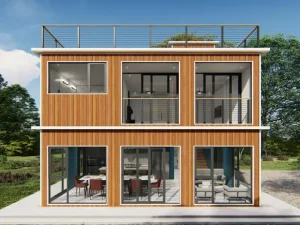
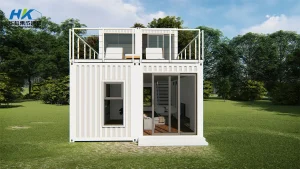
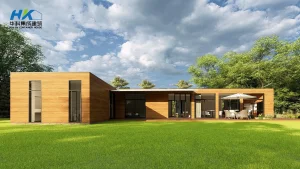
High-Quality Customized Modern Design Prefabricated Luxury Modular Container Villa House

High-Quality Customized Modern Design Prefabricated Luxury Modular Container Villa House

Request Villa Pricelist
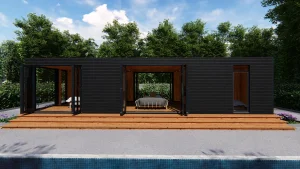
Wholesale Top Quality Endless Swim SPA Clear outdoor Camping Glass Family Prefab Swimming Container Pool

Endless Swim SPA Clear Outdoor Camping Glass Family Prefab Swimming Container Pool

View Pool Details
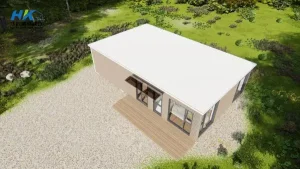
Custom Lgs Steel/Customized Modular/Prefabricated/Fabricated/Prefab House with Steel Frame

Custom LGS Steel Modular Prefabricated House with Structural Steel Framing

Contact Supplier
OEM 3*40ft Luxury Fully Furnished 2 Bedroom 1 Bathroom Prefabricated Container House

OEM 3*40ft Luxury Fully Furnished 2 Bedroom 1 Bathroom Prefab Container Home

Explore Factory Specs
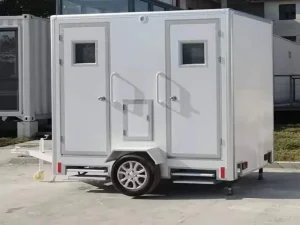
High-Quality Smart Way-transportable Prefab Mobile Fiberglass Trailer Toilet

High-Quality Smart Mobile Fiberglass Trailer Toilet Units for Events & Sites

Get Factory Quotes
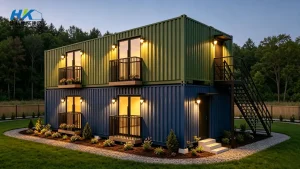
Wholesale Amazing Modern Custom Design Shipping Container Homes

Wholesale Modern Custom Design Architectural Shipping Container Homes

Inquire Wholesale Price
OEM 2x40ft Modified Container House Plywood inner decoration

OEM 2x40ft Modified Container House with Premium Interior Decoration

View Product Details

1. Global Industrial Landscape of Waterproof Enclosures & Modular Prefabrication

Analyzing the macro-economic and engineering forces driving the evolution of moisture protection, structural seal integrity, and high-performance prefabricated building systems across continents.

In modern industrial and commercial architecture, the global demand for high-reliability modular units, containerized facilities, and prefabricated steel buildings has reached an unprecedented peak. Modern construction timelines are tighter than ever, while environmental extreme weather events—ranging from atmospheric rivers in North America to monsoon conditions in Southeast Asia and sub-zero freeze-thaw cycles in Northern Europe—pose relentless threats to structural longevity. At the core of this engineering paradigm shift sits an absolute necessity: bulletproof structural waterproofing and environmental envelope isolation.

$18.4B
Global Prefab Market Waterproofing Valuation
50+ Yrs
Design Service Life Target for Sealed Steel Structures
Zero-Leak
Industrial Tolerance Threshold for Data & Power Shelters
ISO 9001
Mandatory Quality Standard for Export Suppliers

Water intrusion is the single leading root cause of premature structural degradation in prefabricated buildings. When moisture penetrates a building envelope, it initiates a destructive cascading cycle: steel corrosion, mold proliferation, thermal insulation degradation, and eventual structural compromise. Consequently, global enterprise buyers—ranging from resort developers in coastal Australia to mining conglomerates operating in hyper-arid or torrential jungle biomes—no longer evaluate prefabricated housing or container shelters purely on aesthetic or surface cost. Instead, purchasing decisions are anchored in Information Gain and Technical Assurance regarding waterproofing chemistry, joint engineering, flashing design, and long-term durability metrics.

"Achieving true structural waterproofing in modular prefabrication requires moving beyond surface sealants. It demands an integrated architectural system combining corten steel integrity, hydrostatic pressure resistance, elastomeric membrane barriers, and precise thermal-break engineering."

Advanced Engineering Physics of Envelope Waterproofing

Structural waterproofing in modular prefab houses requires solving complex micro-physical phenomena. It is not merely a matter of applying silicone along seams. High-quality manufacturing must account for:

  • Hydrostatic Water Pressure Management: Preventing standing roof water from forcing its way through mechanical fasteners under continuous hydrostatic head pressure.
  • Capillary Action Interruption: Engineering microscopic drainage channels and anti-capillary breaks into panel joints so driving rain cannot be drawn upward against gravity into wall cavities.
  • Thermal Bridging & Condensation Control: Moisture accumulation is not only external; indoor humidity condensing on uninsulated cold steel frames causes internal decay. Advanced polyurethane (PU) spray insulation and thermal breaks eliminate dew-point migration inside the structure.
  • Dynamic Shear and Transport Flex Stress: Prefabricated containers and modular homes undergo massive torsion during ocean transit and crane rigging. Elastomeric sealants must retain elasticity (exceeding 600% elongation at break) without delaminating from primed steel substrates.

2. Material Science: Sealant Chemistries & Coating Systems

Inside the technical specifications of high-performance weatherproofing membranes, marine-grade primers, and structural sealants utilized by top-tier factories.

Polyurea Spray Coatings

Utilized for heavy-duty industrial equipment shelters and container roof decks. Fast-curing elastomeric polyurea forms a seamless, joint-free impermeable membrane capable of withstanding standing water, physical abrasion, and continuous solar UV degradation.

EPDM & Modified Bitumen

Ethylene Propylene Diene Monomer (EPDM) synthetic rubber membranes provide exceptional flexibility across extreme temperature spans (-40°C to +120°C). Applied to flat-pack container roofs and light steel villa gutters to ensure 25+ year zero-leak guarantees.

MS Polymer Sealants

Modified Silicone (MS) Polymers represent the gold standard for dynamic joint sealing in modular construction. Unlike traditional silicone, MS polymers adhere aggressively to wet or dry painted steel, can be painted over, and offer zero shrinkage during curing.

Marine-Grade Anti-Corrosion Paint Specifications (C4/C5 Standard)

For shipping container homes, mobile trailer toilets, and modular villas situated near ocean environments, external waterproofing must be coupled with heavy-duty anti-corrosion protection. Superior Chinese factories utilize a multi-layer coating system:

  • Layer 1: Zinc-Rich Epoxy Primer (70–80 microns): Provides sacrificial cathodic protection directly onto shot-blasted SA 2.5 steel plates.
  • Layer 2: Epoxy High-Build Intermediate Coat (100–120 microns): Acts as a dense physical barrier against moisture absorption and oxygen migration.
  • Layer 3: Fluorocarbon or Polyurethane Topcoat (50–60 microns): Delivers extreme UV resilience, gloss retention, and resistance to acid rain, atmospheric salts, and chemical spills.

3. China's Manufacturing Efficiency & Structural Advantage

How concentrated industrial clusters, automated robotic welding, and streamlined supply chains deliver unmatched price-to-performance ratios for global buyers.

When sourcing high-grade waterproof container homes, flat-pack units, or LGS (Light-Gauge Steel) villas, global enterprise procurement teams consistently turn to specialized Chinese manufacturing hubs, such as those in Jiangxi, Guangdong, and Jiangsu. China’s competitive advantage in modular construction extends far beyond competitive labor costs—it is built upon an integrated industrial ecosystem that maximizes output precision and material quality.

Full Supply-Chain Integration

Factories operate in direct proximity to major steel mills, specialized seal chemistry manufacturers, and ISO container hardware suppliers. Raw material lead times are reduced from weeks to hours, allowing rapid prototyping and mass fabrication.

Robotic Continuous Seam Welding

Automated fiber-laser and robotic MAG welding equipment produce continuous, non-porous welds along container frame corners and roof beams. This eliminates the micro-gaps inherent in manual hand-welding where water typically penetrates.

Rigorous Factory Water-Tightness Testing

Prior to export packaging, leading manufacturers subject completed modules to intensive hydrostatic spray booths—simulating torrential hurricane-force rainfall (over 100 L/m²/hour) for extended durations to guarantee 100% leak-free integrity.

Furthermore, Chinese modular construction companies lead in Design for Manufacture and Assembly (DfMA). By integrating BIM (Building Information Modeling) with CNC cold-formed steel framing machines, steel profiles are cut and punched with millimeter-level precision. Perfect structural alignment ensures that gaskets, tongue-and-groove sandwich wall panels, and interlocking roof modules fit together tightly during final installation overseas, leaving zero unintended air or water gaps.

4. Localized Application Scenarios & Environmental Adaptation

Tailoring structural waterproofing, insulation density, and exterior finishes to demanding geographic environments across global markets.

A. Mining & Energy Remote Worker Camps

Locations: Australian Outback, Atacama Desert, Sub-Saharan Africa.

Key Challenge: Extreme diurnal temperature fluctuations (45°C day to 0°C night) combined with violent, sudden desert flash rainstorms and blowing sand.

Waterproof Spec: Double-sealed flat-pack container frames, heavy-duty polyurethane sandwich panels, and sloped secondary corrugated iron over-roofs with deep perimeter flashings.

B. Oceanfront Glamping Resorts & Container Hotels

Locations: Caribbean Islands, Southeast Asian Coasts, Mediterranean Coastline.

Key Challenge: Continuous high-humidity salt haze, tropical typhoons, and wind-driven horizontal sea water spray.

Waterproof Spec: Corten-A steel modified container shells, C5-M marine paint finishes, double-pane tempered glass windows with EPDM automotive-grade rubber seals, and integrated concealed downspout drainage.

C. Sub-Zero Alpine Villas & Emergency Shelters

Locations: Scandinavian Regions, Canada, High-Altitude Alpine Operations.

Key Challenge: Heavy snow loads leading to ice-damming along roof margins and repeated freeze-thaw water expansion stress.

Waterproof Spec: High-density closed-cell spray foam insulation, heated roof edge gutters, self-adhering ice and water shield underlayments, and pitched roof LGS structural steel framing.

D. Critical Industrial & Telecom Equipment Shelters

Locations: Global Infrastructure & Substation Sites.

Key Challenge: Absolute zero-tolerance for moisture, dust, or chemical ingress; sensitive electrical equipment integrity.

Waterproof Spec: IP66-rated wall penetrations, seamless spray polyurea exterior encapsulation, pressure-tested double-gasket access doors, and positive-pressure climate control sealing.

5. Strategic Procurement Guidelines for Enterprise Buyers

Key technical audit criteria, compliance frameworks, and total cost of ownership (TCO) parameters when evaluating Chinese suppliers.

For B2B procurement directors, project managers, and real estate developers, selecting the right manufacturing partner involves rigorous vetting beyond looking at brochure photos. To mitigate financial risk and ensure long-term structural viability, evaluation processes should incorporate the following criteria:

1. Material Test Certification

Demand third-party laboratory validation (SGS, TÜV, Intertek) verifying steel yield strength, sandwich panel fire ratings (Class A non-combustible rock wool), and sealant elongation/aging resistance under ASTM/EN standards.

2. Factory Quality Assurance Audit

Verify that the supplier maintains dedicated Quality Control (QC) checkpoints at raw steel receipt, frame assembly, surface prep (shot blasting), paint mill thickness measurement, and final shower testing.

3. Shipping & Packaging Protection

Ensure flat-pack components or custom modified containers are wrapped in heavy-duty shrink film, equipped with desiccant packs inside, and fitted with protective edge corner guards to prevent transit damage.

Total Cost of Ownership (TCO) Metric: Investing 5-8% more upfront in marine-grade elastomeric coatings, upgraded EPDM flashings, and continuous laser seam welding yields up to a 400% reduction in lifetime site maintenance and structural repair costs.

6. Future Industry Trends: Smart Waterproofing & Green Materials

Pioneering innovations transforming modular envelope longevity, building sustainability, and intelligent monitoring systems.

The prefabrication industry is evolving rapidly through the convergence of smart IoT technologies and advanced material chemistry. Looking toward the next decade, forward-thinking modular manufacturers are integrating cutting-edge innovations:

  • Embedded IoT Leak Detection Sensors: Micro-electronic moisture sensors integrated into critical roof corners and wall panels during factory assembly. These wireless sensors communicate real-time humidity levels to facility management dashboards, pinpointing micro-leaks before structural damage occurs.
  • Bio-Based & VOC-Free Polyurethane Sealants: Transitioning to non-toxic, plant-derived polyurethane foams and sealers that satisfy stringent European REACH and LEED green building certifications while maintaining industrial-grade weatherproofing.
  • Self-Healing Waterproofing Membranes: Incorporating micro-encapsulated liquid polymer agents within roof underlayments. If a nail puncture or physical abrasion occurs during installation, the capsules rupture, reacting with ambient air to instantly seal the breach automatically.
  • Solar-Integrated Photovoltaic Waterproof Roofs (BIPV): Replacing conventional corrugated steel roofing with structural BIPV panels that serve a dual purpose: acting as an impenetrable waterproof outer roof shell while producing renewable solar energy.

7. Deep Technical Q&A: Enterprise Procurement & Waterproof Engineering

Expert insights answering critical engineering, sourcing, and installation questions regarding modular container and prefab building weatherproofing.

Q1: How do Chinese factories ensure structural seam sealing won't crack or leak during ocean transport dynamic flex?
High-quality manufacturers utilize MS Polymer and specialized Polyurethane elastomeric sealants possessing over 600% ultimate elongation at break. Rather than relying on rigid epoxy or low-grade silicone, these flexible compounds absorb the racking, vibration, and twisting stresses experienced aboard container vessels. Additionally, critical joints are mechanically interlocked using overlapping lap seams and factory-applied EPDM compression gaskets before final riveting or bolting.
Q2: What is the expected maintenance-free lifespan of the waterproofing system on flat-pack vs modified shipping containers?
Modified ISO shipping container homes engineered with C5-grade marine paint coatings and welded Corten steel roofs offer a maintenance-free waterproofing lifespan of 25 to 30 years in standard climates. Flat-pack container units utilizing galvanized steel frames and EPDM/bitumen roof membrane overlays typically feature an initial maintenance-free lifespan of 15 to 20 years, after which minor joint seal inspection and topcoat renewal may be recommended depending on environmental UV exposure.
Q3: How is internal condensation (cold-bridging moisture) prevented inside metal container houses?
Internal condensation occurs when warm, moist interior air comes into contact with cold metal corrugated walls. Factories mitigate this by applying seamless closed-cell spray polyurethane foam (PU) directly to the interior steel face (minimum 50mm–80mm thickness). This creates an airtight vapor barrier, completely isolating the steel substrate from room humidity and moving the thermal dew point safely outside the building envelope.
Q4: Can modular container roofs handle standing snow accumulation without leaking around perimeter flashings?
Yes. For heavy snow load regions, factory engineers design secondary pitched roofs (using LGS steel trusses and standing-seam metal roofing plates) or increase the structural steel gauge of flat roof beams. Pitching the roof prevents standing water during thaw cycles, while integrated perimeter drip edges and continuous rubber underlayments guarantee zero water infiltration under hydrostatic melt pressure.
Q5: What factory water-tightness test standards should buyers specify in their contracts?
Procurement teams should require suppliers to perform tests compliant with ASTM E1105 (Standard Test Method for Field Determination of Water Penetration of Installed Exterior Windows, Skylights, Doors, and Curtain Walls by Uniform or Cyclic Static Air Pressure Difference) or ISO 1496-1 full-envelope high-pressure shower testing (delivering a minimum of 2.0 bar pressure across all seams for at least 30 minutes with zero internal leakage).
Q6: How are window and door wall cutouts waterproofed in custom container modifications?
When corrugated container walls are cut open for doors or glazing, structural steel tube frames (SHS/RHS) are fully welded around the perimeter opening to restore structural rigidity. Heavy-gauge steel drip flashings are welded directly above the opening. The window frame is then sealed into the steel buck using industrial silicone, butyl flashing tape, and continuous backer rod seals to create a multi-layer defense barrier against driving rain.
Q7: What is the difference between EPS, Rock Wool, and Polyurethane (PU) sandwich panels regarding water absorption?
Rock wool offers supreme fire resistance (Class A) but can absorb moisture if directly exposed to water, losing thermal performance. EPS (Expanded Polystyrene) has moderate moisture resistance but lower thermal efficiency. Polyurethane (PU) features a closed-cell structure that absorbs virtually zero water (less than 1% volume absorption), rendering it the ultimate choice for high-humidity and wet environments.
Q8: How are multi-container modular complexes joined and waterproofed on site?
When multiple units are joined together side-by-side or stacked, the interface seams are secured with structural connect plates. Factories supply complete field-assembly kit packages containing pre-cut EPDM compression gaskets, heavy-duty butyl sealing tapes, custom-bent metal cover flashings, and structural MS polymer sealants to completely cap and seal inter-module roof and wall joints against weather exposure.

Expanded Product Portfolio & Prefabricated Catalog

Explore additional high-grade modified containers, expandable homes, trailer units, and specialized structural assemblies direct from factory lines.
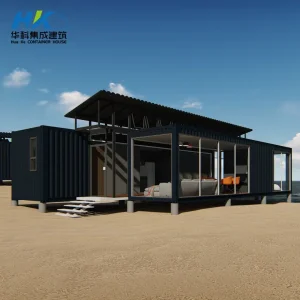
Custom 2*40ft Modified Shipping Container House Quotes, Supplier

Custom 2*40ft Modified Architectural Shipping Container House Units

Request Supplier Quotes
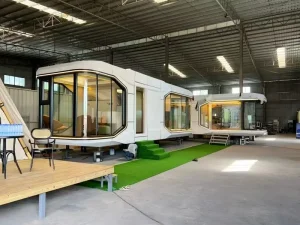
Wholesale Luxury and natural style Capsule house Quotes, Suppliers

Wholesale Luxury and Natural Style Futuristic Modular Capsule House

Inquire Wholesale Specs
OEM Prefab Steel Structure Buildings for Outdoor Factory Warehouse

OEM Prefab Steel Structure Buildings for Outdoor Industrial Factory Warehouse

View Building Specs
High-Quality Three bedroom modular container house Factories, Suppliers

High-Quality Modern Three Bedroom Modular Prefabricated Container House

Contact Factory Supplier
Wholesale Factory Price Customize 20/40FT Prefabricated/Prefab/Modular/Container House

Wholesale Factory Price Customizable 20FT & 40FT Modular Container House

Get Factory Price List
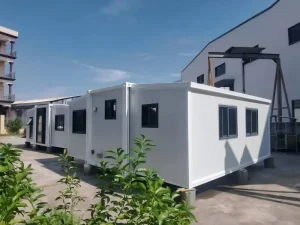
High-Quality Portable Prefab Tiny Expandable Container Home house

High-Quality Portable Prefab Tiny Expandable Foldable Container Home

Explore Expandable Unit
Custom 20ft /40ft Container Toilet And Shower Block Factory, Supplier

Custom 20ft / 40ft Container Toilet And Sanitation Shower Block Units

View Toilet Block Specs
Wholesale Two Storey Customized Modular Container Apartment Factories, Quotes

Wholesale Two Storey Customized Multi-Family Modular Container Apartment

Request Apartment Quote