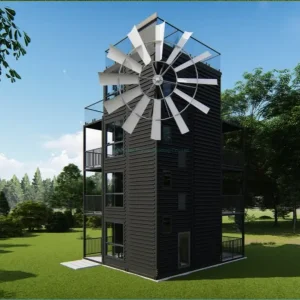
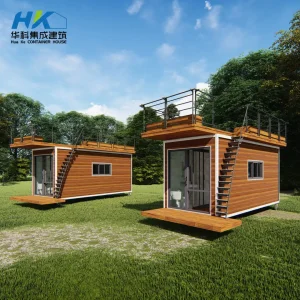
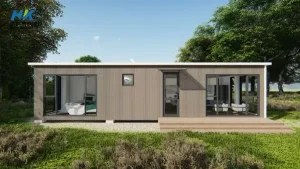
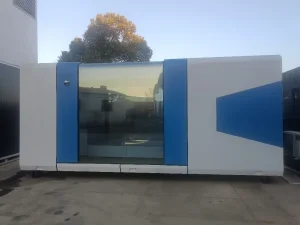
Direct factory solutions configured for instant PV integration, off-grid deployments, and commercial modular infrastructure.
The global energy landscape is undergoing a structural transition toward decentralized power generation, high-density energy storage, and accelerated off-grid independence. Historically evaluated as standalone capital purchases for utility grids or utility-scale farms, solar photovoltaics (PV) are now deeply integrated directly into prefabricated architecture, industrial logistics nodes, commercial real estate, and rapid-deployment modular shelters. Global photovoltaic deployment surpassed 1.5 Terawatts (TW) of cumulative installed capacity, driven primarily by levelized cost of electricity (LCOE) parity against conventional fossil fuels and volatile grid infrastructure.
From an enterprise procurement perspective, requesting a solar panel pricelist & quotes requires an understanding that cost-per-watt ($/W) is no longer the sole decision metric. Industry buyers must account for cell architecture performance (e.g., N-Type TOPCon vs. Mono-PERC vs. HJT), structural mechanical load tolerance, temperature coefficients, degradation curves, and modular integration capabilities. As commercial sites and off-grid housing developments scale rapidly across Australia, Europe, North America, and South Africa, the synchronization of solar power systems with prefabricated structures has emerged as a primary lever for reducing overall capital expenditure (CapEx) while guaranteeing operational resilience.
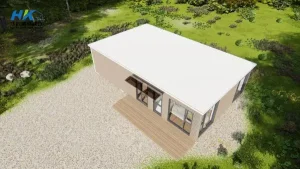
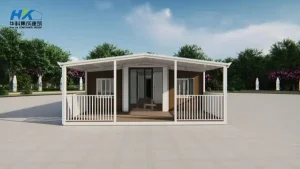
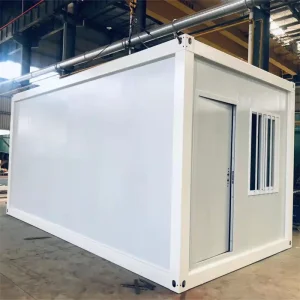
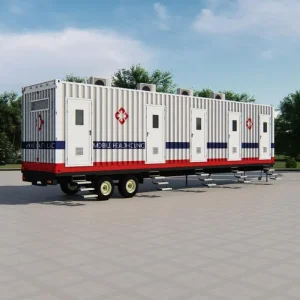
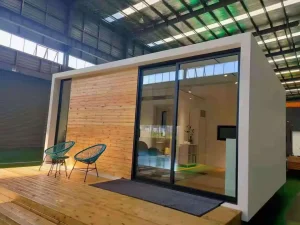
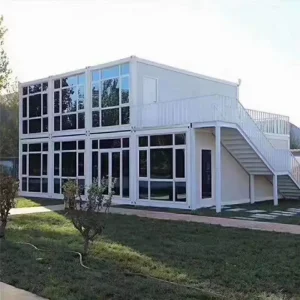
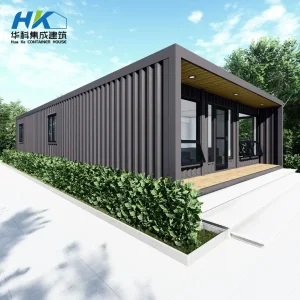
As illustrated by technical deployments at Jiangxi HK Prefab Building Co., Ltd., coupling custom solar arrays directly with high-insulation container housing systems creates self-sustaining microgrids capable of generating upwards of 48 kWh per day per unit with integrated LiFePO4 battery storage. This convergence of building-integrated photovoltaics (BIPV) and modular steel structures provides remote industrial projects—such as labor camps, telecom shelters, and eco-resorts—with rapid grid independence without incurring costly grid extension fees.
Commercial procurement teams must evaluate solar panel quotations through a multi-variable total cost of ownership (TCO) lens. The benchmark table below highlights current wholesale pricing models based on technological platform, cell efficiency rating, and commercial application scale.
| Technology Platform | Efficiency Range (%) | Est. Wholesale Price ($/Watt FOB) | Annual Degradation | Primary Industrial Application |
|---|---|---|---|---|
| Mono-PERC (P-Type) | 20.5% - 21.8% | $0.085 - $0.105 | 0.55% / Year | Budget commercial rooftops, standard grid-tied residential |
| N-Type TOPCon (Tunnel Oxide) Recommended | 22.3% - 23.2% | $0.100 - $0.125 | 0.40% / Year | Off-grid container microgrids, commercial facilities, harsh climates |
| Heterojunction (HJT) | 22.8% - 24.0% | $0.135 - $0.160 | 0.30% / Year | Extreme temperature zones, ultra-high efficiency land-constrained sites |
| Flexible / Lightweight BIPV | 17.0% - 19.5% | $0.220 - $0.350 | 0.75% / Year | Curved roofs, weight-restricted modular structures, mobile homes |
A bare solar panel pricelist represents only 35% to 45% of the total off-grid system cost. When evaluating vendor quotes, engineers must verify Balance of System (BOS) line items, including MPPT charge controllers, hybrid string inverters, racking wind-load certification (Pa ratings), anti-PID (Potential Induced Degradation) testing certificates, and freight density ratios inside high-cube shipping containers.
Several macro and micro-economic metrics govern the final quote issued by solar manufacturing hubs:
Understanding the technological trajectory of solar PV allows procurement officers to future-proof investments and avoid premature asset obsolescence. Over the next decade, the industry is transitioning away from legacy P-type PERC cells toward advanced N-type architectures and tandem cell configurations.
N-Type TOPCon cells utilize ultrathin silicon oxide layers combined with polycrystalline silicon to reduce recombination losses, driving practical module efficiencies beyond 23.5% with near-zero Light-Induced Degradation (LID).
Commercial pilot lines are emerging for tandem solar cells that stack a perovskite top layer over a silicon bottom cell. Theoretical efficiencies exceed 35%, promising dramatic output increases for space-constrained container roofs.
Next-generation installations integrate solid-state or high-density LiFePO4 battery modules directly within structural steel sub-frames, controlled by AI-driven energy management systems (EMS) that optimize real-time usage.
Solar power systems coupled with prefabricated infrastructure cater to specific operational environments across various regions. Below are real-world application scenarios demonstrating how specialized engineering resolves environmental and logistical challenges.
Region: Western Australia, Sub-Saharan Africa, Atacama Desert
Challenge: Extremely high ambient temperatures, heavy dust density, and lack of municipal utility access require resilient, self-contained power solutions.
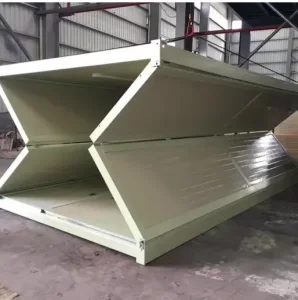
Solution: Flat-pack container camps fitted with high-temperature-tolerant N-type TOPCon panels and dust-resistant hydrophobic coatings. System integrated with 30 kWh battery banks per residential block, ensuring continuous operation for climate control and medical facilities without diesel generator dependency.
Region: Caribbean Islands, Southern Europe, Southeast Asian Archipelagos
Challenge: High electrical tariffs, coastal salt mist corrosion, and strict visual and environmental zoning rules.
Solution: Luxury modified container houses and smart space capsules paired with architectural BIPV roof arrays. Modules feature IEC 61701 Level 6 salt mist corrosion protection and sleek black-frame glass-glass aesthetics, blending luxury living with complete zero-emission self-sufficiency.
Navigating cross-border procurement requires strict adherence to international electrical, structural, and environmental standards. A low upfront quote is useless if modules fail local utility interconnect requirements or structural building codes.
Ensure panel arrays hold valid testing certifications: IEC 61215 (Design Qualification & Type Approval), IEC 61730 (Module Safety Qualification), and UL 61730 for North American grid standards. Inverters must comply with IEEE 1547 and local grid code interconnections.
Deployment in coastal or agricultural regions requires verified resistance testing: IEC 61701 for Heavy Salt Mist Corrosion and IEC 62716 for Ammonia Resistance in livestock/agricultural applications.
When installing arrays on container roofs, wind lift (up to 5400 Pa mechanical snow load / 2400 Pa wind load) must be calculated against structural steel framing specifications. Factory pre-drilled brackets reduce field labor and maintain roof membrane integrity.
Answers to common technical, financial, and logistical questions raised by global project managers and procurement specialists.
Explore our full catalog of modular housing units, specialized equipment shelters, and customized living systems available for worldwide export.