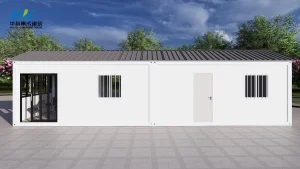
Equipment Shelter Factories & Suppliers

Global Industrial Whitepaper: Engineering High-Performance Telecom, Energy & Modular Protection Enclosures for Extreme Environments

Primary Modular Equipment & Enclosure Catalog
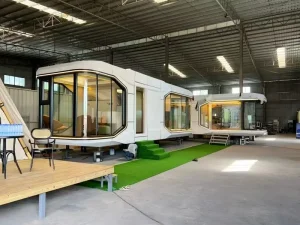
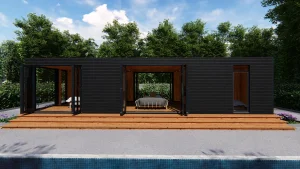
Wholesale Luxury Capsule House
Wholesale Luxury and natural style Capsule house Quotes, Suppliers
View Details & Quotes
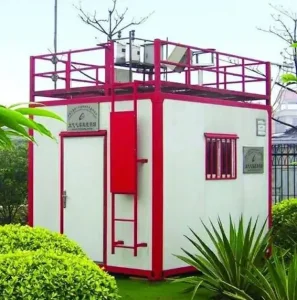
OEM Monitoring Cabin Factory
OEM Fiberglass sandwich panel Monitoring cabin Factory, Factories
View Details & Quotes
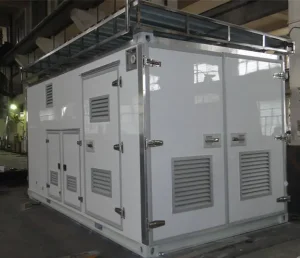
High-Quality Telecom Shelter
High-Quality Fiberglass telecom shelter . Products, Suppliers
View Details & Quotes
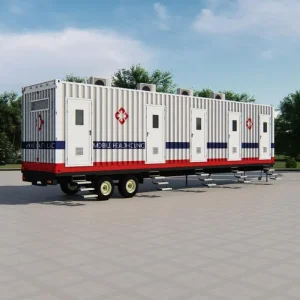
Custom Mobile Medical Cabin
Custom Modular prefab container clinic /mobile medical cabin. Quotes, Suppliers
View Details & Quotes
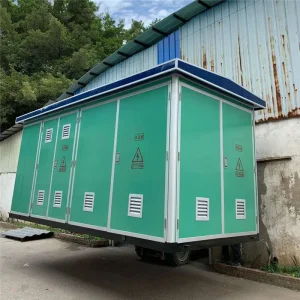
Custom Equipment Shelter Supplier
Custom Equipment shelter Supplier, Suppliers
View Details & Quotes
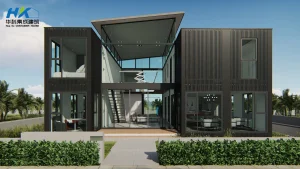
2 Storey Container Villa
OEM China Factory Price 4*40FT Fully Furnished Luxury 2 Storey Customized Prefabricated Container House/Villa Product, Pricelist
View Details & Quotes
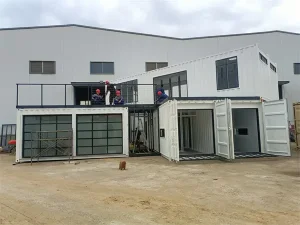
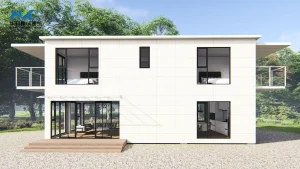
Modified Container House
OEM 2x40ft Modified Container House Plywood inner decoration Factory, Product
View Details & Quotes
Flat Pack Guard Security Rooms
Custom Easy Install Quick Assembly Flat Pack Assembly Container Guard Security Rooms Pricelist, Products
View Details & Quotes

Macro Industry Landscape: The Evolution of Industrial Equipment Shelters

In an era dominated by hyper-connectivity, decentralized power grids, and edge computing, the global demand for highly specialized Equipment Shelters has shifted from rudimentary storage sheds to mission-critical infrastructure assets. Modern equipment shelters are modular, environmental-controlled, electromagnetic-shielded, and structurally fortified enclosures designed to protect sensitive electronics, telecom nodes, power systems, and monitoring hardware across hostile environments.

6.8%
Global CAGR in Modular Enclosure Sourcing (2024-2030)
IP66 / NEMA 4X
Baseline Protection Rating for Industrial Shelters
-40°C to +55°C
Operational Thermal Range Capability
30+ Years
Engineered Lifecycle of FRP & Corten Modular Units

Key Drivers Accelerating Global Procurement Intent

Leading telecom operators, energy utility conglomerates, mining operators, and municipal infrastructure authorities are recalibrating their procurement requirements. The primary forces shaping equipment shelter manufacturing include:

5G & Edge Computing Expansion

The roll-out of ultra-low latency 5G networks demands distributed micro-datacenter shelters equipped with automated precision cooling, fire suppression, and battery backup systems directly situated at remote cell towers.

Battery Energy Storage Systems (BESS)

Solar and wind microgrids require thermally stable equipment shelters to house high-density lithium-iron-phosphate (LFP) battery banks, inverter stations, and high-voltage switchgear under strict HVAC monitoring.

Extreme Climate Resilience

Industrial clients require factory-tested, hurricane-rated (Category 5), seismic-resistant (Zone 4), and anti-corrosive (C5-M marine standard) modular structures capable of off-grid operation.

Global Procurement Strategy: Evaluating Manufacturers vs. Suppliers

Navigating the global supply chain for prefabricated equipment shelters requires a clear distinction between third-party trading intermediaries and original equipment manufacturers (OEMs). Strategic procurement officers must evaluate manufacturing depth, engineering compliance, and customizable floorplan capabilities before contract execution.

Evaluation Vector Direct Equipment Shelter Factory (OEM) Trading Companies & Brokers Engineering Procurement Benchmark
Structural Customization Full structural engineering, bespoke panel thickness, non-standard dimensions. Limited to standard prefabricated dimensions and stock modular sizes. Custom framing, structural load calculations (3.0 kN/m² floor load).
Material Integrity & Testing In-house mill certificates, salt-spray testing, fire rating (Class A / EI60). Relies on third-party claimed documentation without direct validation. Compliance with ISO 9001, CE, ASTM, and UL certification frameworks.
Integration Capability Factory installation of HVAC, DC Power, cable trays, grounding, and fire suppression. Delivers raw shell; requires expensive site-based electro-mechanical assembly. Plug-and-Play pre-commissioned skid or containerized delivery.
Total Cost of Ownership (TCO) Direct factory pricing, optimized container load packing, lower CAPEX. 15% to 35% broker margin markup; higher risk of post-delivery defects. 20-30% lifecycle cost savings via direct OEM technical support.

Manufacturing Technical Audit Criteria for Procurement Directors

When conducting a supplier audit on Chinese and international equipment shelter factories, technical teams must verify specific production capabilities:

  • Core Insulation Selection: High-density Polyurethane (PU) injection ($42 kg/m^3$) or non-combustible Rock Wool cores ($120 kg/m^3$) providing zero thermal bridging.
  • Wall Panel Technology: Fiberglass Reinforced Polymer (FRP) seamless outer skins vs. hot-dip galvanized steel sheet with Fluorocarbon (PVDF) anti-corrosion coatings.
  • Ingress Protection Testing: Automated seal strip manufacturing ensuring continuous IP65 to IP66 weatherproofing against driving rain, desert sandstorms, and humidity.

Engineered Sector Solutions: Turnkey Equipment Shelter Applications

Equipment shelters must be custom-tailored to their specific operational payload. Below are four key industrial configurations manufactured to meet international engineering guidelines.

1. Telecom & Microwave Base Stations

Engineered for BTS networks, fiber-optic transmission hubs, and satellite ground control. Features dual-redundant wall-mounted air conditioners (lead-lag control), anti-static raised flooring, integrated feeder cable entry windows (ROXTEC seals), and copper busbar grounding systems.

2. Power Substation & Control Cabins

Designed to house high-voltage switchgear, SCADA remote terminal units, and industrial UPS arrays. Built with heavy-duty structural steel frames capable of carrying transformer weights up to 10 metric tons, blast-resistant wall panels, and gas fire suppression systems (FM-200 / Novec 1230).

3. Mobile Medical & Environmental Cabins

Modular cleanroom-grade containment units configured for environmental monitoring, air quality sampling, or field medical clinics. Utilizes anti-bacterial smooth FRP interiors, HEPA air filtration systems, medical isolation ducting, and rapid deployment flat-pack or skid chassis.

Compliance Architecture: Standards, Local Approvals & Engineering Rigor

Deploying prefabricated modular equipment shelters globally requires flawless compliance with regional building codes, structural wind/snow load standards, and electrical safety protocols. Leading Chinese equipment shelter factories provide comprehensive drawing packages and calculation sheets to facilitate smooth local permitting.

North American Compliance

  • IBC (International Building Code) Structural Standards
  • NEC (National Electrical Code) Pre-Wiring
  • NEMA 3R, 4, and 4X Rating Validation
  • UL 752 Bullet Resistance Options (Level 3+)

European Union Standards

  • CE Marking & EN 1090 Structural Steel Executions
  • Eurocode 1: Wind & Snow Load Calculations
  • EI30 / EI60 / EI120 Fire Resistance Ratings
  • RoHS & REACH Compliant Non-Toxic Materials

Global Ocean & Logistics Seals

  • ISO 668 Shipping Container Dimensioning
  • CSC Safety Approval for Intermodal Transport
  • Corrosion Protection under ISO 12944 (C4 to C5-M)
  • IP66 Ingress Water Tightness Testing

Engineering Verification & Factory Acceptance Testing (FAT)

To guarantee zero-defect deployment at site, tier-1 suppliers execute rigorous Factory Acceptance Testing prior to ocean freight dispatch. The FAT protocol includes:

  1. Rain Spray Ingress Test: High-pressure water nozzles deliver 200 kPa water jets across all panel joints, door gaskets, and roof seams for 60 continuous minutes to confirm leak-free integrity.
  2. Thermal Insulation Verification: Infrared thermography scanning during HVAC simulation tests identifies potential thermal bridges, ensuring optimal R-value retention (up to R-30 equivalent).
  3. Electrical Continuity & Dielectric Testing: Grounding busbars and electrical panels undergo insulation resistance testing (500V DC megohmmeter) to verify equipment grounding.

Technology Roadmap: Next-Generation Equipment Shelter Innovations (2025-2030)

The equipment shelter manufacturing industry is experiencing rapid technological convergence. Future-proof procurement relies on selecting suppliers that actively integrate smart IoT monitoring, advanced composites, and sustainable building systems into their structural design matrix.

AI-Driven Automated Telemetry

Smart shelters equipped with internal IoT sensor hubs stream microclimate conditions, door access control, vibrations, humidity, and early-stage smoke/gas detection straight to cloud management dashboards.

Nanotechnology Aerogel Insulation

Transitioning from traditional Rockwool to ultra-thin Aerogel blanket insulation allows for a 50% reduction in wall panel thickness while delivering superior thermal thermal resistance ($R-30+$) and maximizing interior spatial volume.

Photovoltaic Integrated Roofs (BIPV)

Next-gen shelters feature lightweight, flexible solar panels seamlessly laminated directly onto the shelter roof outer layer, supplying autonomous trickle-charge energy to secondary telemetry systems.

Frequently Asked Questions (FAQ) & Sourcing Guidance

Addressing critical technical questions, ROI calculations, transport logistics, and operational parameters for engineering sourcing teams.
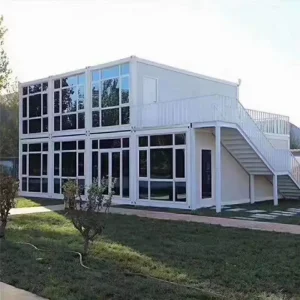
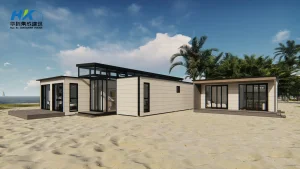
What materials offer the longest lifecycle: FRP Sandwich Panels vs. Steel Corten Container Shelters?
Both structural systems serve distinct environmental needs. Fiberglass Reinforced Polymer (FRP) sandwich panels offer superior non-corrosive properties, zero radio-frequency interference (RF transparency), lightweight installation, and immunity to salt air, making them ideal for coastal telecom and radar installations (30+ year lifespan without painting). Corten Steel Container Shelters provide maximum physical security, blast resistance, and structural strength against vandalism, making them preferred for high-risk industrial sites or heavy battery storage applications (BESS).
How are equipment shelters shipped internationally to minimize freight costs?
Factories utilize two primary logistical routes: 1) Flat-Pack Modular Delivery: Wall panels, floor frames, and roof assemblies are packaged into compact flat-pack kits. Up to four 20ft flat-pack shelters fit inside a single 40ft High Cube container, dramatically reducing ocean freight CAPEX. 2) Assembled ISO Containerized Units: Shelters designed within standard 20ft or 40ft ISO shipping dimensions are fully pre-fitted with internal equipment at the factory and shipped directly as standard containerized freight via CSC certification.
What thermal control options exist for shelters operating in desert environments (+50°C)?
For extreme heat environments, equipment shelter suppliers utilize high-density polyurethane (PU) injection cores ($42 kg/m^3$ minimum) with a minimum panel thickness of 100mm to 150mm. Additionally, dual redundant (N+1) industrial air conditioning units featuring free-cooling economizers are installed. Free-cooling automatically draws ambient air through HEPA filters when outside temperatures drop at night, cutting HVAC power consumption by up to 60%.
Can equipment shelters be manufactured with EMI/RFI Shielding?
Yes. Specialized equipment shelter factories offer complete Faraday-cage electromagnetic interference (EMI) and radio frequency interference (RFI) attenuation options. This involves lining interior walls with continuous copper or aluminum shielding foils, installing honeycomb wave-guide air vents, and utilizing brass-mesh EMI gaskets around all door openings to achieve attenuation levels exceeding 80 dB to 100 dB across a 10 kHz to 10 GHz spectrum.
What baseline engineering documentation should be requested during RFP submission?
Procurement engineers should request: 1) Structural Calculation Reports detailing wind speed rating ($>160 km/h$) and roof live loads; 2) Thermal Loss Calculations (U-value / R-value sheets); 3) Fire Test Certificates (UL94, ASTM E84 Class A, or EN 13501-1); 4) 3D CAD/BIM Floorplans detailing cable tray routing, DC power distribution layouts, and point-load floor capacities; and 5) Warranty terms (minimum 10-year structural warranty).
Additional Specialized Prefabricated & Modular Structures
Mobile Medical Cabin Clinic
Custom Modular prefab container clinic /mobile medical cabin. Quotes, Suppliers
View Details & Quotes
Massive Luxury Container House
Wholesale Massive Luxury container house home Factory, Quotes
View Details & Quotes
Modular Flat Pack Container House
Wholesale Affordable prefabricated modular flat pack container house Pricelist, Supplier
View Details & Quotes
Luxury 40HQ Modular Villa
High-Quality Luxury 3 Bedrooms 40HQ Shipping Container Prefab Modular Villas with Granny house Product, Pricelist
View Details & Quotes
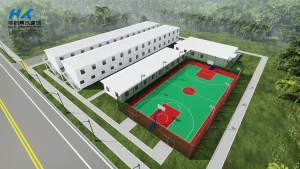
Large Scale Temporary Buildings
OEM customization construction Large-scale temporary buildings Quotes, Products
View Details & Quotes
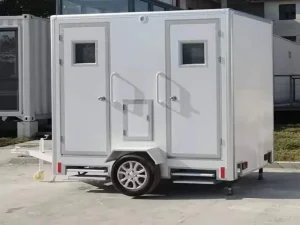
Mobile Fiberglass Trailer Toilet
High-Quality Smart Way-transportable Prefab Mobile Fiberglass Trailer Toilet Factories, Quotes
View Details & Quotes
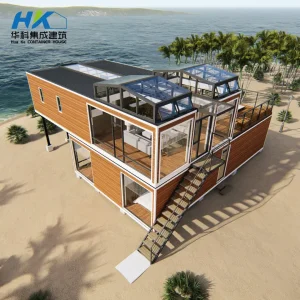
Two-Story Idyllic Villa Container
Custom Two-Story Idyllic Villa Luxury Building Container House Home Factory, Quotes
View Details & Quotes
OEM Elegant Container Residences
OEM Elegant Container Residences: Redefining Modern Living Factories, Pricelist
View Details & Quotes
All Equipment Shelter Products