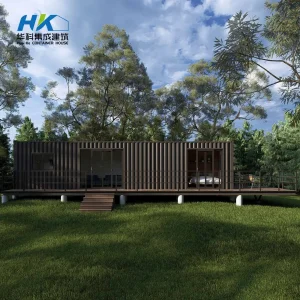
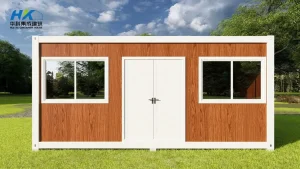
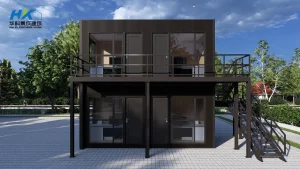
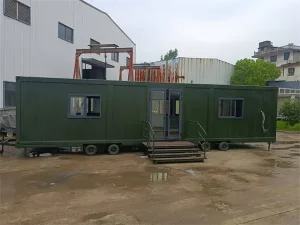
As global telecommunications networks transition to 5G Standalone (SA) architectures, edge computing clusters, and ultra-dense radio access networks (RAN), the physical infrastructure safeguarding mission-critical electronics has become a cornerstone of network availability. Original Equipment Manufacturer (OEM) telecom shelters serve as hardened, environmental protection enclosures engineered to house mobile base transceiver stations (BTS), fiber optic termination racks, rectifiers, lithium-ion battery banks, and uninterruptible power supplies (UPS).
Unlike standard prefabricated buildings, telecom shelters must guarantee strict thermal control, electromagnetic compatibility (EMC), IP65/IP66 ingress protection, and structural resilience against seismic events, coastal salt spray, and extreme thermal cycling (-40°C to +55°C). Navigating the global procurement ecosystem for OEM telecom shelters requires network operators, tower companies (TowerCos), and turnkey EPC (Engineering, Procurement, Construction) contractors to balance capital expenditure (CapEx) against total cost of ownership (TCO).
The global telecom equipment enclosure market is experiencing unprecedented demand driven by three macro-technological catalysts: global 5G network densification, rural connectivity initiatives (such as US-FAD and EU Gigabit Infrastructure Act), and the decentralization of data processing toward edge data centers.
Legacy 3G/4G passive shelters relied on simple free-cooling louver fans. Modern 5G Massive MIMO deployments generate thermal dissipation loads exceeding 10 kW to 30 kW per shelter site. Consequently, OEM manufacturers now integrate intelligent variable-refrigerant inverter HVAC units paired with emergency DC back-up ventilation.
In emerging markets across Africa, Southeast Asia, and Latin America, unstable power grids require telecom shelters to function as complete energy hubs. OEM suppliers integrate photovoltaic (PV) charge controllers, smart hybrid diesel generators, and localized energy management systems (EMS) within fire-shielded battery compartments.
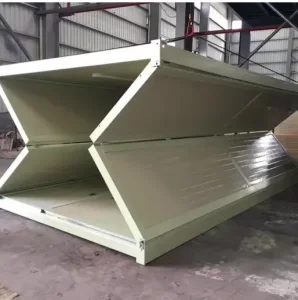
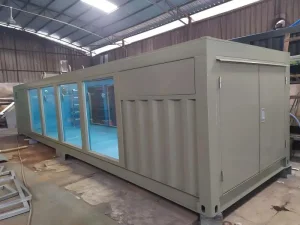
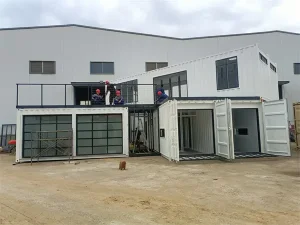
Industrial suppliers are increasingly utilizing modular Corten steel containers and flat-pack polyurethane (PU) sandwich panel architectures. Flat-pack modular shelters allow up to six disassembled shelter units to be packed into a single 40ft High Cube container, dramatically reducing international ocean freight costs by up to 65%.
To select the correct OEM manufacturer, engineering procurement managers must examine the mechanical, structural, and thermodynamic properties of shelter construction materials.
| Engineering Parameter | Standard OEM Specification | Heavy-Duty Extreme Specification | Operational Value Delivered |
|---|---|---|---|
| Structural Framework | Q235 Hot-Dip Galvanized Steel Frame (80µm zinc thickness) | Corten-A Weathering Corrosion Steel / ISO Container Steel Frame | Prevents structural rust for 25+ years in harsh industrial or coastal environments. |
| Wall Insulation Core | 75mm Polyurethane (PU) Foam Board (42 kg/m³ density) | 100mm–150mm High-Density Rock Wool Core (Class A1 Fireproof) | Achieves ultra-low thermal conductivity (λ ≤ 0.022 W/m·K), reducing HVAC energy consumption by up to 40%. |
| Outer & Inner Cladding | 0.5mm Pre-painted Galvanized Steel (PPGI) Skin | 0.8mm Stainless Steel (316L) or Aluminum-Zinc Alloy (Galvalume) | Delivers mechanical impact resistance, chemical washdown capability, and UV resistance. |
| Ingress Protection (IP) | IP55 (Dust-protected, water jet resistant) | IP65 / IP66 (Dust-tight, powerful water jet protection) | Guarantees zero sand, dust, or rain intrusion during severe desert sandstorms or typhoons. |
| Seismic & Wind Rating | Zone 4 Seismic Rating / Wind load 150 km/h | Zone 4+ Seismic / Typhoon Wind Resistance up to 250 km/h | Protects delicate transmission, fiber optic, and core equipment during natural disasters. |
| EMI / RFI Shielding | 40 dB attenuation (10 kHz – 10 GHz) | > 70 dB High-Shielding Specification (Gasketed Joints) | Prevents radio frequency interference and electronic eavesdropping on critical networks. |
Telecom shelters rely on continuous environmental management. Premier OEM manufacturers engineer integrated dual-redundant HVAC systems operating on an N+1 duty cycle. If primary AC line power fails, emergency free-cooling dampers automatically actuate, drawing filtered outdoor air powered by internal 48V DC battery banks to prevent heat-soak equipment failure.
Evaluating an OEM telecom shelter pricelist requires understanding how structural configuration, thermal management systems, electrical distribution panels, and transport dimensions influence factory base costs.
Below is a comprehensive cost breakdown matrix representing global OEM factory direct pricing (FOB China / Asia Manufacturing Hubs) for standard telecommunications shelter configurations.
| Shelter Category & Size | Dimensions (L × W × H) | Estimated Base OEM Price Range (USD) | Included Core Equipment & Features | Best Application Fit |
|---|---|---|---|---|
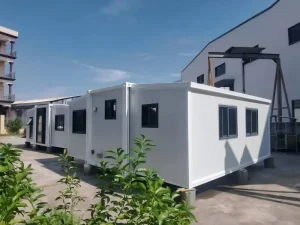
| Micro BTS Shelter (Flat-Pack) | 2.0m × 2.0m × 2.5m | $2,500 – $4,200 | 50mm PU Sandwich Panels, 1.5kW DC Air Conditioner, Main Distribution Board (MDB), Cable Entry Gland plate. | Urban 5G Micro Cells, Rooftop Base Stations, Fiber Node Points. |
| Standard Telecom Shelter (Integrated) | 3.0m × 2.4m × 2.8m | $5,800 – $9,500 | 75mm PU Panels, Dual Redundant 3.5kW AC Units, Emergency Free Cooling, Feeder Cable Glands, Fire Suppression Port. | Standard Cellular Tower Sites (3G/4G/5G Co-location), Microwave Hubs. |
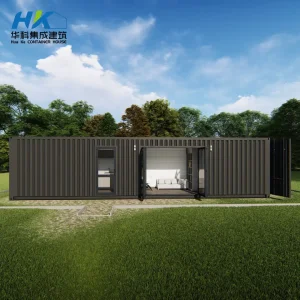
| Heavy-Duty ISO Shipping Container Shelter | 6.0m × 2.4m × 2.9m (20ft High Cube) | $11,500 – $18,500 | Corten Steel Shell, Rockwool Insulation, Industrial 7kW Dual HVAC, Static Anti-Static ESD Raised Floor, EMI Gaskets. | Extreme Climate Areas, Military Networks, Off-Grid Solar Power Nodes. |
| Multi-Room Hybrid Energy & Battery Shelter | 9.0m × 3.0m × 2.9m | $22,000 – $36,000 | Partitioned Genset / Battery / Telecom Equipment Rooms, Explosion-proof Battery Ventilation, Automatic Fire Extinguishing System (FM-200 / Novec 1230). | Remote Off-Grid Sites, Transcontinental Fiber Repeater Stations, Mining Networks. |
Standard comfort air conditioners reduce upfront cost but lack continuous 24/7/365 run-time reliability. Precision industrial HVAC units with inverter compressors increase initial price by 25–35% but reduce lifecycle power consumption significantly.
Integration of Class I and Class II Surge Protection Devices (SPD), automatic transfer switches (ATS), smart metering, and remote monitoring sensors (RMS) add $1,200 to $4,500 per unit.
Fully assembled shelters require open-top ocean shipping or dedicated flat-rack containers. Flat-pack modular kits cost slightly more in local assembly labor but cut ocean logistics spend by up to two-thirds.
Selecting the right OEM supplier involves verifying engineering capabilities, quality control protocols, and supply chain transparency. A failure in shelter structural integrity directly endangers millions of dollars in electronic active equipment.
Telecom shelters are deployed across highly diverse geographical and climatic regions. OEM customization must account for local environmental stressors:
Requires dual high-ambient compressors capable of operating up to +55°C, solar radiation sun-shield roof covers, sand-trap louvers, and positive pressure air filtration systems.
Demands C5-M marine grade anti-corrosion epoxy coatings, 316 stainless steel hardware, insulated thermal breaks, and sealed cable entry boots to eliminate galvanic corrosion.
Integrates heavy floor loading structural beams for 48V energy storage racks, snow load reinforced roof structures (up to 3.5 kN/m²), and automated generator start systems.
Deploying equipment shelters across international jurisdictions requires adherence to localized building and electrical codes. Reputable OEM suppliers collaborate with regional engineering partners to deliver fully compliant site installation packages.
The next generation of OEM telecom shelters is evolving from passive physical boxes into self-monitoring, AI-optimized operational assets.
Integrated sensors track temperature, humidity, water intrusion, door access, smoke, vibration, and battery health via Modbus/SNMP protocol directly to network operation centers (NOC).
Integrating PCM panels inside shelter walls absorbs peak midday thermal energy without electrical draw, releasing heat during colder night cycles to minimize HVAC compressor run-time.
Native structural integration of roof-mounted photovoltaic solar frames and green hydrogen fuel cell storage compartments to replace legacy diesel generators completely.