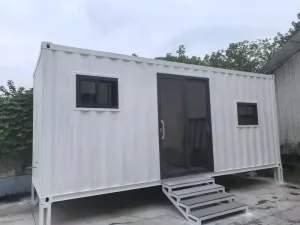
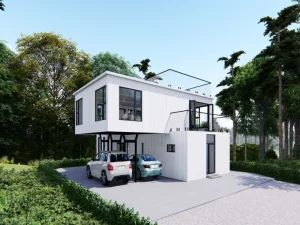
Cold formed steel members (sometimes called light gauge steel) are made from structural-quality sheet steel that’s formed into shaped either through free-braking blank sheared from sheets or coils, or more commonly, by roll-forming the steel through a series of dies. Unlike hot-formed structural I-beams, neither process requires heat to form the shape, thus the name “cold formed” steel. Light gauge steel produces are usually thinner, faster to produce, and cost less than their hot-formed counter-parts.
II. Advantages of Steel Framing
Steel studs and joists are strong, lightweight, and made from uniform-quality material. Steel walls are straight, with square corners, and all but eliminate pops in drywall. This virtually does away with the need for costly callbacks and adjustments.
Cold formed steel is coated to protect rusting during the phase of construction and living. Hot-dipped zinc galvanizing can protect your steel framing as long as 250 years.
Consumer enjoy steel framing for fire safety and termite protection. Steel doesn’t contribute combustible material to feed a fire.
Steel-framed houses can be designed to withstand wind and seismic loads caused by hurricanes and earthquakes. The strength and ductility of steel allows it to meet the strongest wind and seismic ratings in the national building codes.
Steel joists and trusses can achieve greater spans, opening up large spaces inside a home.
Steel framing members can be just fastened together with screws.
Good offers on your option to panelize your walls or truss to a certain degree to make your houses more cost-effectively to save you the whole construction period.
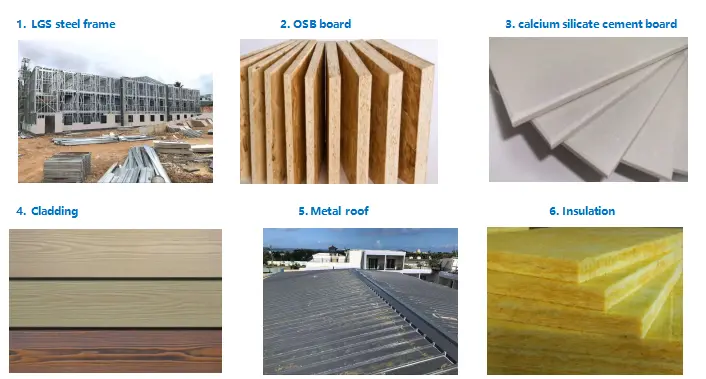
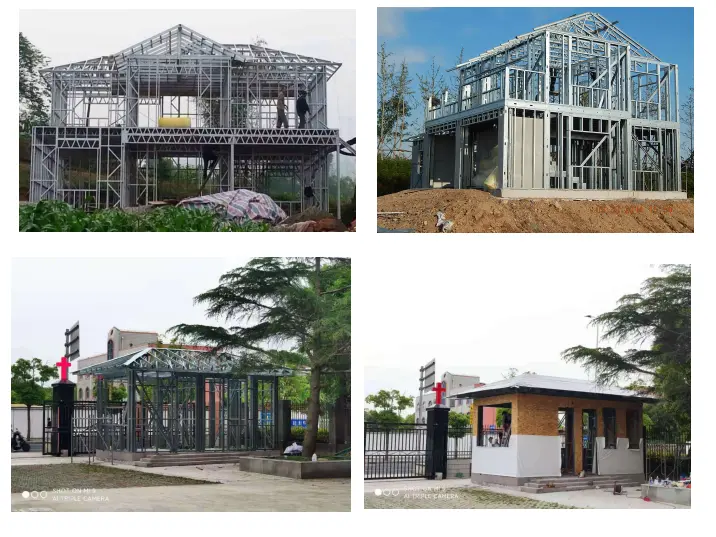
III. The Main Material to Build the LGS House
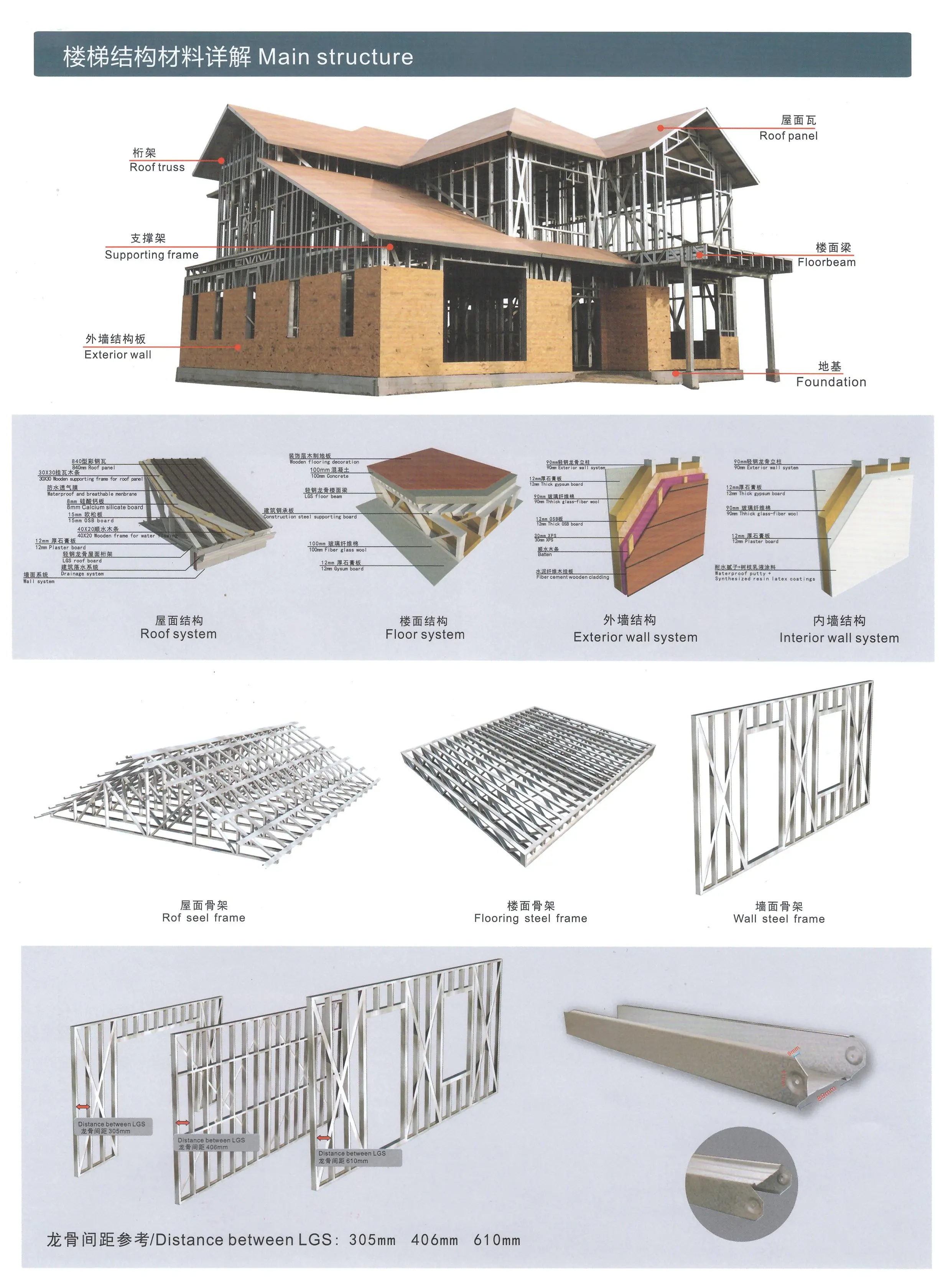
Main Structure of the Light Gauge Steel House
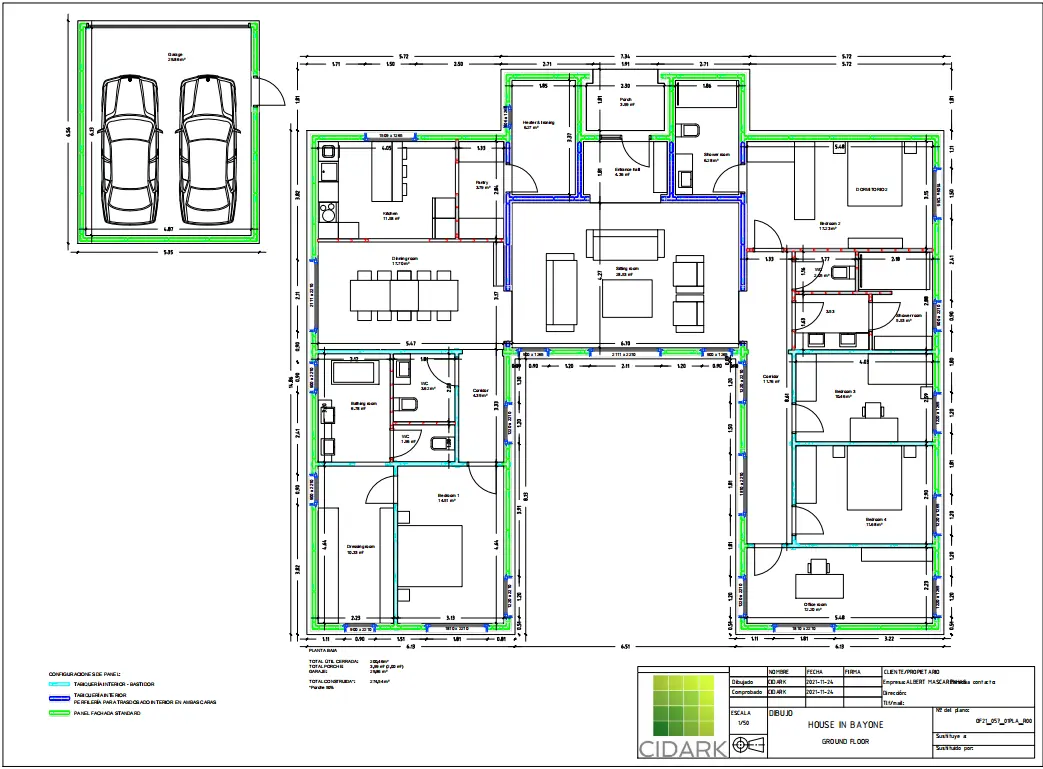
Steel Frame House Floor Plan
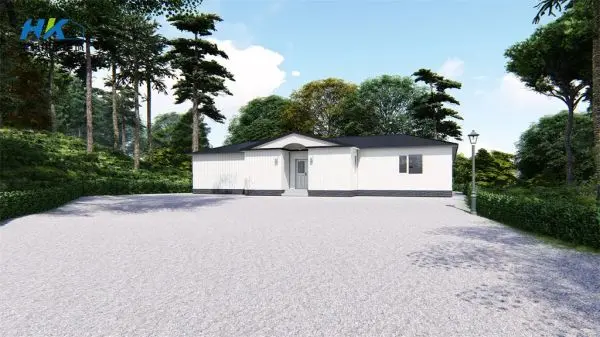
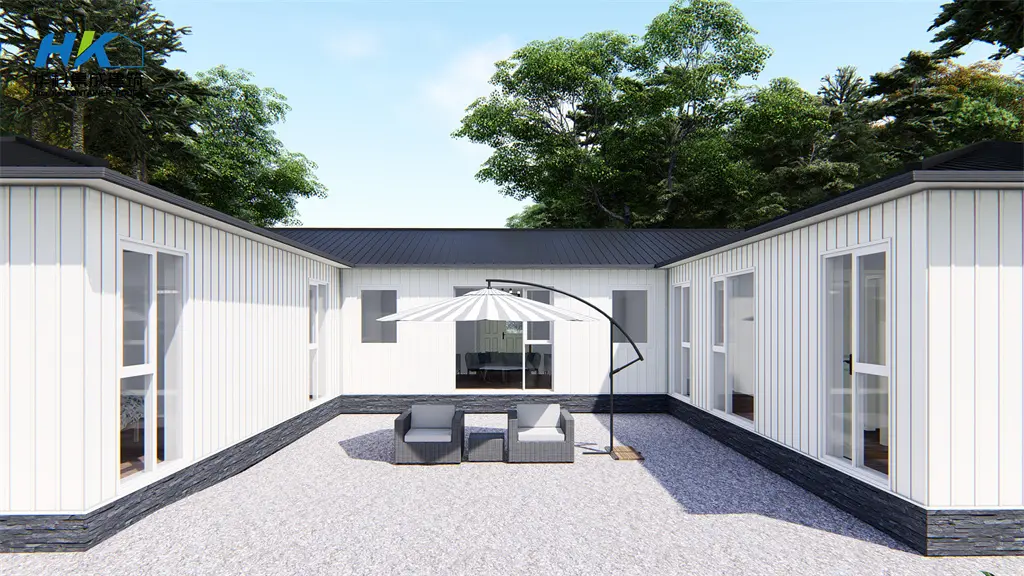
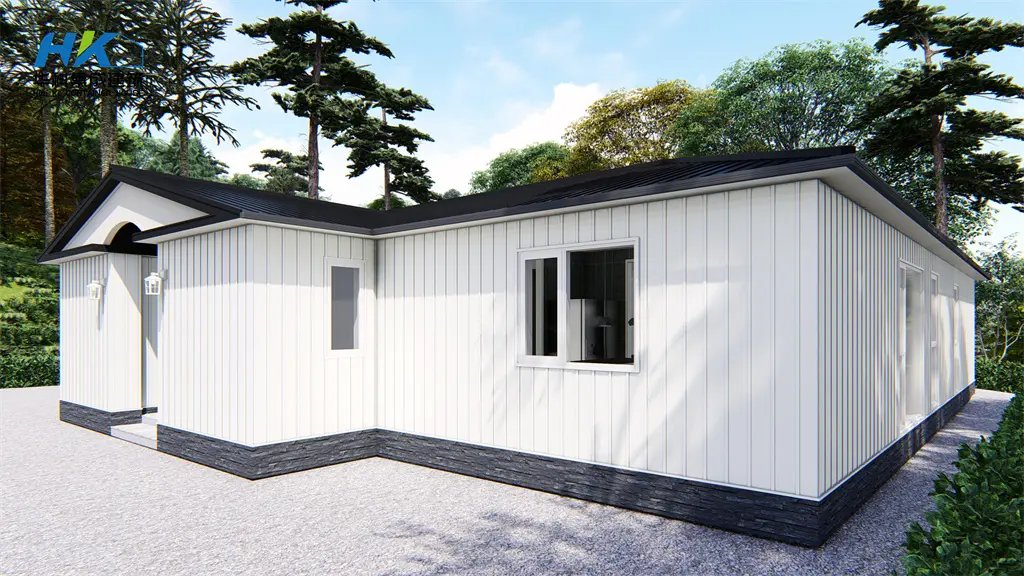
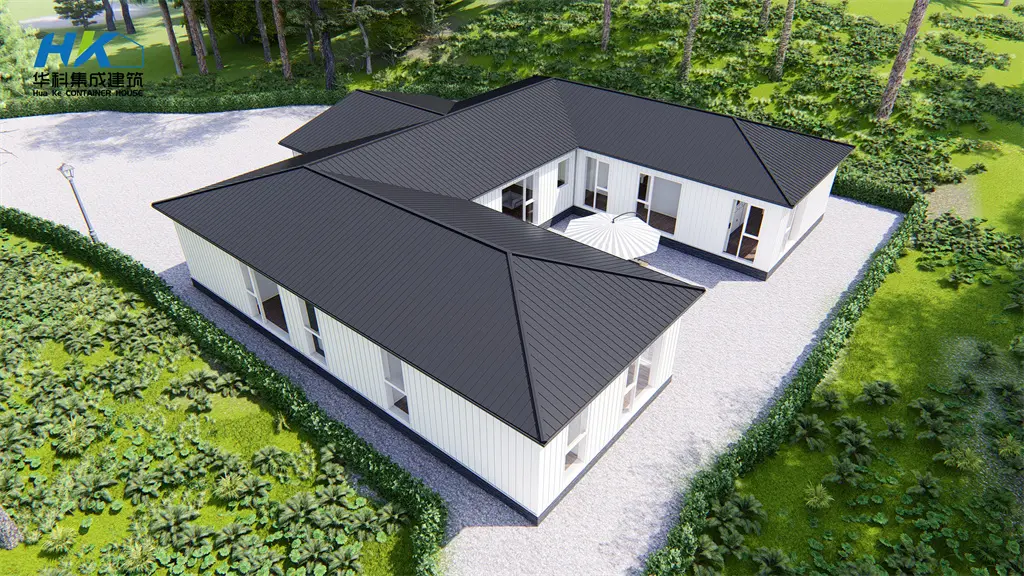
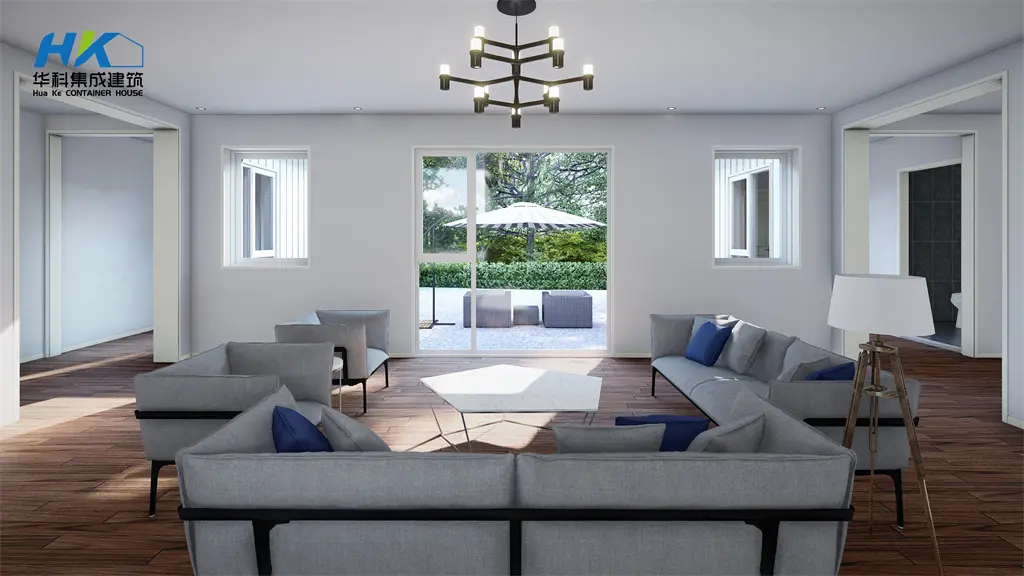
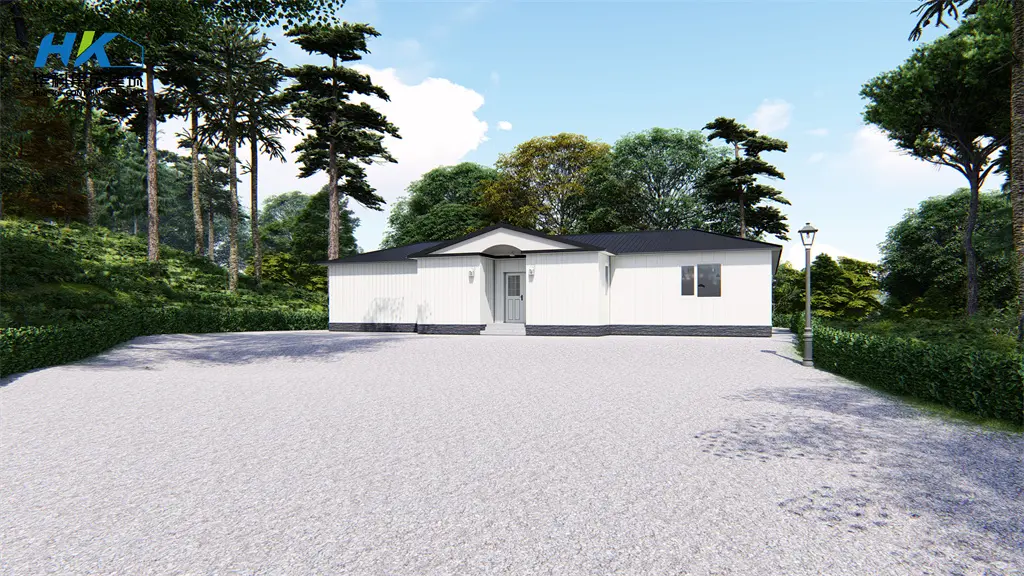
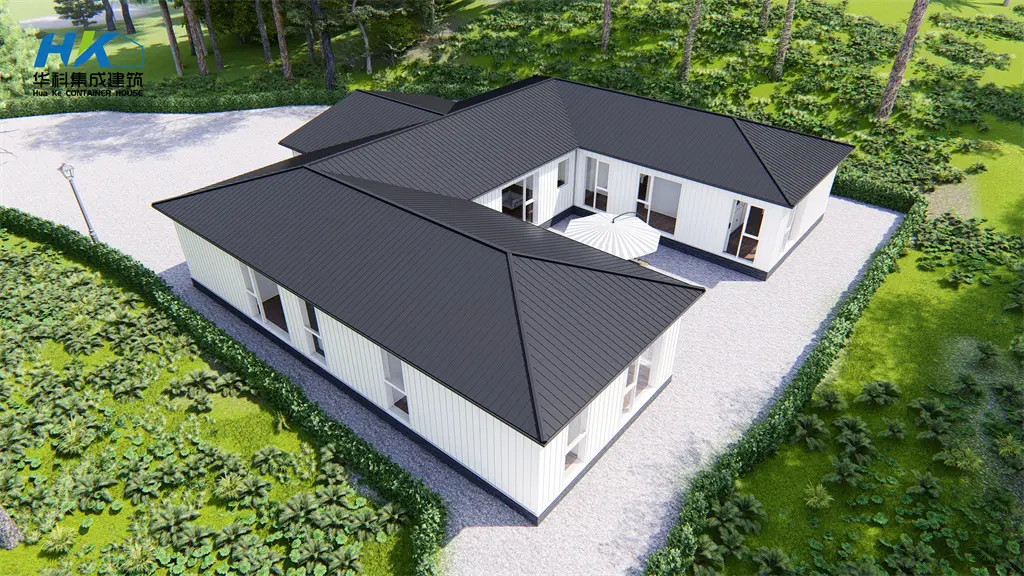
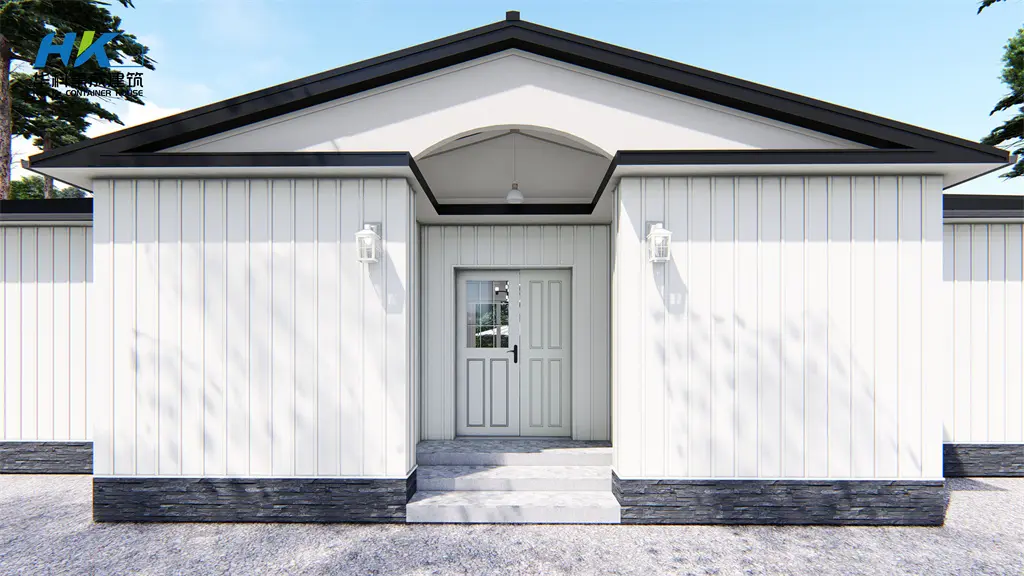
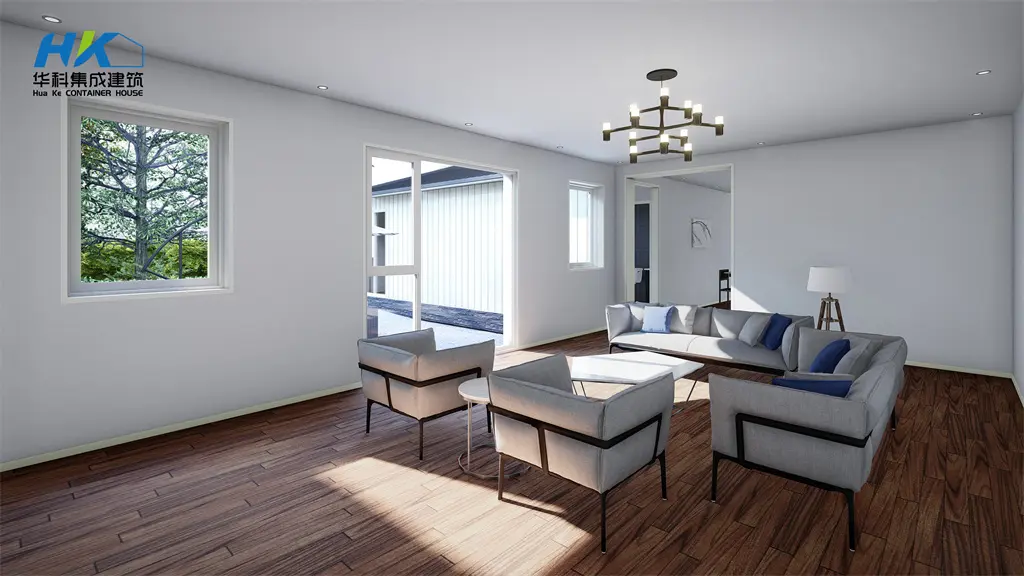
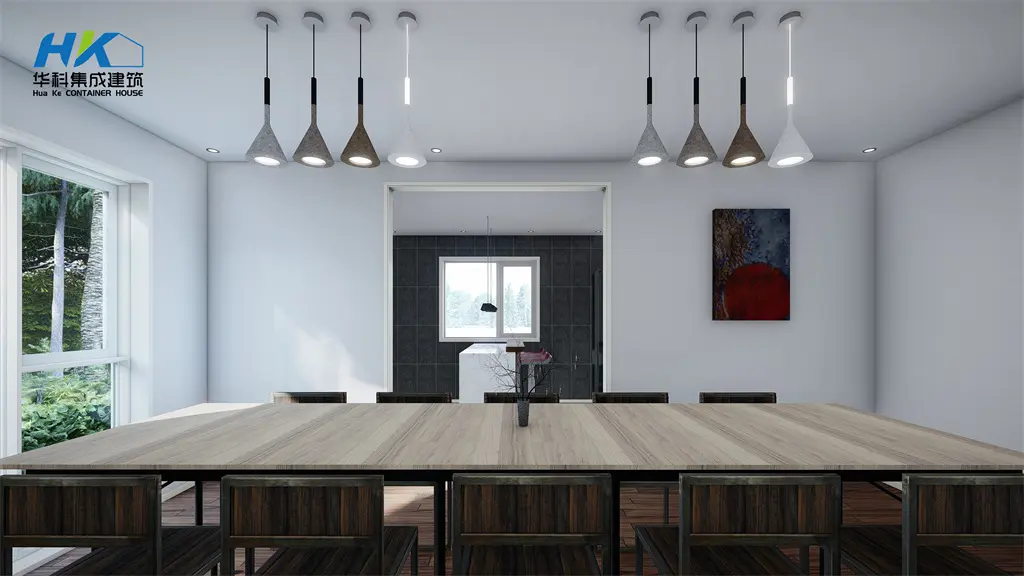
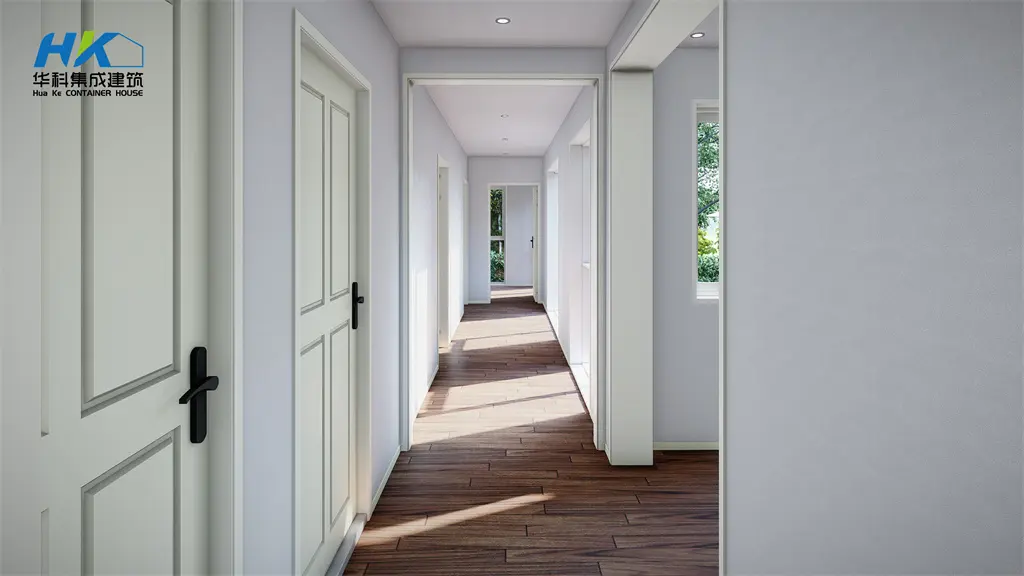
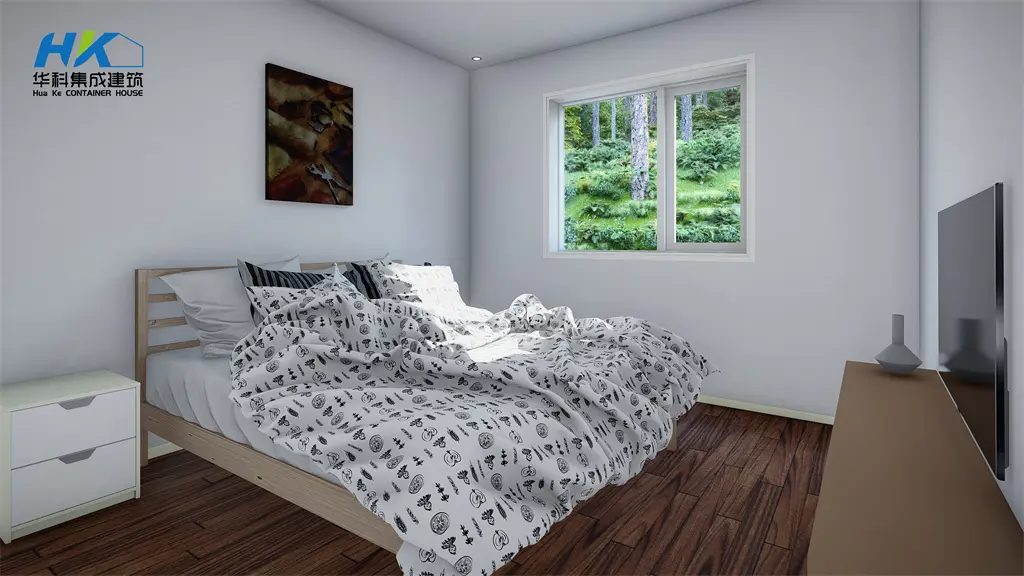
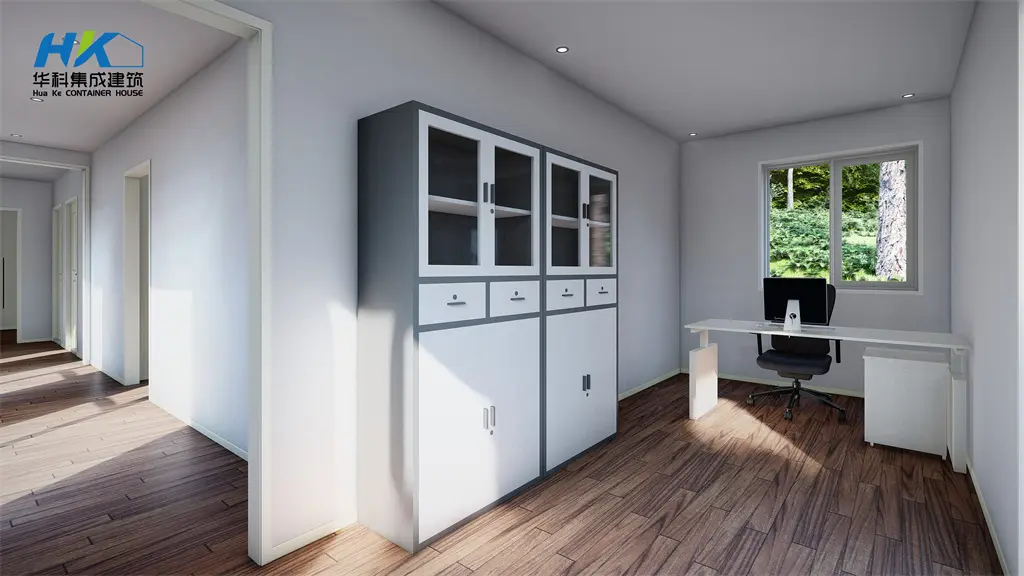
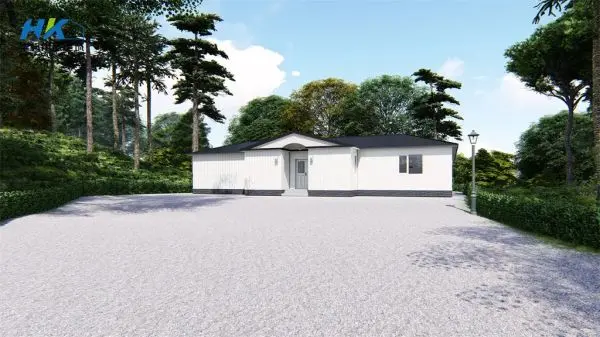
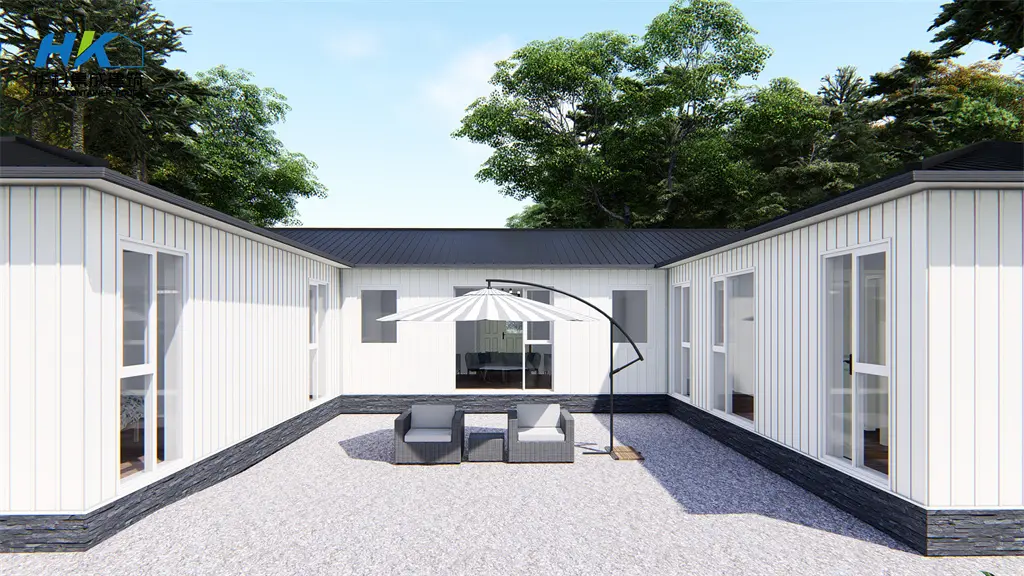
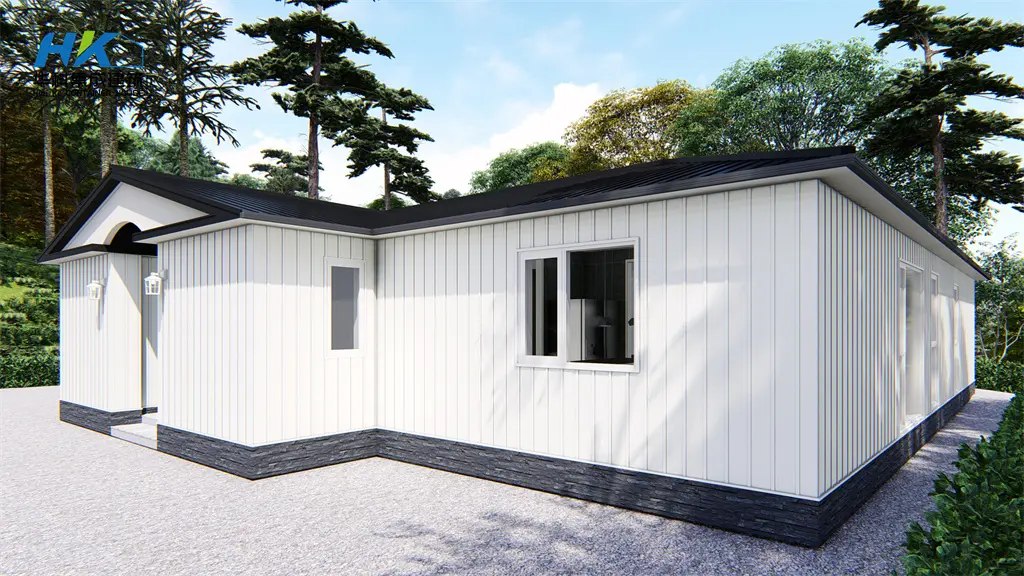
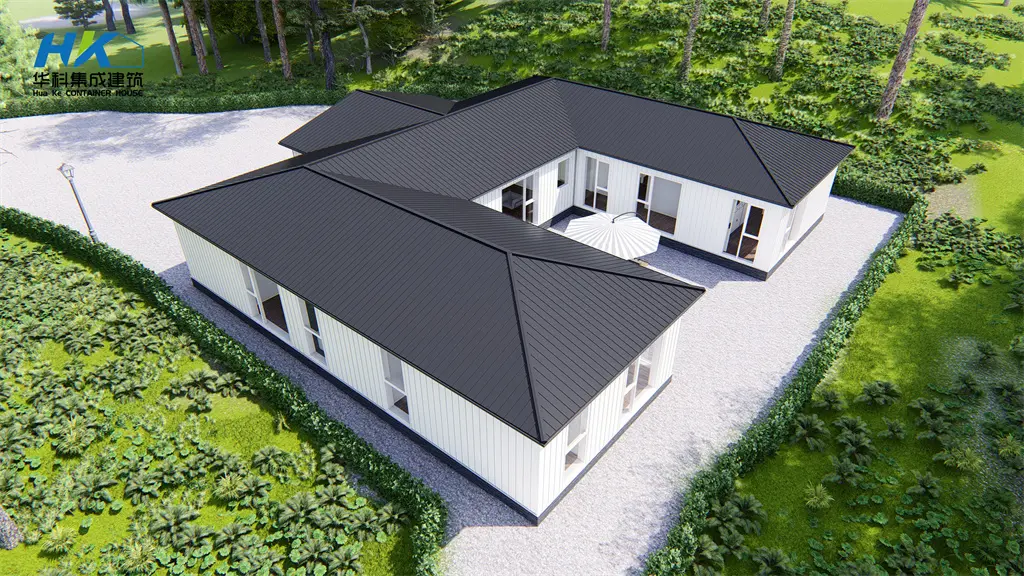
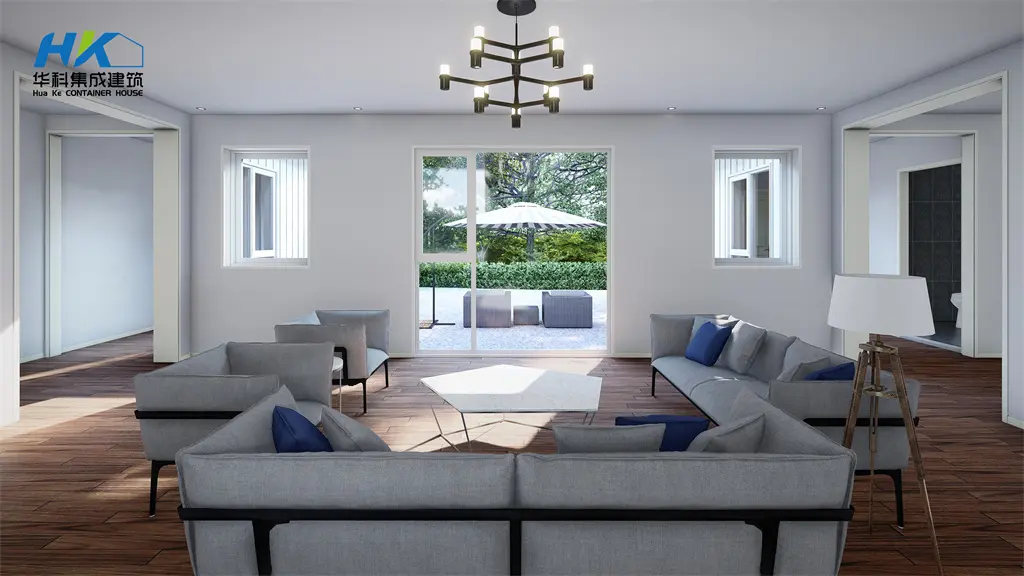
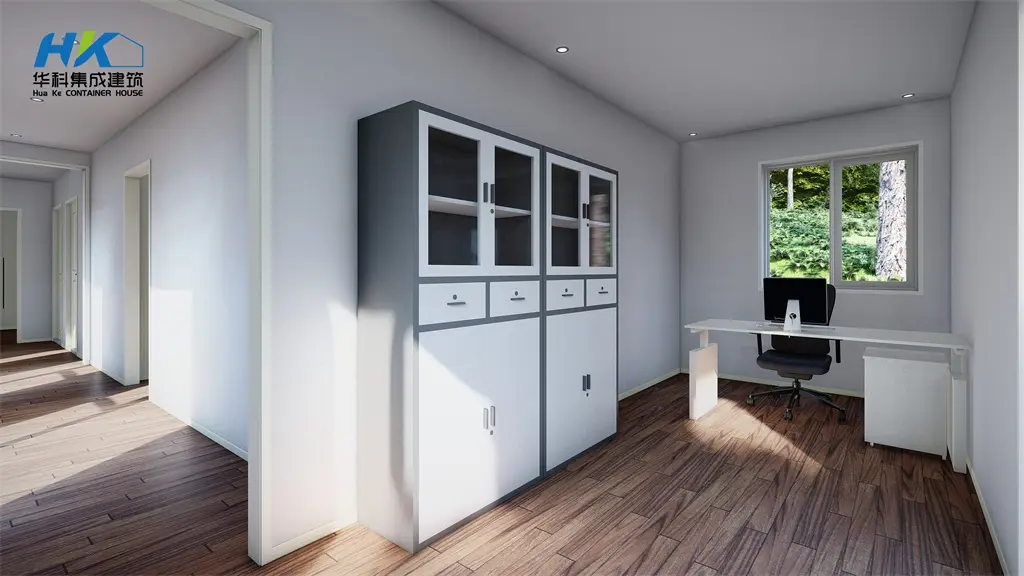
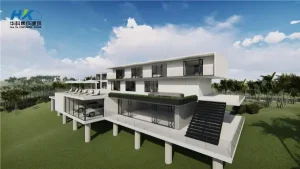
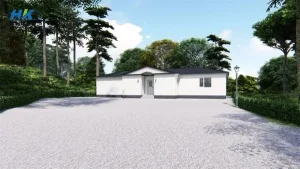
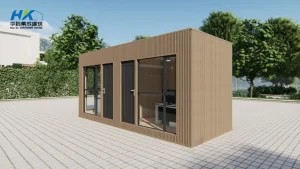
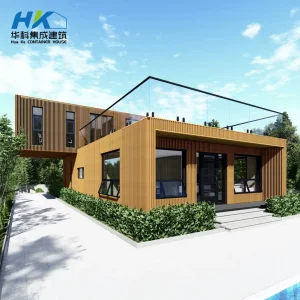
Rendering Photos for Proposal
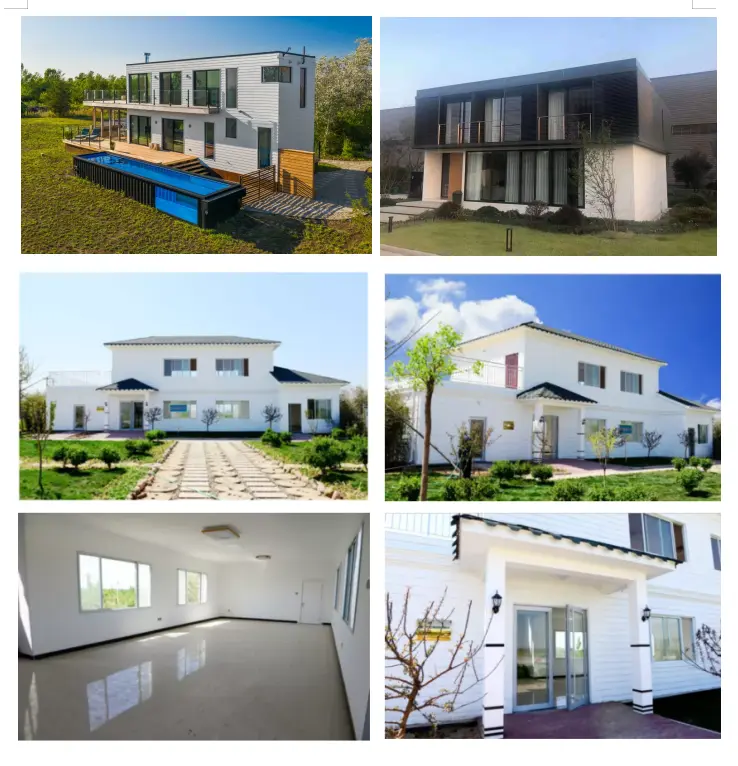
Similar Products Processing for Reference
Previous: Professional China Portable Container House – Customized Modular Fiberglass Mobile Caravan – HK prefab
Next: Duplex Luxury Prefabricated Home
Frequently Asked Questions (FAQ)
Q: What is a Light Gauge Steel (LGS) house?
A Light Gauge Steel (LGS) house uses cold-formed structural steel profiles as its main load-bearing framing. It offers exceptional strength, precise manufacturing, rapid assembly, and superior long-term durability compared to traditional timber or concrete buildings.
Q: How long does a Light Gauge Steel frame house last?
LGS framing members are treated with high-grade hot-dipped zinc galvanizing for anti-corrosion protection. Under standard conditions, steel framing can easily last up to 250 years without structural degradation.
Q: Are LGS houses safe against severe natural disasters like earthquakes and hurricanes?
Yes. Due to the high strength-to-weight ratio and natural ductility of structural steel, LGS houses absorb dynamic forces effectively and can be engineered to comply with the highest wind speed and seismic resistance building codes.
Q: Is Light Gauge Steel framing resistant to fire and termites?
Absolutely. Steel is a non-combustible material that does not contribute fuel to fires. Furthermore, it is completely immune to termites, carpenter ants, rot, and fungi infestations.
Q: How does LGS framing save construction time and labor costs?
LGS wall panels and roof trusses can be pre-assembled (panelized) in factory conditions prior to site delivery. This enables ultra-fast screw-together assembly on site, significantly cutting down construction schedules and labor expense.