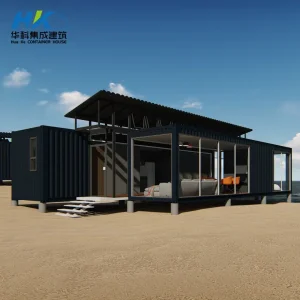
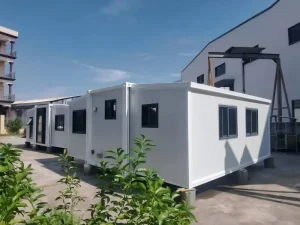
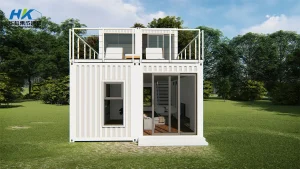
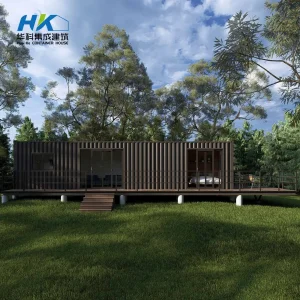
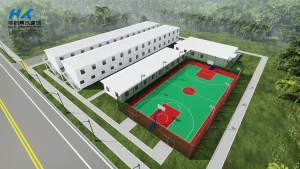
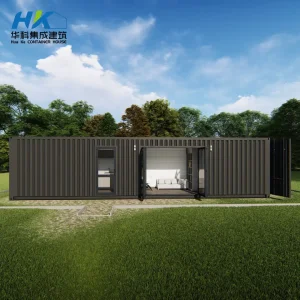
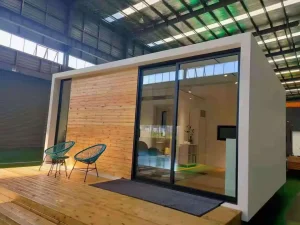
Factory-direct engineered container structures optimized for rapid site deployment, structural durability, and energy efficiency.
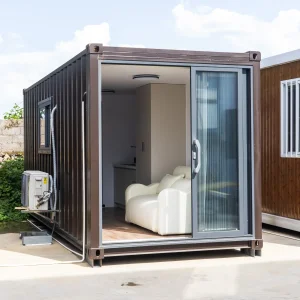
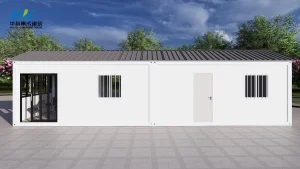
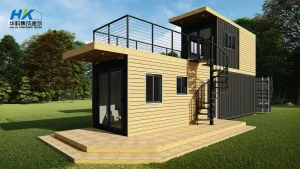
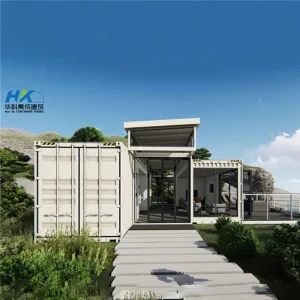
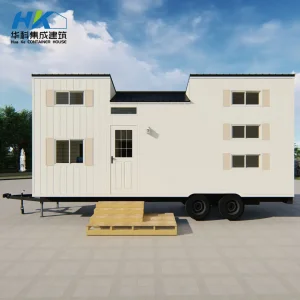
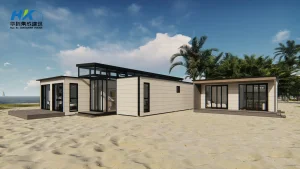
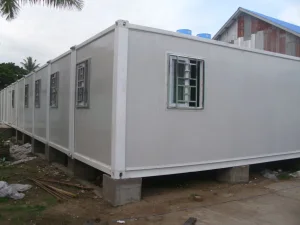
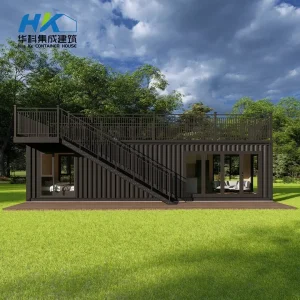
Deciphering the paradigm shift in global modular construction: How original equipment manufacturing (OEM) shipping container accommodation bridges structural durability, offsite manufacturing precision, and scalable financial expenditure.
Global procurement teams navigating OEM Shipping Container Accommodation require strict adherence to pre-engineered architectural drawings, localized building codes, and material bill of quantities (BOQ). Unlike standard off-the-shelf ODM units, OEM manufacturing requires factory-level structural modification of ISO intermodal containers (20ft, 40ft, 40ft HC) while preserving load-bearing corner castings and longitudinal stability under stacking conditions.
Standard container modification often compromises structural integrity by randomly cutting corrugated side walls. OEM precision engineering calculates stress redistribution using Finite Element Analysis (FEA). Heavy-gauge hollow structural section (HSS) tubular steel frames are robotically welded into modified apertures, restoring wind shear (up to 250 km/h) and seismic load dynamics (Zone 4 compliant).
Pioneering advancements in thermal envelopment, acoustic mitigation, intelligent energy harvesting, and structural longevity for containerized habitats.
Addressing the inherent thermal conductivity of steel ($k \approx 50 \text{ W/m}\cdot\text{K}$) through zero-thermal-bridge insulation vectors. Utilizing closed-cell Polyisocyanurate (PIR) and Spray Polyurethane Foam (SPF) directly bonded to corrugated inner walls.
Industrial campsites and urban container developments require sound transmission mitigation against low-frequency equipment vibration and external ambient noise.
Integration of rooftop solar PV arrays with high-density Lithium Iron Phosphate ($LiFePO_4$) energy storage systems for self-sustaining remote operation.
Engineered structural specifications tailored for harsh operational environments worldwide—from sub-zero Arctic mining camps to hyper-saline coastal resorts.
Operating in environments down to -50°C requires complete elimination of condensation frost lines, heated utility trace lines, and triple-pane low-E argon glazing.
Engineered for ambient operational temperatures exceeding +55°C with heavy solar radiation loads and fine airborne particulate ingress.
Anti-corrosion engineering for island resorts, container hotels, and marine research bases subject to salt spray and Category 5 wind loads.
How state-of-the-art robotic steel fabrication, vertical supply integration, and economy-of-scale produce unmatched cost-to-quality ratios for B2B buyers.
| Evaluation Parameter | Traditional On-Site Construction | Standard Flat-Pack Units | China OEM Heavy Corten Shipping Units |
|---|---|---|---|
| Structural Lifespan | 50+ Years (High Maintenance) | 10 - 15 Years | 30 - 50+ Years (Low Maintenance) |
| Structural Shell Steel | Mild Structural Steel / Masonry | 1.5 - 2.0mm Galvanized Profile | 2.0 - 4.0mm SPA-H Corten-A Weathering Steel |
| Seismic Resistance | Varies (Site Dependant) | Richter Magnitude 6.5 | Richter Magnitude 8.5+ (Zone 4 Certified) |
| Deployment Speed | 12 - 18 Months | 2 - 4 Weeks | Turnkey Plug-and-Play (1 - 3 Days On-Site) |
| Ocean Freight Mode | Raw Materials Bulk Freight | Flat-Packed Bundles | Standard CSC ISO Intermodal Shipper Owned Container |
Automated multi-axis welding arms ensure zero-defect seam welds on all modified aperture headers, side wall structural posts, and corner casting tie-ins, eliminating moisture infiltration risks.
Every modified steel shell undergoes automated shot-blasting to Sa 2.5 cleanliness standards before applying multi-coat anti-corrosion primer systems, ensuring adhesion and 20+ year paint durability.
Direct integration with top-tier steel mills and global MEP component manufacturers allows factory-direct OEM pricing, bypassing intermediary markups while offering certified material documentation.
Fulfilling institutional procurement standards across international commercial contracts, public-private partnerships (PPP), and turnkey EPC projects.
Structured LC (Letter of Credit), TT financing terms, transparent Milestone Billing based on factory FAT (Factory Acceptance Testing) inspections.
ISO 9001 quality management systems, full batch metallurgical testing, weld non-destructive testing (NDT), and water tightness spray testing.
Engineering modules to fit standard ISO dimensions as Shipper Owned Containers (SOC) to drastically reduce international breakbulk freight costs.
Non-Disclosure Agreements (NDA) protecting client proprietary architectural drawings, custom interior layouts, and specialized technological integrations.
Harmonizing international offsite prefabrication with region-specific building codes, electrical safety standards, and structural load metrics.
Every OEM unit is configured to the destination country's electrical grid and plumbing code specifications prior to factory dispatch:
Our engineering division collaborates with third-party structural engineers worldwide to provide calculation packs, wind load simulations, and foundation connection details necessary for local municipal building permits.
In-depth responses to critical engineering, logistics, commercial, and regulatory inquiries from international procurement directors.
ISO modified container accommodation utilizes heavy-duty SPA-H Corten-A weathering steel corrugated panels (2.0mm to 4.0mm thick) integrated with ISO corner castings and heavy structural steel floor joists. This structural rigidity allows multi-story stacking (up to 6 to 9 units high) without external steel framing and permits transport fully fitted with internal furniture as a Shipper Owned Container (SOC). Flat-pack container units use lighter cold-formed galvanized steel profiles (1.5mm - 2.0mm) assembled on site, ideal for single or two-story temporary site offices with lower freight volume requirements.
Thermal bridging is eliminated by applying a continuous layer of closed-cell Spray Polyurethane Foam (SPF) directly to the corrugated steel inner walls, filling all trapezoidal voids. The internal studs are decoupled from the steel frame using non-conductive thermal break tape or wooden furring strips. This ensures the dew point is contained within the continuous impermeable foam layer, preventing condensation formation behind internal drywall or fiber cement cladding.
Fully modified units retaining standard ISO length, width, height, and corner casting geometry are certified under CSC (Convention for Safe Containers). They are loaded onto container vessels as standard intermodal cargo (SOC), avoiding expensive Breakbulk or Flat Rack freight surcharges. Internal components, MEP fixtures, and loose joinery are securely strapped inside the unit prior to factory seal.
Yes. As a dedicated OEM factory, we execute architectural designs per CAD/BIM specifications. Exterior claddings range from natural timber composite (WPC), aluminum composite panels (ACP), and fiber cement weatherboards to architectural louvers. Interior finishes include SPC flooring, integrated cabinetry, glass curtain walls, and smart home automation systems.
Standard prototype production and engineering shop drawing approval take 10 to 15 days. Mass manufacturing capacity reaches 200+ modified ISO units or 1,500+ flat pack units per month across automated assembly lines. Shipping transit times vary by destination port (typically 14 to 35 days).
Explore our complete OEM portfolio covering modified shipping containers, expandable mobile units, and large-scale steel structure complexes.