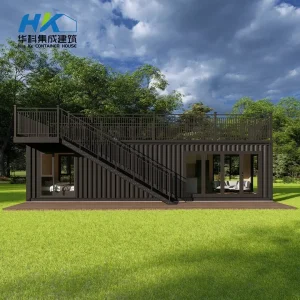
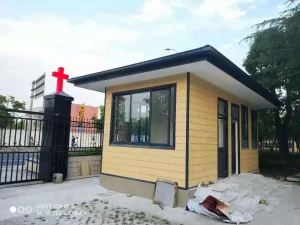
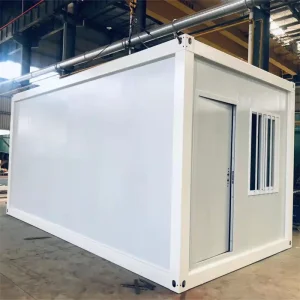
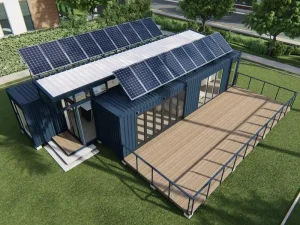
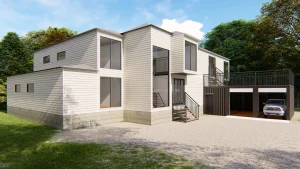
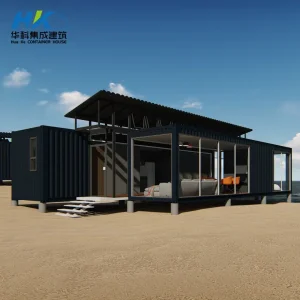
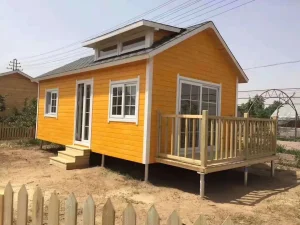
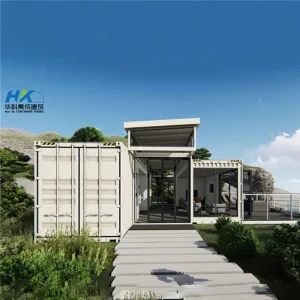
Engineered for seamless integration with modular building assemblies, high-rise curtain walls, and specialized structural enclosures.
In the domain of modern architectural fenestration, white powder-coated aluminium window systems represent the confluence of structural durability, thermal insulation efficiency, and timeless minimalist aesthetics. As a global OEM/ODM manufacturer, our enterprise operates at the intersection of metallurgical precision and advanced polymer chemical engineering. Aluminum extrusions crafted from prime-grade AA6063-T5 / T6 aluminum alloys undergo rigorous electrostatic powder coating processes to yield a resilient surface layer resistant to extreme atmospheric degradation, color fading, chemical erosion, and mechanical abrasion.
Architects, structural engineers, and global commercial building contractors demand fenestration systems that go beyond superficial visual appeal. White powder coating finishes—ranging from soft architectural mattes (RAL 9010) to ultra-bright pure whites (RAL 9016) and traffic whites (RAL 9003)—must maintain gloss retention, color stability, and corrosion prevention across multi-decadal operational lifecycles. By embedding Qualicoat Class 2 / Class 3 thermosetting powders and multi-cavity polyamide (PA66 GF25) thermal breaks, our manufacturing lines produce architectural fenestration units capable of satisfying demanding global energy performance mandates, including North American NFRC ratings, European CE/EN 14351-1 standards, and Australian AS2047 structural requirements.
The international demand for architectural aluminum windows is experiencing a paradigm shift driven by stringent decarbonization policies, urban densification, and evolving architectural design language. Commercial real estate developers and municipal infrastructure projects are systematically replacing legacy uninsulated framed fenestration with high-performance thermal break powder-coated aluminum assemblies.
High-density office towers and mixed-use developments mandate white powder-coated profiles due to their light-reflective qualities, minimizing solar heat gain coefficient (SHGC) while delivering crisp facade aesthetics.
In North America and Europe, white architectural finishes account for over 42% of single-family and multi-family residential fenestration specs, complementing modern minimalist and Scandinavian interior designs.
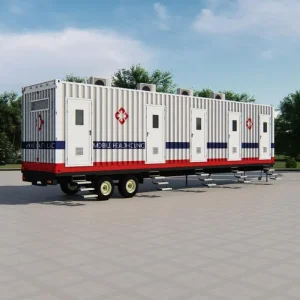
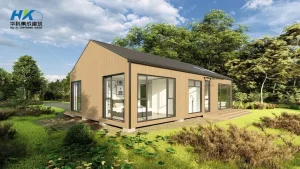
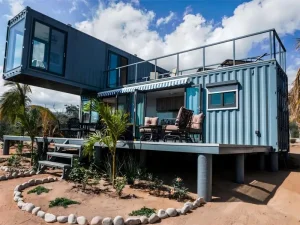
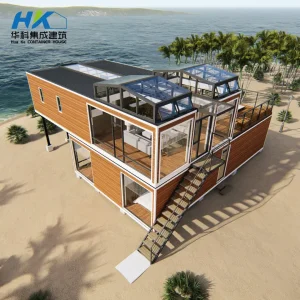
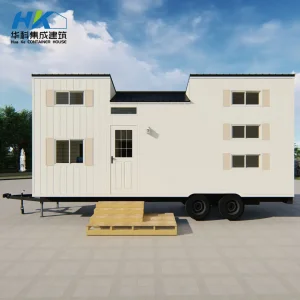
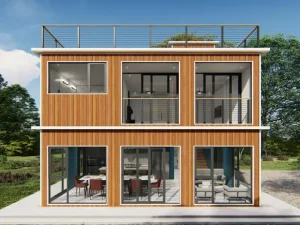
Prefabricated healthcare clinics, modular container housing, and remote site offices require lightweight, corrosion-proof windows engineered for quick assembly and rugged transit endurance.
Achieving superior weatherability on white aluminium windows requires strict execution across a multi-stage manufacturing matrix. Raw 6063-T5 aluminum extrusions are first subjected to a rigorous 11-stage chemical pretreatment process. This includes alkaline degreasing, acid etching to eliminate surface oxides, micro-demineralization, and the application of a titanium/zirconium-based chromate-free conversion coating. This non-toxic conversion layer creates a microscopic passivation barrier that guarantees covalent bonding between the aluminum matrix and the powder layer.
During electrostatic powder application, corona spray guns charge thermosetting polyester or fluoropolymer resins to -60kV. The charged particles are drawn uniformly to the grounded aluminum profiles. The coated profiles then enter a continuous curing oven maintained at 180°C to 200°C peak metal temperature (PMT) for 15 to 20 minutes. This thermal exposure triggers cross-linking polymerisation, transforming the dry powder into a solid, non-porous, hydrophobic film with uniform thickness (typically 60μm to 80μm).
| Coating Technology Class | Resin System Chemistry | UV Resistance (QUV-B) | Neutral Salt Spray (ISO 9227) | AAMA / Qualicoat Spec | Recommended Environment |
|---|---|---|---|---|---|
| Qualicoat Class 1 | Standard Architectural Polyester | 500 Hours (Gloss Ret. >50%) | 1,000 Hours Pass | AAMA 2603 | Inland Residential & Low-Rise |
| Qualicoat Class 2 | Superdurable TGIC-Free Polyester | 2,000 Hours (Gloss Ret. >75%) | 2,000 Hours Pass | AAMA 2604 | Commercial High-Rise & Coastal Zone |
| Qualicoat Class 3 | PVDF Fluorocarbon Hydrocarbon | 4,000 Hours (Gloss Ret. >85%) | 3,000+ Hours Pass | AAMA 2605 | Extreme Industrial & Tropical Marine |
Our manufacturing facility in Jiangxi, China, leverages deep vertical integration to solve global supply chain bottlenecks. By unifying raw aluminum billet casting, custom die design, high-speed extrusion lines, automated vertical powder coating lines, thermal break insertion, glazing assembly, and final QA testing within a unified 12,000m² manufacturing ecosystem, we offer international OEMs unprecedented lead-time reliability and cost advantages.
In-house extrusion tooling and surface treatment eliminate third-party delays, ensuring strict batch-to-batch color consistency ($\Delta E < 0.3$) and seamless order scaling.
Laser film thickness gauges, spectrophotometers, cross-hatch adhesion testers (ISO 2409), and automated pressure-leakage test rigs verify product compliance prior to dispatch.
Profiles are wrapped in protective blue peelable film, interleaved with foam separation sheets, and packed into steel-reinforced plywood crates for ocean freight protection.
Global building environments present diverse environmental challenges. Our engineering department tailors frame geometries, glass stacks, gasket polymers, and powder chemistries to align with regional climate loads:
Challenge: High salt spray concentrations cause filiform corrosion beneath coating films.
OEM Solution: Marine-grade pre-anodizing pretreatment combined with Qualicoat Class 2 Superdurable powder and 316-grade stainless steel hardware fittings.
Challenge: Severe thermal stress leads to structural frame bowing and indoor condensation.
OEM Solution: 34mm multi-cavity PA66 GF25 thermal breaks, triple Low-E warm-edge argon glass units ($U_w \le 0.8 \text{ W/m}^2\text{K}$), and EPDM triple sealing gaskets.
Challenge: Intense ultraviolet radiation causes color yellowing and gloss degradation on white surfaces.
OEM Solution: Inorganic titanium dioxide ($TiO_2$) white pigment formulations enriched with Hindered Amine Light Stabilizers (HALS).
The future of powder-coated aluminum window manufacturing centers on sustainability, smart integration, and circular economic principles. Our R&D engineering division is actively pursuing three major technological vectors:
Transitioning to 75%+ post-consumer recycled aluminum billets ($< 2.0 \text{ kg CO}_2/\text{kg Al}$ embodied carbon), drastically shrinking lifecycle environmental impacts for LEED/BREEAM certified projects.
Integrating Near-Infrared (NIR) reflecting technology into white powders to reject solar heat loading, reducing profile surface temperatures by up to 15°C under high sun irradiance.
Designing extrusion profiles with hidden wiring channels for electrochromic glass control systems, integrated solar sensors, and automated motorization units.
Partnering with our OEM factory extends far beyond standard profile procurement. We provide global structural engineering firms, developers, and facade contractors with a complete engineering support system:
Discover our comprehensive export product range, manufactured with high-strength structural framing and precision surface finishing.