Explore our precision-engineered product lines available for global export, custom factory modification, and wholesale procurement.
The global recreational vehicle (RV) and towable trailer market is undergoing a structural transition driven by vehicle electrification, urban density, and changing consumer demographics. Historically, towable travel trailers equipped with integrated bathroom facilities required heavy-duty pickup trucks or large SUVs with towing capacities exceeding 5,000 lbs (2,268 kg). However, the market demand has pivoted decisively toward ultra-lightweight travel trailers under 2,000 lbs dry weight (UVWR) that do not compromise on essential sanitary hygiene.
Engineering a micro travel trailer under the strict 2,000 lbs threshold while integrating a functional wet bath (combined shower, cassette/macerator toilet, and sink system) presents significant structural, aerodynamic, and weight-distribution challenges. Achieving this benchmark requires moving away from traditional wood-stud framing and heavy iron chassis toward composite sandwich panels, aluminum structural ribbing, and molded monocoque fiberglass wet modules.
Electric crossover SUVs like the Tesla Model Y, Hyundai Ioniq 5, and RAV4 Prime have maximum towing capabilities capped between 1,500 lbs and 3,500 lbs. Aerodynamic sub-2000 lbs trailers minimize drag coefficient ($C_d$), mitigating EV battery range depletion during long-distance transit.
Modern buyers demand complete autonomy. Integrating a fully pressurized hot/cold shower, cassette toilet, greywater storage, and solar battery systems into a micro-chassis allows extended boondocking without reliance on conventional campsite infrastructure.
The key to producing high-durability travel trailers under 2,000 lbs lies in advanced composite material engineering and automated manufacturing lines. Chinese OEM factories have established a dominant global competitive advantage by vertical integration of lightweight structural raw materials, advanced CNC machining, and modular assembly protocols.
Replacing heavy plywood and aluminum skins, Fiber-Reinforced Polymer (FRP) combined with High-Density XPS (Extruded Polystyrene) foam cores provides maximum thermal R-value insulation with zero risk of rot, mold, or structural delamination, shaving off up to 300 lbs per shell.
Utilizing high-tensile hot-dip galvanized steel frames with strategically placed weight-reduction punch holes (lightening holes), coupled with AL-KO style independent rubber torsion axle suspension systems to maintain maximum structural rigidity under off-road conditions.
Instead of multi-piece plastic inserts that leak over time, Chinese manufacturing centers employ single-piece fiberglass wet bath modules. This seamless construction prevents water intrusion into living space walls and weighs under 85 lbs complete with fixture hardware.
A comparative breakdown demonstrating why purchasing managers and RV dealerships source micro-travel trailers directly from specialized Chinese manufacturing hubs:
| Specification Metric | Western Regional Production (US/EU) | China Export Factory Standard (HK Prefab) | B2B Operational Impact |
|---|---|---|---|
| Wall & Roof Structure | Wood framing / Hand-laminated aluminum | Vacuum-bonded FRP + XPS Sandwich Panel | 30% Weight Reduction & 100% Rot Immunity |
| Chassis Manufacturing | Welded mild steel (heavy powder coat) | Laser-cut Hot-Dip Galvanized Light Steel | Higher Rust Resistance & Lower Tare Weight |
| Wet Bath Architecture | Modular plastic panels (Seam maintenance required) | Integrated 1-Piece Fiberglass Molded Shell | Zero-Leak Risk & Rapid 45-Min Factory Assembly |
| Base FOB Wholesale Cost | $18,000 – $28,000 USD | $6,500 – $11,800 USD | 35-50% Higher Profit Margins for Dealers |
| Custom OEM Lead Time | 16 – 24 Weeks | 4 – 6 Weeks | Agile Response to Seasonal Inventory Spikes |
The versatility of travel trailers under 2,000 lbs with an integrated bathroom extends far beyond traditional weekend camping. Enterprises worldwide leverage these compact micro-habitats across multiple revenue-generating models:
Boutique wilderness resorts use micro trailers to rapidly expand room capacity without permanent site foundation permits. Because the units include private wet baths, operators command premium nightly rates comparable to fixed luxury cabins.
Peer-to-peer and commercial rental operators favor sub-2,000 lbs units because 90%+ of consumer sedans, CUVs, and EVs possess compatible hitches. This drastically expands the addressable target customer base of renters without heavy trucks.
Geological survey teams, telecom infrastructure crews, and disaster response organizations deploy these insulated micro trailers as off-grid housing quarters equipped with sanitation facilities in high-altitude or off-road sites.
The micro travel trailer segment is transitioning from basic camping utility into intelligent, high-tech mobile ecosystems. Key engineering trends defining the next decade include:
Future micro trailers under 2,000 lbs feature flexible monocrystalline solar panels flush-mounted into pop-top or teardrop roofs, generating 400W–800W feeding into 12V/24V 200Ah Lithium Iron Phosphate (LiFePO4) power banks. This powers 12V DC inverter air conditioning and hot water heaters without requiring generator auxiliary power.
To maintain a low towing profile while maximizing interior room volume at camp, advanced manufacturers utilize linear actuator-driven slide-outs and rear pop-out tent bed extensions. This achieves an interior living floor space exceeding 100 sq ft while maintaining a towing dry weight under 1,850 lbs.
Integration of CAN-bus digital control panels and smartphone apps allowing real-time telemetry monitoring of fresh/grey water tank levels, battery state-of-charge (SOC), interior climate control, and electronic stabilizing leveling jacks.
Computational Fluid Dynamics (CFD) optimization of trailer frontal profiles and underbody belly pans reduces wind resistance by up to 28%, significantly reducing EV range anxiety and fuel consumption during highway cruising.
When sourcing micro travel trailers with bathrooms from OEM manufacturers, procurement officers must balance initial unit pricing, minimum order quantities (MOQ), container loading ergonomics, and regional certification (DOT, ADR, CE, CRIA).
| Model Class / Trim Level | Dry Weight (UVWR) | Bathroom Specs | Sample Unit Price (FOB) | Bulk Order Price (10+ Units) |
|---|---|---|---|---|
| Micro-Teardrop Lite | 1,450 lbs (657 kg) | External Quick-Tent Shower + Portable Toilet | $5,800 USD | $4,600 USD |
| Standard Micro-Camper Wet-Bath | 1,780 lbs (807 kg) | Internal Molded Wet Bath, Cassette Toilet, Sink | $8,900 USD | $6,950 USD |
| Off-Grid Solar Executive | 1,920 lbs (870 kg) | Integrated Wet Bath, Hot Water Heater, 400W Solar | $11,500 USD | $8,800 USD |
| Custom OEM Commercial Edition | Configurable (<2000 lbs) | Custom Plumbing / Marine Macerator Toilet | Quote per Spec | Quote per Spec |
By utilizing specially engineered angled shipping cradles, factory logistics teams can fit up to 4 micro travel trailers inside a single 40ft High Cube (40HQ) ocean freight container. This reduces sea transport costs per unit by up to 60%, delivering immense landed-cost advantages to overseas distributors.
Standardized global export builds require multi-voltage wiring harnesses (110V AC for North America, 230V AC for EU/Australia) along with SAE/DOT compliant LED exterior lighting, dual-gas supply lines (CE/CSA certified), and certified trailer brake systems (electric or surge brakes).
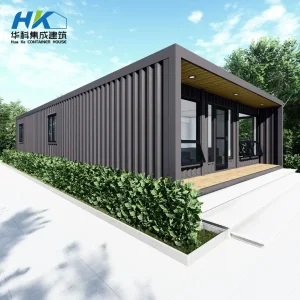
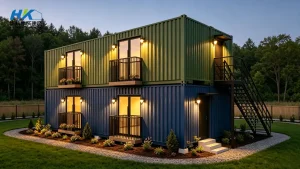
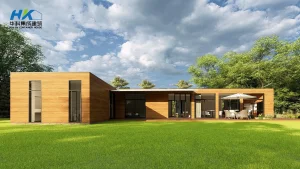
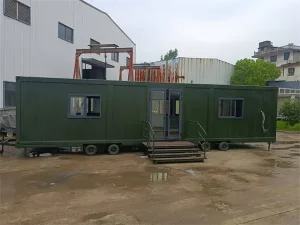
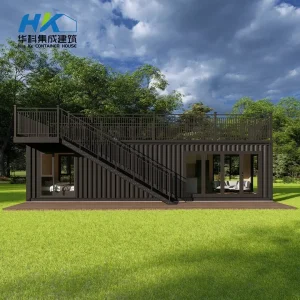
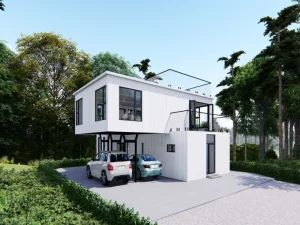
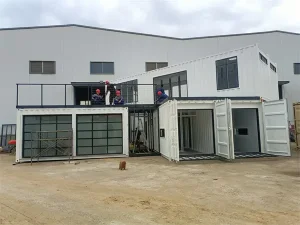
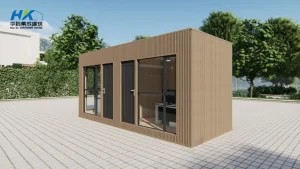
Select from our expanded portfolio of modular container homes, luxury villas, expanded mobile units, and lightweight structures.
Detailed engineering answers addressing core search intents for dealers, rental operators, and individual buyers.