As global demand shifts toward lightweight, off-grid capable, and structurally resilient recreational vehicles, establishing direct integration with Tier-1 custom pop up camper factories is vital for B2B fleet operators, distributors, and commercial overlanding brands.
Modern custom pop up campers represent a complex intersection of automotive structural engineering, aerodynamic design, and marine-grade internal integration. Traditional rigid RVs suffer from elevated drag coefficients, excessive gross vehicle weight ratings (GVWR), and severe off-road maneuverability constraints. In contrast, engineered pop up campers manufactured by advanced OEM facilities utilize low-profile travel configurations paired with automated pneumatic or mechanical expansion mechanisms, reducing wind resistance by up to 45% during transit while expanding usable volumetric floor space by over 120% at site deployment.
The transition from traditional aluminum-skinned wooden skeletons to monocoque fiberglass shells and hydrophobic polyurethane XPS sandwich panels. These advanced materials provide R-16 thermal insulation values while remaining immune to rot, delamination, and structural shear stress under high-articulation off-road conditions.
Future-proof factory setups are replacing legacy 12V systems with integrated 48V LiFePO4 battery banks, solid-state solar charging controllers, and high-efficiency MPPT arrays yielding up to 1.2kW solar input. This enables continuous operation of induction cooktops, inverter air conditioning, and water desalination without generator dependency.
Integration of CAN-bus vehicle control networks allowing push-button hydraulic and linear actuator expansion. Fleet telemetry systems enable remote diagnostics of axle load, tire pressure monitoring (TPMS), battery state-of-charge (SoC), and real-time GPS tracking for commercial rental networks.
Our 12,000 m² manufacturing plant located in Jiangxi operates dedicated robotic laser-cutting lines, automated structural welding stations, and zero-VOC dust-free paint booths. By centralizing laser cutting of hot-dip galvanized steel chassis, CNC machining of interior cabinetry, and custom mold extrusion for pop up roofs, production cycles are reduced by 40% compared to fragmented Western manufacturing models.
Direct access to China's dense upstream supply ecosystem for automotive-grade rubber seals, lithium cells, and lightweight aluminum alloys guarantees stable material costs and immunity to global supply chain disruptions.
Every pop up camper module undergoes extensive physical validation prior to container loading:
Engineered with standardized replacement components, heavy-duty independent suspension systems, and scratch-resistant RAPTOR exterior coatings. Designed specifically for high-frequency commercial rental operators requiring minimal downtime and simplified maintenance protocols.
Custom soft-walled pop up camper units serve as high-margin, low-impact hospitality accommodation. Being fully relocatable, these units bypass strict permanent building permits, enabling resort developers to operationalize wilderness sites rapidly.
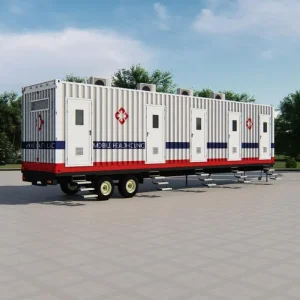
Rapidly deployable off-grid shelter modules engineered for governmental agencies, medical triage, telecommunication field teams, and disaster relief operations demanding immediate operational readiness in grid-denied environments.
Navigating international trade requires flexible manufacturing frameworks capable of adjusting to varied market expectations. Our production lines support total customization across structural dimensions, chassis gross weight specs, gas system certifications, and interior layout typologies:
To maximize ocean freight efficiency, our engineering teams offer specialized SKD (Semi-Knocked-Down) and CKD (Completely-Knocked-Down) packaging configurations. By engineering modular bolt-together chassis assemblies and flat-pack pop up roof structures, up to 4 complete units can be loaded into a single 40ft High Cube (HC) shipping container, reducing per-unit freight tariffs by over 60%.
We partner with global RV brands to manufacture white-label product lines under strict Non-Disclosure Agreements (NDAs). From proprietary fiberglass mold development to customized 3D interior CAD rendering, our engineering department acts as an extension of your in-house R&D team.
Chassis fabrication adheres to Department of Transportation (DOT) safety regulations. All electrical systems feature UL-listed wiring, dual-braided gas lines compliant with NFPA 1192 standards, and electric breakaway braking systems.
Custom pop up campers bound for the European market are engineered to satisfy Whole Vehicle Type Approval (WVTA) parameters, including mechanical inertia braking, CE-marked appliances, and EU-compliant 230V shore-power circuitry.
Fully compliant with Australian Design Rules (ADR). Features heavy-duty hot-dip galvanized steel drawbars, ADR-approved safety chains, dual-axle suspension configurations, and gas plumbing certified under AS/NZS 5601.
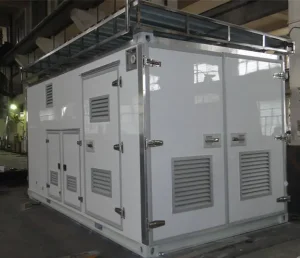
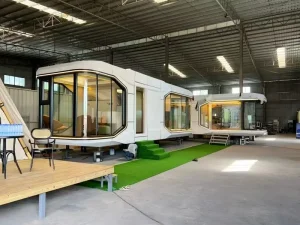
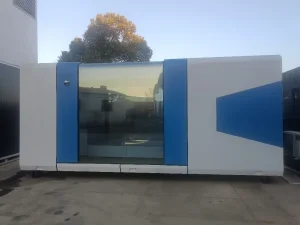
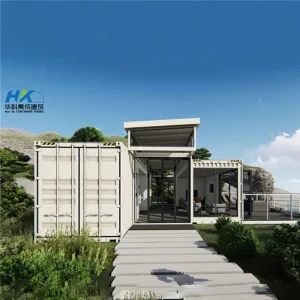
Custom pop up campers combine low-profile towing ergonomics with expanded interior volumetric space. When collapsed, their reduced height lowers aerodynamic drag by 35%–45%, directly increasing fuel efficiency and towing stability for off-road towing vehicles. Upon deployment, pneumatic or electric actuators expand the ceiling, providing full standing head-height, optimized thermal ventilation, and comfortable living amenities while maintaining a significantly lower Gross Vehicle Weight Rating (GVWR).
Our custom camper walls utilize advanced vacuum-bonded composite sandwich panels comprising an outer weather-resistant monocoque fiberglass (FRP) skin, a high-density closed-cell Extruded Polystyrene (XPS) or Polyurethane (PU) thermal insulation core (density ≥ 42kg/m³), and an interior structural honeycomb reinforcement. This 100% timber-free wall construction yields an R-value rating of up to R-16, eliminating condensation bridging and wall rot risk entirely.
Yes. We engineer heavy-duty off-road chassis using Q355B structural steel, hot-dip galvanized to a minimum coating thickness of 85 microns to guarantee corrosion resistance. Suspension configurations include custom independent trailing-arm suspensions fitted with dual heavy-duty nitrogen gas shock absorbers, heavy-coil springs, 360-degree off-road block couplers (Cruisemaster style), and 12-inch electric drum brakes tuned to your exact payload parameters.
For standardized custom pop up camper models or white-label prototypes, our standard MOQ is 1 unit for evaluation. For full OEM production runs with proprietary tooling or modified floorplans, typical batch orders start at 5–10 units per container configuration. Manufacturing lead time ranges between 30 to 45 calendar days from final 3D CAD design approval and deposit receipt.
Our engineering team builds directly to regional destination specs: 110V/60Hz AC circuitry with ETL/UL components for North America, 230V/50Hz AC with CE certification for Europe, and AS/NZS 3000 electrical standards for Australia. Gas system manifolds are factory pressure-tested and constructed to accommodate regional regulator fittings (e.g., AGA certification for Australia, DOT/NFPA for the US).