Explore factory-direct wholesale pricing, structural modular quotes, and high-efficiency pre-assembled sanitary units engineered for global deployment.

The global commercial and industrial toilet hardware market has entered a transformative era driven by rapid urbanization, strict environmental ESG mandates, and modular prefabrication.
Modern commercial procurement has evolved far beyond traditional vitreous china porcelain fixtures. Today’s international buyers—ranging from general construction contractors and municipal infrastructure planners to remote mining camp operators and luxury resort developers—require complete, rapidly deployable modular sanitation systems. The global market for wholesale toilets and prefabricated restroom structures is expanding at an estimated CAGR of 6.8%, driven by demanding site schedules, high local labor costs, and urgent water conservation metrics.
Purchasing wholesale toilet fixtures and modular restroom blocks requires evaluating five distinct commercial applications:
Why sourcing prefabricated sanitation units and commercial toilets from specialized Chinese hubs like Jiangxi delivers unprecedented cost-to-performance advantages.
By collocating high-grade steel fabrication workshops, resin-molded fiberglass plants, and specialized sanitary hardware foundries within unified industrial zones, raw material turnarounds are cut by up to 60% compared to Western assembly plants.
Utilization of high-density closed-cell polyurethane (PU) spray foam, fiberglass reinforced sandwich panels (FRP), and hot-dip galvanized steel frames guarantees 25+ year structural lifespans with zero structural rot or corrosion.
Flat-pack and expandable modular toilet cabins are engineered specifically around ISO 40ft High Cube container dimensions. A single freight container can transport up to 6 complete modular restroom units, slashing per-unit ocean freight costs.
Every commercial toilet unit undergoes 100% pneumatic leak detection, hydrostatic pressure testing for water supply pipelines, load-bearing testing, and electrical safety insulation checks prior to ocean dispatch.
Compare architectural formats, structural specs, insulation ratings, and target operational environments for enterprise wholesale orders.
| Sanitation Unit Category | Structural Frame | Insulation & Walls | Waste & Water System | Primary Commercial Use Case |
|---|---|---|---|---|
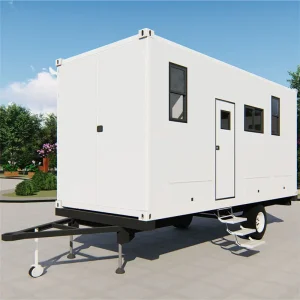
| Trailer Toilets (Mobile) | Heavy-duty towable chassis, dual-axle steel suspension | 50mm PU Spray Foam / FRP Exterior Shell | Integrated holding tanks (Fresh 400L / Waste 600L) with 12V pump | Outdoor festivals, film sets, temporary municipal events, mobile site teams |
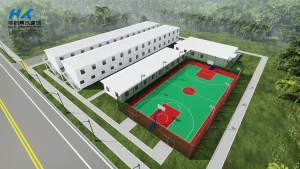
| Flat Pack Restroom Blocks | Cold-formed galvanized steel framing (3.0mm) | 60mm/75mm Rockwool or EPS Sandwich Panels | Direct municipal grid connection or centralized manifold septic hook-up | Mining labor camps, construction worker accommodation, military outposts |
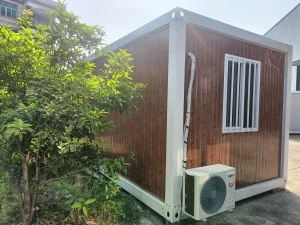
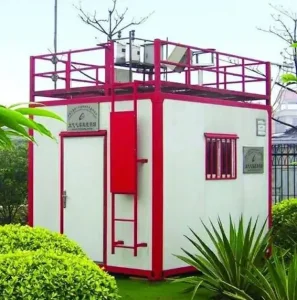
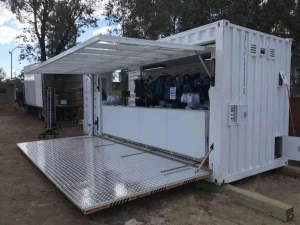
| Container Toilet Cabins (20ft/40ft) | ISO Corten Steel Modified Container Structure | Polyurethane Spray Foam + Decorative WPC interior cladding | Vacuum flush system (0.8L/flush) or macerating pump discharge | Highway service stations, public parks, commercial ports, sports complexes |
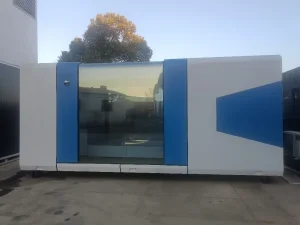
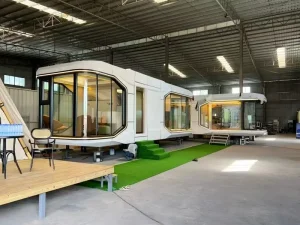
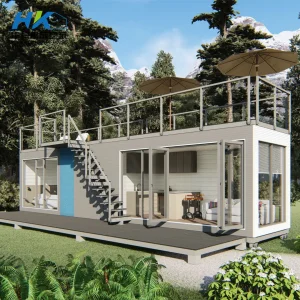
| Luxury Capsule Restrooms | Aluminum Alloy Aviation Shell + Steel Frame | Double-layer Tempered Low-E Glass + PU Insulation | Smart automated ceramic toilet, blackwater treatment tank integration | Boutique eco-resorts, glamping sites, high-end commercial rooftop venues |
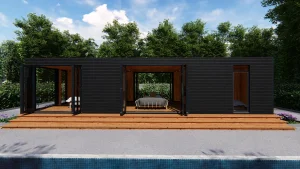
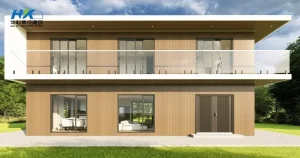
| Light Steel Villa Restrooms | Light-gauge Cold-Formed Steel (LGS) Truss | Fiber Cement Board + Rockwool Insulation | Standard domestic or commercial plumbing manifold systems | Permanent residential complexes, hotels, modular school infrastructure |
Navigating international plumbing standards, accessibility regulations, and environmental rules for successful project clearance.
B2B toilet orders targeting North America must incorporate Americans with Disabilities Act (ADA) geometry: minimum 60-inch turning radius, 32-inch clear door width, properly anchored grab bars (supporting 250 lbs minimum), and low-flow 1.28 GPF (Gallons Per Flush) fixtures compliant with EPA WaterSense standards.
European deployments require strict adherence to EN 16194 for mobile sanitary cabins, emphasizing ventilation air exchange rates, minimum indoor light intensity (100 lux), non-slip floor slip-resistance ratings (R10/R11), and CE-marked electrical wiring with RCD breaker protection.
Sanitation exports to Australia require WaterMark certification on all plumbing fixtures, backflow prevention valves compliance, and structural engineering approvals for regional wind categories (up to Cyclonic Region C).
How next-generation technology is reducing operational costs (OpEx) while elevating hygiene standards in commercial modular toilets.
The enterprise sanitation industry is undergoing a digital revolution. Buyers requesting wholesale toilet quotes are increasingly incorporating three key technological innovations into their project specifications:
Modern prefabricated restroom blocks are integrated with micro-sensor networks connected via LoRaWAN or 4G/5G gateways. Facilities managers receive real-time data on consumable levels (toilet paper, soap, water capacity), traffic counts, odor levels (NH3 and H2S gas sensors), and automatic leak detection alerts. This data-driven approach reduces janitorial labor overhead by up to 35%.
Adopted from maritime and aerospace engineering, micro-vacuum flush systems utilize differential air pressure rather than gravity, consuming only 0.5L to 0.8L of water per flush—an 85% water reduction compared to conventional gravity-fed toilets. Combined with greywater filtration systems (recycling sink wastewater to flush toilets), commercial complexes dramatically decrease municipal utility charges.
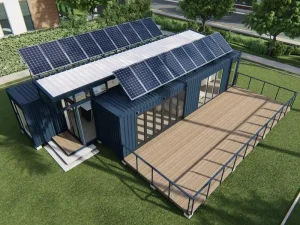
For remote sites lacking grid infrastructure, modular toilet units manufactured by HK Prefab incorporate roof-mounted solar photovoltaic arrays with integrated lithium battery storage (generating ~48 kWh/day). Paired with multi-stage anaerobic biological digestion tanks, blackwater is converted into clean effluent suitable for land irrigation, achieving 100% off-grid autonomy.
Key metrics for procurement officers evaluating B2B wholesale quotes for modular toilet cabins and sanitary structures.
While fully assembled modified container toilets offer zero site assembly work, flat-pack units cut ocean freight charges by 70%. Buyers must balance local site labor rates against freight costs to determine the optimal shipping format.
Specifying 75mm spray foam or high-density PU insulation reduces heating/cooling power consumption by up to 40% in harsh climates, lowering lifetime operational costs over a 20-year building cycle.
Ensure your supplier utilizes standardized ISO plumbing thread pitches (G 1/2", NPT 1/2") and universally replaceable ceramic valve cartridges, avoiding custom proprietary hardware that complicates long-term maintenance.
Technical answers to common queries submitted by global procurement teams, architects, and engineering contractors.
Units manufactured by HK Prefab utilize hot-dip galvanized steel framing coated with multi-layer marine-grade epoxy primer and polyurethane topcoats (total paint thickness ≥ 120μm). For severe coastal or marine environments, we offer Corten-A anti-corrosion steel shells and marine-grade 316 stainless steel interior hardware, guaranteeing a structural service life of 25+ years with minimal maintenance.
When municipal sewage connection is unavailable, our modular restrooms can be equipped with three specialized off-grid waste solutions: 1) High-capacity integrated polyethylene waste holding tanks beneath the floor frame with cam-lock pump-out valves; 2) Micro-macerating pump systems that pump blackwater vertically up to 7 meters and horizontally up to 70 meters to remote holding tanks; or 3) Integrated solar-powered biological aerobic digestion systems that convert sewage into clear non-potable water.
Yes. For sub-zero installations (e.g., Northern Canada, Scandinavia, high-altitude mining sites), we engineer deep-cold winterization packages featuring 100mm continuous spray polyurethane insulation (R-value ~28), triple-pane Low-E argon filled windows, electric heat-tracing wires wrapped around internal water pipes, and floor-embedded heating mats to prevent freezing.
Every modular restroom or trailer toilet is pre-wired in our factory according to the destination country's electrical code. We supply 110V-120V 60Hz UL/CSA compliant wiring and breakers for North America, 220V-240V 50Hz CE/EN compliant systems for Europe and Asia, and AS/NZS 3000 compliant systems for Australia/New Zealand. All units include IP65 waterproof junction boxes and RCD/GFCI master breakers.
Depending on the specific dimensions (standard 20ft unit vs. compact 1.5m x 2.0m single-stall cabins), a single 40ft High Cube ocean shipping container can accommodate up to 6 complete flat-packed 20ft modular cabins or up to 16 individual self-contained single-stall toilet pods, optimizing shipping efficiency.
Standard manufacturing lead time for a order of 20 units is approximately 15 to 25 calendar days from final CAD drawing approval. For custom architectural projects requiring specialized interior finishes or off-grid solar integrations, production lead time is typically 25 to 35 days.
Review additional prefabricated container houses, temporary worker accommodation units, expandable shops, and modular building systems available for direct export.