Factory-direct modular structural components, thermal break windows, and prefabricated building systems engineered for global supply chains.
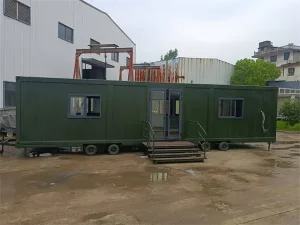
Wholesale 40ft Expandable Mobile Container Food Truck & Catering Trailer Products, Supplier
View Details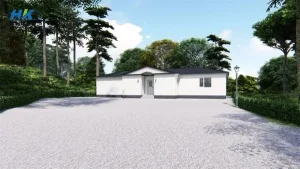
Wholesale Light Gauge Steel Structure House Quotes, Products
View Details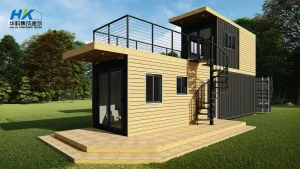
Wholesale 40ft+20ft Two-Storey a perfect blend of modern design Container House Product, Suppliers
View Details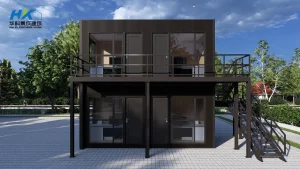
Custom customized prefab modular shipping container office Factories, Pricelist
View Details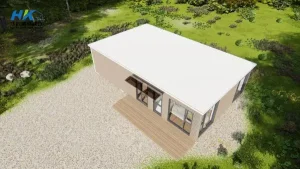
OEM 3*40ft Luxury Fully Furnished 2 Bedroom 1 Bathroom Prefabricated Container House Home Factory, Suppliers
View Details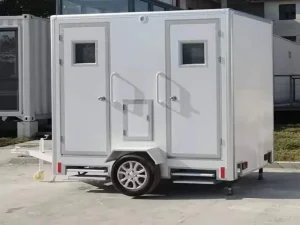
High-Quality Smart Way-transportable Prefab Mobile Fiberglass Trailer Toilet Factories, Quotes
View Details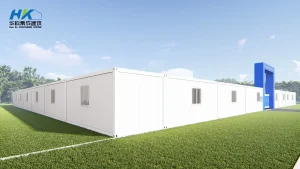
High-Quality 20FT/40FT Mini Modulartiny Portable Prefabricated Capsule Cabin Home Container Houses Pricelist, Products
View Details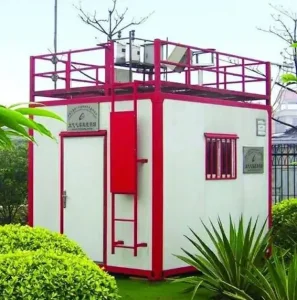
OEM Fiberglass sandwich panel Monitoring cabin Factory, Factories
View DetailsAn authoritative analysis of how thermal break aluminum window systems are transforming modern building envelopes, commercial architecture, and large-scale enterprise purchasing strategies.
Modern commercial architecture and residential developments face unprecedented regulatory pressures regarding thermal efficiency, carbon reduction, and life-cycle energy consumption. As international building energy codes—such as the European Union’s Energy Performance of Buildings Directive (EPBD) and North American ASHRAE 90.1 standards—tighten, non-insulated aluminum frame profiles are rapidly being phased out.
Aluminum possesses an inherently high thermal conductivity ($k \approx 160-200 \text{ W/m·K}$). Without a thermal break, uninsulated aluminum framing creates thermal bridges that allow rapid heat exchange between the interior and exterior environments. This causes severe energy loss, internal surface condensation, structural moisture damage, and elevated HVAC operational overhead.
A wholesale thermal break aluminium window integrates a low-conductive polyamide resin separator (PA66 with 25% glass fiber reinforcement, $k \approx 0.3 \text{ W/m·K}$) directly between the inner and outer aluminum extrusions. This structural modification cuts frame thermal transmission by up to 80%, providing direct compliance with LEED v4.1, BREEAM, and Passive House thermal efficiency frameworks.
For enterprise developers, general contractors, and fenestration importers, direct B2B sourcing from a certified wholesale thermal break aluminium windows factory offers crucial cost-efficiencies, design customization capabilities, and predictable delivery schedules. Off-the-shelf window products rarely satisfy the complex structural load calculations, acoustic requirements, and aesthetic demands of commercial developments.
Delivering exceptional structural durability, micro-climatic resilience, and thermal isolation through precision material science and manufacturing engineering.
The structural core of any premium thermal break system is the insulating strip. We utilize high-density Polyamide 66 reinforced with 25% glass fiber (PA66-GF25). This specific composite material matches the linear thermal expansion coefficient of aluminum ($\alpha \approx 2.3 \times 10^{-5} /\text{K}$), preventing delamination, profile warp, or seal failure under extreme thermal stress cycles ranging from -40°C to +80°C.
Our profile extrusions exclusively employ 6063-T6 structural aluminum alloy, delivering yield strength exceeding 170 MPa and tensile strength over 205 MPa. Wall thicknesses are engineered from 1.4mm for standard residential windows to 2.0mm+ for heavy-duty sliding doors and curtain walls, ensuring full resistance against typhoon-level wind loads and structural deflection (L/175 and L/240 standards).
Thermal break profiles are paired with advanced Low-E double or triple-glazed IGUs. Utilizing argon gas filling (90%+ purity), warm-edge composite spacers (Swisspacer or Technoform), and double-pass structural silicone seals, system center-of-glass thermal performance achieves $U_g \le 0.6 \text{ W/m²K}$ while reducing acoustic transmission by up to 45 dB (STC rating 42+).
| Performance Indicator | Standard Non-Thermal Aluminum | Standard Thermal Break (PA66 14.8mm) | High-Performance Thermal Break (PA66 24mm+) | Passive House Certified Systems (PA66 + Aerogel) |
|---|---|---|---|---|
| Frame Thermal Transmittance ($U_f$) | > 5.8 W/m²K | 2.5 - 3.2 W/m²K | 1.4 - 1.8 W/m²K | ≤ 0.8 - 1.0 W/m²K |
| Overall Window Value ($U_w$) | > 4.5 W/m²K | 2.0 - 2.4 W/m²K | 1.2 - 1.5 W/m²K | ≤ 0.75 W/m²K |
| Air Infiltration (ASTM E283) | Level 2 (Higher leakage) | Level 4 Standard | Level 6 High-Sealing | Class A1 Ultra-Airtight |
| Acoustic Isolation (STC Rating) | 22 - 26 dB | 32 - 36 dB | 38 - 42 dB | 45+ dB (Acoustic Laminate) |
| Condensation Resistance Factor (CRF) | CRF < 35 (High risk) | CRF 55 - 62 | CRF 68 - 75 | CRF > 80 (Zero condensation) |
Inside our automated production facilities: how precision engineering, robotic assembly, and stringent QC protocols ensure zero-defect exports.
Aluminum billets are heated and extruded through high-precision dies under 2500+ ton hydraulic pressure. Prior to thermal strip insertion, dedicated CNC knurling machines roll precise mechanical teeth into the internal aluminum keyways. This mechanical keying ensures maximum shear strength ($T_Q \ge 24 \text{ N/mm}$) once the polyamide strip is rolled into place.
Computer-controlled assembly equipment inserts the PA66-GF25 strips and executes three-stage precision rolling to lock the profiles into a rigid composite section. Mitered frame corners undergo automated hydraulic corner crimping combined with dual-component structural epoxy injection, establishing impenetrable corner joint shear integrity and water tightness.
Every wholesale shipment undergoes rigorous batch testing in accordance with ASTM E330 (Structural Load), ASTM E331 (Water Penetration), and ASTM E283 (Air Leakage). Surface finishes—whether Qualicoat-certified powder coating, PVDF fluorocarbon spraying, or architectural anodizing—are verified for thickness ($\ge 60\mu\text{m}$), cross-hatch adhesion, and salt spray corrosion resistance (1000+ hours).
Custom-engineered fenestration solutions designed to meet local building codes, extreme environmental conditions, and international shipping requirements.
Building codes vary significantly across international markets. Our engineering team provides full design adaptation support to ensure product compliance across global jurisdictions:
Preventing transit damage is as critical as manufacturing precision. We deploy specialized exporting packaging modules based on project delivery requirements:
Explore our complete catalog of industrial container modifications, expandable modular villas, and mobile auxiliary units.
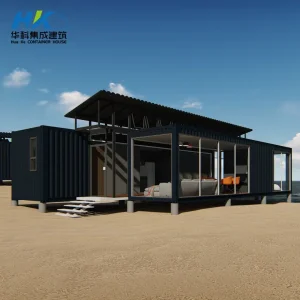
Custom 2*40ft Modified Shipping Container House Quotes, Supplier
View Details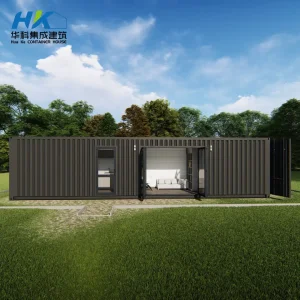
Wholesale 1 Unites 40FT Container House for Family Suites Pricelist, Supplier
View Details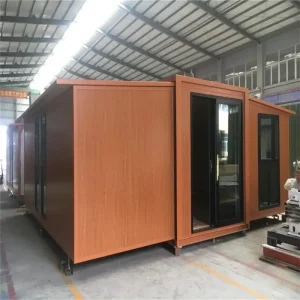
Custom 1 expand 3 expandable prefabricated container house with kitchen and bathroom . Factories, Product
View Details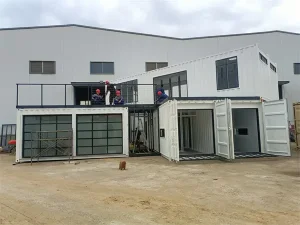
Custom Two-Story Idyllic Villa Luxury Building Container House Home Factory, Quotes
View Details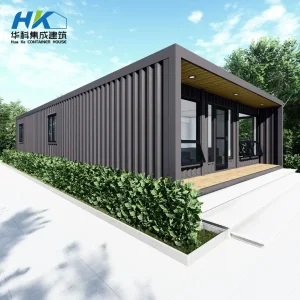
Custom 3*40ft Modified Shipping Container House Product, Products
View Details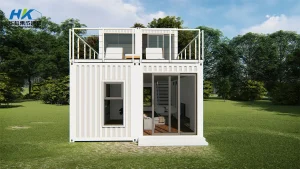
Wholesale Factory Price Customize 20/40FT Prefabricated/Prefab/Modular/Container House Quotes, Products
View Details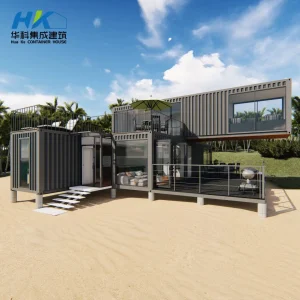
Custom 3*40ft Two Story Modular Prefabricated Shipping Container Home Factory, Pricelist
View Details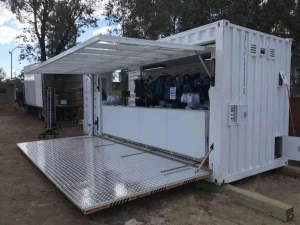
High-Quality Professional China Portable Container House - 20ft expandable shipping container shop/coffee shop . - HK prefab Pricelist, Products
View DetailsAddressing core engineering queries, technical performance metrics, material specifications, and wholesale ordering workflows for global buyers.