Explore our top-tier prefabricated units engineered for instant deployment, structural resilience, and energy efficiency across diverse international sites.
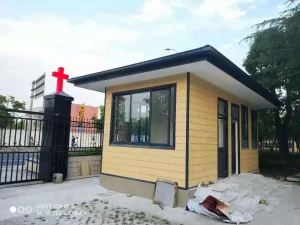
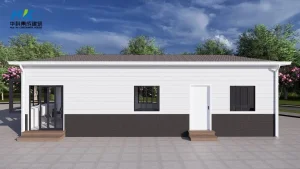
The global modular architecture sector is experiencing a paradigm shift driven by acute labor shortages, surging urban density, urgent ESG compliance mandates, and the rapid expansion of off-grid industrial projects worldwide.
In 2025, the global market valuation for portable container houses and prefabricated modular spaces crossed $85 Billion USD, with projections estimating a CAGR of 7.8% through 2032. Once considered a temporary fix for emergency sites or remote work camps, industrialized off-site manufacturing (OSM) has evolved into a dominant architectural solution for commercial real estate, luxury hospitality, specialized telecom infrastructure, and high-density workforce accommodation.
Primary manufacturing hubs centered in East Asia—most notably in specialized industrial clusters across Jiangxi, China—have consolidated supply chain verticality. Modern production facilities combine automated cold-formed steel roll-forming, high-precision laser welding, and automated polyurethane spray insulation. This degree of industrial control guarantees structural tolerances within ±1.5mm, eliminating field-fit discrepancies that historically plagued traditional on-site building practices.
Furthermore, key economic corridors in North America, Northern Europe, Australia, and the Middle East are accelerating the adoption of modified ISO shipping container structures alongside customized Light Gauge Steel (LGS) flat-pack units. Importers, government bodies, and commercial developers utilize wholesale supply networks to achieve immediate operational readiness while maintaining strict adherence to local building codes (such as Eurocodes, AS/NZS standards, and US IBC directives).
Achieving structural longevity, thermal efficiency, and transport compliance requires complex material engineering. The architectural matrix below outlines the technological evolution of wholesale portable container systems:
Transition from structural carbon steel to specialized CORTEN-A anti-corrosive steel alloy for container frames, paired with hot-dip galvanized coating (275g/m² zinc layer). This matrix guarantees a structural service life exceeding 30–50 years, even under harsh coastal or high-salinity industrial atmospheres.
Incorporation of high-density closed-cell Polyurethane (PU), Polyisocyanurate (PIR), or hydrophobic Rockwool core sandwich panels. Continuous thermal-break technology eliminates cold-bridging across steel framing, achieving U-values down to 0.18 W/m²K for arctic or desert deployments.
Factory-fitted pre-wired electrical harnesses complying with CE, UL, and SAA standards. Integrated greywater recycling loops, roof-mounted solar photovoltaic system attachments, and smart energy storage units allow complete off-grid operational independence.
| Structural System Typology | Frame Material Spec | Wall Panel Core Density | Wind Load Tolerance | Primary Logistics Method |
|---|---|---|---|---|
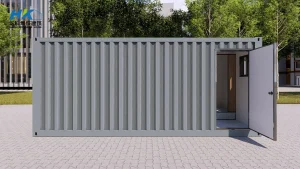
| Modified ISO Shipping Container | CORTEN-A SPA-H Anti-rust Steel | PU / Spray Foam (45 kg/m³) | Up to 250 km/h (Category 5) | Shipped as standard ISO unit |
| Flat Pack Container System | Q235B / Q355B Galvanized Steel | High-density Rockwool (120 kg/m³) | Up to 180 km/h (Category 2-3) | 4-in-1 Bundle (SOC Freight) |
| Expandable Modular Unit | Hot-dip Galvanized Box Section | EPS / Glass Wool Sandwich (16 kg/m³) | Up to 160 km/h | Folded 20ft/40ft shipping profile |
| Light Steel Villa Framing (LGS) | G550 AZ150 Cold-Formed Steel | OSB Board + Glass Wool Insulation | Custom Structural Engineering | Packed flat in 40ft HQ Container |
The structural versatility of portable container units makes them ideal for varied economic sectors, geographic terrains, and regulatory requirements:
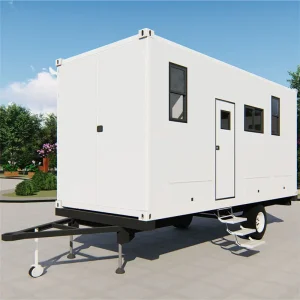
In severe desert climates like Western Australia or freezing sub-zero environments in Northern Canada, industrial operators require rugged worker accommodation. Flat-pack and modified container camps provide climate-controlled sleeping quarters, sanitary blocks, kitchen facilities, and administrative headquarters that assemble rapidly and can be re-located as exploration zones shift.
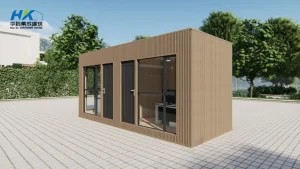
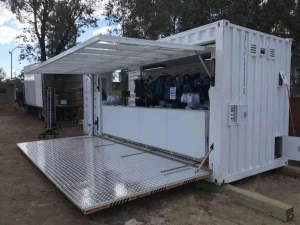
High land costs in metropolitan centers (e.g., London, Tokyo, Sydney) make long-term commercial leases risky. Customizable 20ft and 40ft expandable container shops, modular cafes, and interactive storefronts offer business operators high aesthetic flexibility, structural mobility, and fast ROI without permanent land alteration.
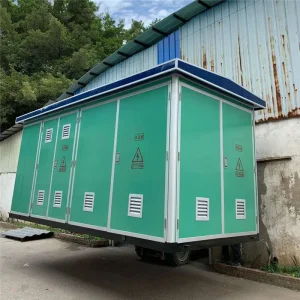
Industrial-grade equipment shelters protect sensitive fiber-optic hubs, 5G base stations, battery storage rooms, and remote generators. Engineered with electromagnetic shielding, fire-rated sandwich wall panels (Class A non-combustible), and precision HVAC systems, these shelters maintain optimal internal operational conditions under extreme environmental stress.
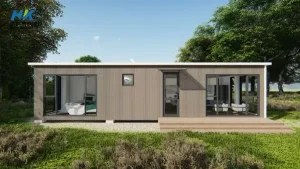
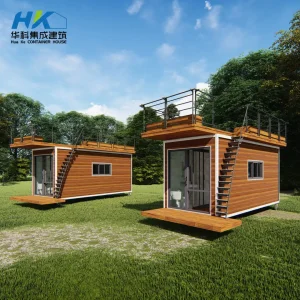
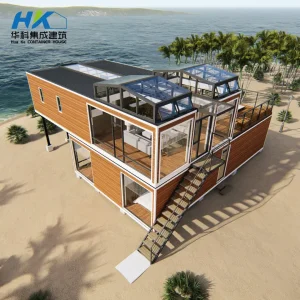
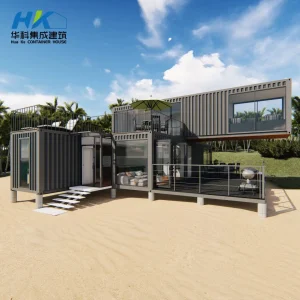
Luxury modified container villas, glass-fronted capsule homes, and modular residential layouts cater to eco-tourism developers. By integrating floor-to-ceiling double-glazed low-E windows, composite bamboo exterior cladding, and smart home automation, buyers create upscale hospitality options while preserving local eco-systems.
Navigating global B2B procurement for modular container structures requires structured evaluation of factory capabilities, structural certifications, and freight efficiency.
When sourcing wholesale portable container houses from Chinese OEMs or modular building manufacturers, international procurement teams should enforce the following quality assurance parameters:
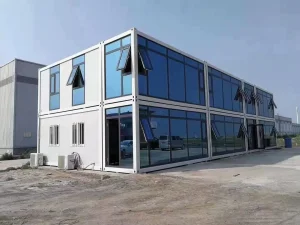
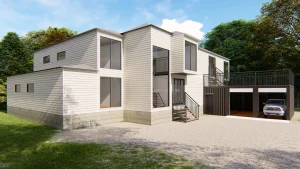
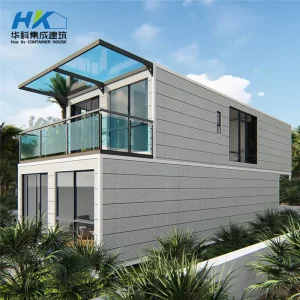
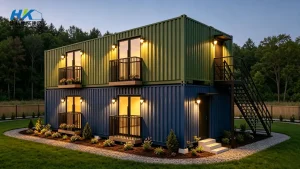
Browse our extended product lineup including specialized office units, residential apartments, luxury villas, and custom trailer solutions.
Find authoritative answers regarding engineering standards, custom production lead times, thermal efficiency, and global logistics for wholesale container house orders.