Explore our premium factory-direct prefabricated steel structures, modular living units, and equipment shelters designed for rapid solarization and deployment in Uzbekistan's industrial hubs.
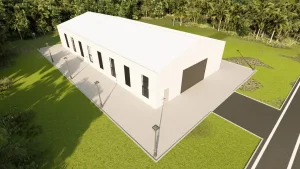
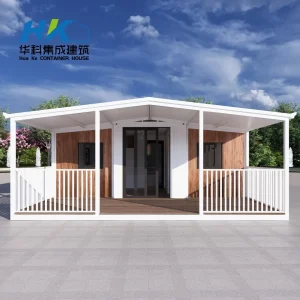

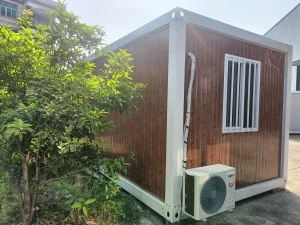
Uzbekistan stands at the threshold of a massive renewable energy transformation. Under the nation's ambitious "Uzbekistan — 2030" Strategy, the Republic aims to increase the share of renewable energy sources in total electricity generation to over 40%, requiring the installation of more than 12 GW of combined solar PV and wind capacity. Given Uzbekistan’s exceptional solar climate—averaging over 300 sunny days per year with global horizontal irradiance (GHI) ranging from 1,600 to 1,800 kWh/m²/year—photovoltaic technology is the core driver of economic expansion, grid modernizations, and industrial self-sufficiency.
As state-owned power tariffs rise for commercial and industrial (C&I) consumers across regions like Tashkent, Samarkand, Bukhara, and Namangan, private enterprises, agricultural conglomerates, and mining facilities are rapidly turning to direct OEM Chinese manufacturing partnerships. Securing factory-direct tier-1 solar module quotes allows domestic engineering, procurement, and construction (EPC) contractors to optimize capital expenditures (CAPEX), lower Levelized Cost of Energy (LCOE), and guarantee long-term operational resilience.
Furthermore, Uzbekistan’s geographic position along the Silk Road logistics corridor (linked via China-Kyrgyzstan-Uzbekistan railway routes and Khorgos/Alashankou land ports) facilitates streamlined customs transit for containerized photovoltaic modules, mounting structures, and hybrid inverter energy storage systems directly from Chinese manufacturing bases.
Selecting the optimal module architecture is critical for maximizing yields under Uzbekistan's continental climate conditions, characterized by extreme temperature fluctuations (-20°C in winter to +45°C in summer) and desert dust deposition in regions like Karakalpakstan. OEM factories in China have completed the industrial transition from legacy p-type PERC to advanced N-type TOPCon (Tunnel Oxide Passivated Contact) and HJT (Heterojunction Technology) architectures.
N-type TOPCon modules boast a power temperature coefficient as low as -0.30%/°C (compared to -0.35%/°C for PERC). During high summer heat waves in Navoiy and Surkhandarya, TOPCon modules deliver up to 3.5% higher actual daily energy yield.
Dual-glass bifacial solar panels capture rear-side reflection from dry soils and concrete roofs in Central Asia. Delivering a bifaciality rate of 80–85%, overall plant energy generation increases by 10% to 25% depending on ground clearance and mounting tilt.
Custom panels for Central Asian deployments feature 3.2mm tempered anti-reflective glass with hydrophobic coating, IP68 junction boxes, and heavy-duty 35mm anodized aluminum frames designed to withstand 5400 Pa mechanical snow loads and 2400 Pa wind pressure.
| Photovoltaic Technology Parameter | Legacy P-Type PERC | N-Type TOPCon (Recommended) | N-Type HJT (Premium) |
|---|---|---|---|
| Mass Production Efficiency | 20.8% – 21.5% | 22.5% – 23.2% | 23.0% – 23.8% |
| Temperature Coefficient (Pmax) | -0.35% / °C | -0.30% / °C | -0.26% / °C |
| Bifaciality Factor | 65% – 70% | 80% – 85% | 85% – 95% |
| First-Year Power Degradation | ≤ 2.0% | ≤ 1.0% | ≤ 1.0% |
| 30-Year Linear Power Output | 84.8% | 87.4% | 88.8% |
| FOB Factory Price Indicator ($/Wp) | $0.085 – $0.095 | $0.092 – $0.110 | $0.125 – $0.145 |
China produces over 85% of the world’s solar polysilicon, wafers, cells, and finished modules. Partnering directly with Chinese solar panel manufacturers offers Central Asian importers, turnkey project developers, and industrial clients unmatched structural advantages:
Chinese gigafactories combine ingot pulling, wafer slicing, cell passivation, and automated robotic glass assembly within single industrial clusters. This reduces intermediary margins and eliminates transit delays between sub-suppliers.
Leading tier-1 facilities utilize 100% triple EL (Electroluminescence) testing before and after lamination to guarantee micro-crack-free panels. Products strictly comply with TÜV Rheinland, CE, ISO9001, and IEC 61215 / IEC 61730 international standards.
Direct block-train freight shipments operating from major Chinese transport hubs (such as Xi'an, Zhengzhou, and Yiwu) reach Tashkent, Samarkand, and Chukursay container depots in just 12 to 18 days, guaranteeing reliable site schedules.
Solar energy technology in Uzbekistan is not limited to mega-utility ground arrays. Factory-direct sourcing enables customized deployment across diverse sector scenarios:
Textile mills in Fergana Valley, agricultural cold-storage hubs in Tashkent Region, and automotive processing facilities are implementing rooftop solar installations ranging from 100 kW to 2 MW. By offsetting daytime peak electricity tariffs, enterprise payback periods drop to 3.2 to 4.5 years.
Navoiy Mining and Metallurgical Combine (NGMK) and Almalyk (AMMC) site developments require reliable off-grid power generation. Hybrid systems combining 580W+ N-type TOPCon panels, lithium BESS (Battery Energy Storage Systems), and modular container accommodation provide continuous 24/7 power.
In arid sectors of Karakalpakstan and Kashkadarya, direct-drive solar pumping systems empower farmers to extract irrigation water without reliance on diesel generators or unstable rural grids, dramatically expanding cotton, fruit, and grain yields.
When issuing Requests for Quotation (RFQs) to Chinese factories for photovoltaic shipments bound for Uzbekistan, procurement officers and EPC engineers should specify structural details to prevent delays and verify compliance:
Get direct factory pricing, localized engineering assistance, and customized containerized solar solutions tailored to your project in Uzbekistan.
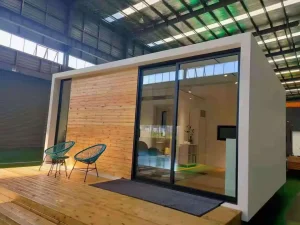
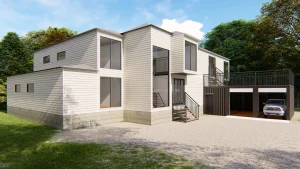
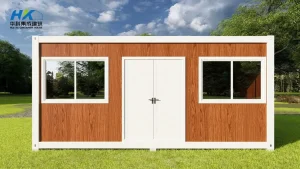
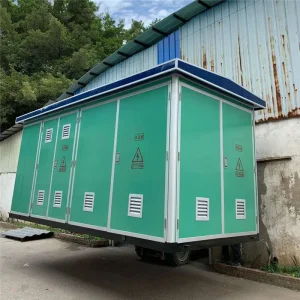
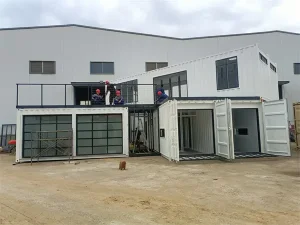
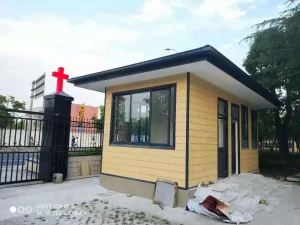
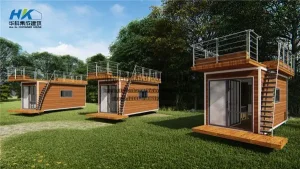
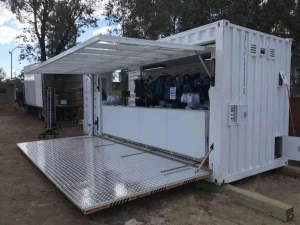
Send Inquiry NowBrowse our complete OEM lineup of modular structures, light steel villas, equipment shelters, and customized solar-ready buildings for commercial, industrial, and residential buyers.
Expert insights covering customs, technical standards, environmental resilience, and delivery routes for procurement managers and developers in Central Asia.