Houston Market Procurement Whitepaper

High-Quality Temporary Building Product & Suppliers for the Houston Market

Engineering Resilient, Code-Compliant & Scalable Prefabricated Modular Structures for Texas Energy, Maritime, and Commercial Ecosystems

Send Inquiry Now
Local Market Deep Dive

Navigating Houston’s Industrial Expansion with Advanced Modular Architecture

An authoritative technical brief on deploying rapid-assembly temporary buildings across Greater Houston, the Energy Corridor, and the Port of Houston industrial zone.

The Houston Commercial & Petrochemical Landscape

Greater Houston stands as the undisputed energy capital of the world, housing over 4,700 energy-related firms and managing extensive operations along the Houston Ship Channel. The sheer velocity of infrastructure development in regions like Baytown, Pasadena, Freeport, and the Energy Corridor demands hyper-flexible structural accommodation. Permanent construction frequently encounters localized permitting bottlenecks, labor shortages, and protracted timelines. High-performance temporary buildings and prefabricated modular units have evolved from short-term stopgaps into critical strategic assets.

Deploying temporary buildings in the Texas Gulf Coast climate requires rigorous engineering. Structures must survive Climate Zone 2A (Hot-Humid) weather profiles—characterized by intense summer thermal loads, elevated relative humidity, and severe weather events including high-velocity hurricane winds (ASCE 7 standards).

Key Houston Engineering Mandates

  • Wind Resistance: Structural frame design rated to withstand 140+ MPH gust winds per Texas Department of Insurance (TDI) coastal guidelines.
  • Thermal Performance: High-density Polyisocyanurate (PIR) and Polyurethane (PU) insulation cores delivering up to R-21 thermal resistance to minimize HVAC power consumption.
  • Corrosion Control: Multi-stage hot-dip galvanized steel chassis with C4/C5 maritime-grade anti-corrosion fluorocarbon coatings for Port of Houston coastal exposures.
  • Rapid Permitting Support: Engineering blueprints compliant with International Building Code (IBC) and Texas Industrialized Building Code (IEBC).
70%
Faster On-Site Deployment
140+
MPH Wind Load Capacity
40%
Cost Savings vs Traditional Build
R-21
Thermal Envelope Performance
Featured Solutions for Houston

High-Priority Temporary Building Systems for Texas Infrastructure

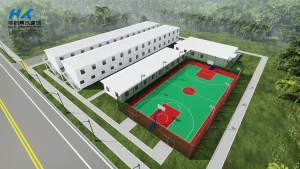
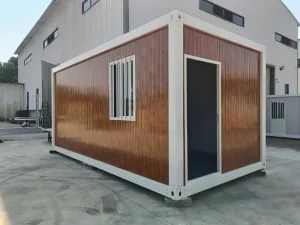
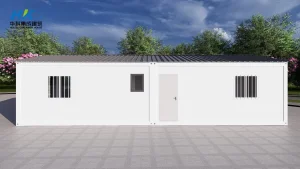
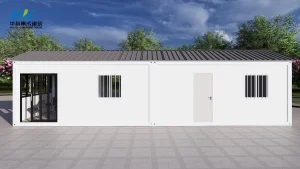
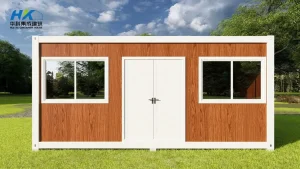
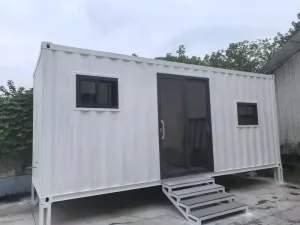
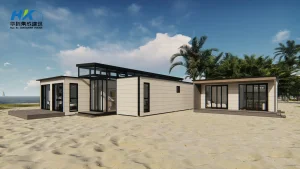
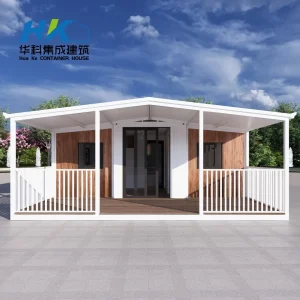
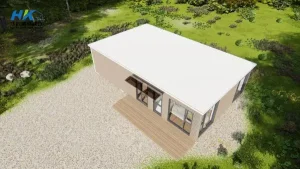
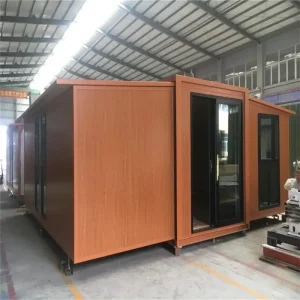
Select prefabricated models optimized for energy site offices, refinery turnarounds, emergency housing, and commercial extensions.

Macro Supply Chain Insights

Global Construction Paradigms & Chinese Manufacturing Synergies

How direct OEM partnership with Chinese advanced modular fabrication clusters unlocks architectural efficiency and cost superiority for North American procurement officers.

Global Shift to Off-Site Prefabrication

The global construction sector is undergoing a structural transition toward Off-Site Prefabricated Construction (OSC). By moving up to 90% of structural fabrication into climate-controlled manufacturing plants, global developers mitigate site labor shortages, eliminate weather delays, and reduce material waste by over 45%.

Chinese Precision Metallurgy & Scale

China accounts for over 60% of world steel output and leads global modular manufacturing innovation. Chinese manufacturing hubs utilize automated robotic welding, CNC plasma profiling, and continuous cold-roll forming lines, delivering structural steel precision within millimeter tolerances at unbeatable scale.

Economic Arbitrage for Houston Procurement

Direct sourcing from advanced Chinese factories provides Houston enterprises with a 35% to 50% net cost advantage compared to domestic US modular assembly yards—even after accounting for trans-Pacific ocean freight, customs tariffs, and drayage to Texas job sites.

Technical Case Study: Structural Integrity & Export Standard Compliance

Leading Chinese modular factories implement rigorous Quality Assurance (QA/QC) regimes, utilizing Q235B and Q355B structural carbon steel framing certified to international standards. For US-bound shipments, modules are designed to integrate UL-listed electrical wiring components, ANSI/ASHRAE energy management standards, and International Building Code structural deflection criteria ($L/240$).

Operational Use Cases

Tailored Application Scenarios Across Greater Houston

Engineered temporary building solutions serving diverse industry sectors across the Texas Gulf Coast.

1. Downstream Petrochemical Refineries & Plant Turnarounds

During plant maintenance turnarounds in Baytown and Pasadena, thousands of specialized contractors arrive on-site for weeks at a time. Blast-resistant modular offices, worker break rooms, and safety command posts are deployed rapidly to provide secure, climate-controlled environments without interfering with ongoing processing facilities.

2. Port of Houston Logistics & Freight Terminals

As the Port of Houston expands container handling capacity at Barbours Cut and Bayport terminals, logistics operators require fast-track administrative buildings, customs checkpoint guard houses, and driver intake centers. Flat-pack modular container units offer minimal footprint disruption and can be expanded or relocated as cargo flow dictates.

3. Energy Corridor EPC Field Engineering Hubs

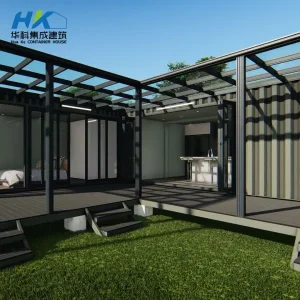
Major Engineering, Procurement, and Construction (EPC) firms executing infrastructure projects west of Houston utilize multi-container interconnected complexes. These temporary facilities feature executive conference suites, open-plan engineering drafting spaces, and fully equipped breakroom modules.

4. Disaster Preparedness & Post-Hurricane Housing

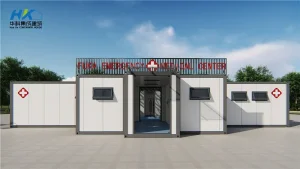
The Texas Gulf Coast’s exposure to tropical storms necessitates emergency preparedness infrastructure. Heavy-duty flat-pack temporary buildings can be stored in stockpiles and deployed within 48 hours to serve as emergency medical stations, relief command centers, or temporary displaced worker housing.

Procurement Roadmap

Strategic Purchasing & Logistics Execution for Houston Projects

A step-by-step framework for corporate procurement teams purchasing factory-direct modular structures from China for seamless delivery to Texas destinations.

Step 1: Engineering & Architectural Alignment

Collaborate with factory engineers to finalize CAD/BIM floor plans, structural steel profiles, window placement, and wall panel core specifications (Rockwool or PIR flame-retardant panels). Confirm compliance with Texas energy conservation codes.

Step 2: Manufacturing & Pre-Assembly Testing

Factory fabrication includes 3D structural fit testing, electrical circuit continuous load testing, and hydrostatic waterproofing checks. Real-time video inspections ensure complete transparency prior to disassembly and container loading.

Step 3: Trans-Pacific Ocean Freight to Port of Houston

Flat-pack units are bundle-packed into SOC (Shipper Owned Containers) or loaded into 40ft High-Cube shipping containers. Direct ocean shipping lines connect major Chinese ports (Ningbo, Shanghai, Shenzhen) directly to Houston, taking approximately 28 to 35 transit days.

Customs Clearance & Last-Mile Delivery in Texas

Upon arrival at the Port of Houston, cargo clears US Customs (CBP) and USDA inspections via experienced customs brokerage partners. Flat-pack modular kits are transported via standard flatbed trucks directly to job sites across Harris County, Fort Bend, or Galveston County for immediate crane placement and bolt assembly.

Full Product Portfolio

Comprehensive Prefabricated Building Range for Global Procurement

Explore our complete OEM/ODM product lineup engineered for commercial, industrial, and residential applications.

Engineering Matrix

Structural Material & Environmental Specification Breakdown

Comparative technical metrics for evaluating structural compliance for Texas commercial installations.

Component Technical Standard / Specification Houston & Texas Climate Benefit
Main Frame Metallurgy Q355B Cold-formed Hot-Dip Galvanized Steel (2.5mm - 4.0mm profile thickness) Resists coastal salt spray rust along Houston Ship Channel & provides 140+ MPH wind load capacity.
Wall Panel Envelope 50mm - 100mm Polyisocyanurate (PIR) / Structural PU Sandwich Panels (Density: 40kg/m³) Eliminates thermal bridging; achieves up to R-21 rating to drastically cut summer AC power demand.
Roofing & Waterproofing 0.5mm Color Steel Sheet + 100mm Glass Wool / PIR + Double-folded standing seam joints Prevents water ingress during heavy Gulf Coast torrential downpours and tropical storm surges.
Glazing & Windows Double-pane Low-E Argon-filled Tempered Glass in Heavy-Duty Aluminum Frame Blocks solar heat gain (SHGC < 0.25) while withstanding severe atmospheric pressure fluctuations.
Flooring System 18mm Fiber Cement Board + 2.0mm Heavy-Duty Commercial PVC / SPC Click Flooring Waterproof, termite-proof, fire-resistant floor substrate suitable for heavy foot traffic in work camps.
Frequently Asked Questions

Expert Knowledge Base: Temporary Buildings in Houston

Direct technical answers to common queries raised by US construction managers, developers, and procurement officers.

How do temporary modular buildings comply with Houston and Harris County building codes?

Temporary and prefabricated buildings destined for Houston must adhere to the International Building Code (IBC) standards adapted by the City of Houston Code Enforcement and Harris County Engineering Department. Key structural criteria include wind load resilience under ASCE 7-16 (requiring structural stability against 130–150 MPH wind speeds for coastal zones), foundation tie-down anchoring plans, and energy conservation compliance under IECC Zone 2A. Factory engineering drawings, wind load calculation reports, and material flame-spread certification are provided directly to facilitate local permitting approval.

Why choose PIR or Polyurethane sandwich panels for temporary offices in Texas?

Houston experiences extended periods of extreme heat and high humidity during summer months. Standard EPS (Expanded Polystyrene) panels often lack sufficient thermal resistance and fire endurance. PIR (Polyisocyanurate) and PU (Polyurethane) sandwich panels offer superior closed-cell thermal performance (R-values ranging from R-14 to R-25), preventing moisture accumulation inside wall cavities, resisting mold growth, and significantly reducing electricity loads for HVAC cooling units.

What is the expected lifespan of a prefabricated steel temporary building?

With a hot-dip galvanized Q355B steel chassis and marine-grade anti-corrosion coating, high-quality temporary container structures have a structural design lifespan of 25 to 30 years for permanent or semi-permanent installations. Even under high-frequency relocation cycles (e.g., shifting across construction job sites every 12 to 24 months), structural integrity is fully maintained due to rigid corner casting design and bolt-interlocking steel frameworks.

What are the ocean freight and delivery timelines from China to the Port of Houston?

Production cycles generally range from 15 to 25 days depending on project order volume and customization complexity. Direct trans-Pacific ocean shipping from Shanghai or Ningbo ports to the Port of Houston (Barbours Cut / Bayport terminals) typically takes 28 to 35 days. Total door-to-jobsite lead time across Greater Houston averages 45 to 60 days from final shop drawing approval.

Can flat-pack container units be stacked into multi-story building complexes?

Yes. Heavy-duty flat-pack container buildings feature reinforced corner columns and structural floor frames engineered to support vertical stacking up to 3 stories high without requiring external structural skeleton support. Inter-module structural twist-lock connections and internal or external steel staircases are supplied to create large-scale modular worker camps, field offices, and dining halls.

How do cost dynamics compare between domestic US modular rentals and factory-direct China procurement?

Renting temporary modular trailers domestically in the US can incur monthly fees ranging from $600 to $1,500 per module, plus substantial delivery, setup, and removal fees. For projects spanning longer than 12 months, purchasing factory-direct modular units from China yields significant cost savings—often paying for the structural asset entirely while leaving a high-value, reusable structural asset on your corporate balance sheet.

Accelerate Your Project Timeline

Ready to Deploy High-Quality Temporary Buildings in Houston?

Consult with our structural engineering team today. Get comprehensive CAD design proposals, factory-direct price estimates, and optimized shipping plans within 24 hours.

Send Inquiry Now