Explore top-tier solar technology optimized for utility, C&I, and off-grid mining projects across Arequipa, Moquegua, Tacna, and Lima.



Peru stands at the threshold of a historical energy transition. Driven by incredible solar resource availability in its southern corridors—most notably across the regions of Arequipa, Moquegua, Tacna, and Ica—the nation exhibits some of the highest Global Horizontal Irradiance (GHI) and Direct Normal Irradiance (DNI) levels globally, often exceeding 6.5 to 7.2 kWh/m²/day. This places Peru on par with the world-renowned Atacama solar corridor, creating an unparalleled foundation for utility-scale photovoltaic (PV) generation, industrial decarbonization, and rural microgrid electrification.
Despite these favorable natural conditions, Peru’s power architecture faces structural challenges: high energy tariffs in remote industrial zones, transmission line congestion along the coastal national grid (SEIN - Sistema Eléctrico Interconectado Nacional), and increasing decarbonization mandates enforced on the country's colossal mining sector. To address these demands, enterprise energy buyers, Independent Power Producers (IPPs), and EPC contractors are seeking advanced, high-reliability solar panel solutions capable of providing long-term structural durability and optimized Levelized Cost of Energy (LCOE).
Peru is the world's second-largest copper producer. Major mining operations located at altitudes above 3,500 meters require mega-watt scale PV systems equipped with low thermal coefficient panels to lower diesel dependency.
Agro-export hubs along the arid coastal belt (Ica, Piura, Lambayeque) utilize solar water pumping and hybrid PV-diesel microgrids to optimize irrigation costs for asparagus, avocado, and blueberry cultivation.
Over 1,000 isolated communities in the Sierra and Selva regions rely on off-grid containerized solar-plus-storage solutions, calling for resilient modules with IP68 encapsulation and high UV resistance.
Why legacy P-Type PERC panels are being superseded by N-Type TOPCon and Heterojunction technologies in high-irradiance Peruvian environments.
The photovoltaic industry has entered the N-Type silicon era. For procurement managers sourcing solar panels for Peruvian installations, understanding cell physics and architectural degradation mechanics is critical for protecting long-term project ROI.
Standard P-type PERC panels suffer from a temperature coefficient of roughly -0.35%/°C. In contrast, our advanced N-Type TOPCon modules achieve a low temperature coefficient of -0.29%/°C, while Heterojunction (HJT) modules reach an extraordinary -0.26%/°C. At high elevations in the Andes where midday solar radiation heats panel surfaces beyond 60°C despite cold ambient air, N-Type modules retain significant voltage stability, delivering up to 4.8% higher daily energy yield compared to conventional modules.
Southern Peru’s desert terrain—characterized by high-albedo sand, light granite rock, and concrete surfaces—offers exceptional rear-side reflections. Our dual-glass bifacial panels achieve a bifaciality factor of 80% to 85%. When mounted on single-axis solar trackers, the rear-side power gain adds an extra 10% to 25% total energy output, substantially lowering the project’s LCOE.
| Technical Parameter | Legacy P-Type PERC | N-Type TOPCon (Our Standard) | HJT (Heterojunction) |
|---|---|---|---|
| Module Efficiency | 20.5% - 21.3% | 22.5% - 23.2% | 22.8% - 23.5% |
| Temperature Coefficient | -0.35% / °C | -0.29% / °C | -0.26% / °C |
| First-Year Degradation | ≤ 2.0% | ≤ 1.0% | ≤ 1.0% |
| Annual Degradation (Years 2-30) | -0.55% / year | -0.40% / year | -0.32% / year |
| Bifaciality Factor | 70% ± 5% | 80% ± 5% | 85% ± 5% |
| Encapsulation Layer | Standard EVA | POE / EPE Dual-Layer | POE (Polyolefin) |
| Resistance to PID/LID | Moderate | Zero LID / High Anti-PID | Zero LID / Zero PID |
Furthermore, our solar modules feature 16BB (Multi-Busbar) micro-gap technology. By shrinking wire thickness and increasing busbar density, internal resistance is reduced by 15%, while micro-crack propagation risks—caused by seismic activity or heavy transport across rough unpaved Peruvian roads—are virtually eliminated.
From coastal ports to high-altitude mining basins, explore how our photovoltaic systems integrate with Peru’s commercial infrastructure.
Engineered specifically for utility-scale solar farms in Arequipa and Tacna. Utilizing 1500V DC system architecture lowers Balance of System (BOS) cabling costs by up to 12%, while reducing transmission losses across long inverter distances.
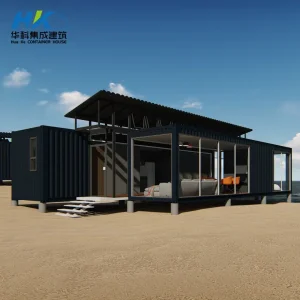
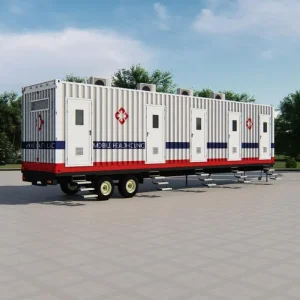
Designed for off-grid mining camps, telecom towers, and remote Andean communities. Integrates N-Type bifacial solar panels, lithium (LFP) energy storage, and smart energy management systems (EMS) inside ruggedized transport containers.
Our bilingual technical team produces customized yield simulations (PVsyst reports), single-line diagrams (SLD), and structural load assessments within 24 hours.
How our smart manufacturing lines in China deliver tier-1 quality control, competitive pricing, and seamless sea freight to Callao and Matarani.
Purchasing solar modules directly from China’s advanced manufacturing hubs offers significant economic advantages to Peruvian energy enterprises, provided quality assurance and supply chain logistics are managed flawlessly.
Our smart manufacturing facility leverages 100% automated manufacturing lines equipped with Artificial Intelligence-driven Automated Optical Inspection (AOI). Every solar cell undergoes EL (Electroluminescence) testing twice—once before lamination and once immediately after—eliminating micro-cracks, soldering voids, and cell mismatch prior to shipment. Manufacturing Execution Systems (MES) track every serial number, giving Peruvian procurement managers complete trace-back transparency from raw silicon ingot to final container loading.
Established maritime shipping routes from Shanghai/Ningbo ports directly to Puerto del Callao (Lima) and Puerto de Matarani (Arequipa), offering 28 to 35-day ocean transit times with competitive freight rates.
Pallets are reinforced with heavy-duty corner protectors, vacuum-sealed moisture barrier films, and vertical anti-vibration strapping to ensure zero transit damage across maritime and Andean mountain journeys.
Full documentation support including Certificate of Origin (Form E / China-Peru FTA), CE, IEC 61215, IEC 61730, UL 61730, and ISO 9001/14001, facilitating preferential tariff customs clearance with SUNAT.
A rigorous financial evaluation guide for Peruvian project developers, financial institutions, and procurement specialists.
When evaluating solar panel quotes for projects in Peru, initial module cost per watt ($/Wp) represents only one fraction of the financial equation. Sophisticated investors prioritize Total Cost of Ownership (TCO) and Total LCOE impact.
The Levelized Cost of Energy (LCOE) is calculated using the following primary metrics:
By selecting our High-Efficiency N-Type TOPCon Dual-Glass panels, Peruvian projects achieve three critical financial advantages:
Select from our certified solar equipment catalog designed for commercial, industrial, municipal, and residential deployments.


Technical, regulatory, and logistics details clarified by our solar engineering and export team.
Partner with an industry-leading solar module manufacturer. Contact our dedicated Latin America engineering and wholesale export team for customized quotes, PVsyst yield simulations, and factory-direct pricing.
Send Inquiry Now