Explore our core prefabricated equipment enclosures optimized for Ho Chi Minh City’s tropical humidity, high wind loads, and industrial site requirements.
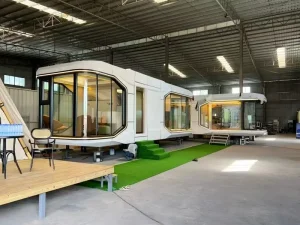
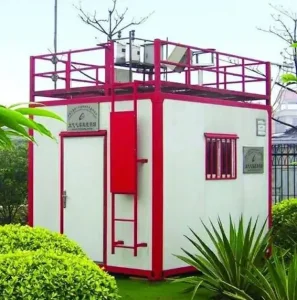
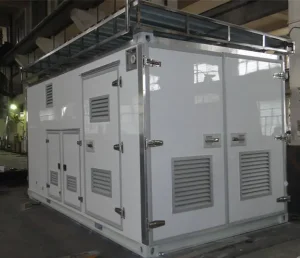
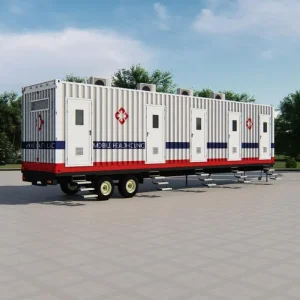
As the undisputed economic center and technology engine of Vietnam, Ho Chi Minh City (HCMC) is experiencing an unprecedented expansion in industrial automation, 5G telecommunications infrastructure, hyperscale data centers, and renewable energy grids. With major investments flooding into Thu Duc City, Tan Thuan Export Processing Zone, and the broader southern key economic zone (Binh Duong, Dong Nai, Long An), the demand for high-reliability, climate-adapted Equipment Shelters has increased by over 34% year-over-year.
Equipment shelters serve as the frontline defense for mission-critical hardware—housing ultra-sensitive fiber optic termination racks, high-voltage switchgears, cellular base stations (BTS), edge-computing servers, and Battery Energy Storage Systems (BESS). In tropical environments like Ho Chi Minh City, characterized by an aggressive monsoon season, high solar irradiance, and elevated atmospheric salt content from coastal proximity, field equipment failures stem primarily from thermal stress and moisture ingress.
This comprehensive technical whitepaper provides infrastructure managers, telecom engineers, procurement leads, and EPC contractors with precise technical specifications, regulatory compliance framework under Vietnam Standards (TCVN), and realistic pricelists for equipment shelter deployment across Greater Ho Chi Minh City.
HCMC experiences peak ambient temperatures exceeding 39°C with direct solar panel surface heat reaching 68°C. Without high-density polyurethane (PU) or rockwool insulation with low thermal conductivity (λ ≤ 0.022 W/m·K), internal temperatures spike rapid HVAC failure and battery thermal runaway.
Relative humidity fluctuates between 80% and 98% during the May-to-November rainy season. Thermal bridging in standard containers causes internal condensation, leading to short-circuits,PCB corrosion, and insulation degradation. Integrated vapor barriers are mandatory.
Sites along the Saigon River, Nha Be, and Can Gio are subject to high atmospheric salinity and industrial SO2/NOx emissions. Standard structural steel degrades rapidly without hot-dip galvanizing (≥80µm) and Fluorocarbon (PVDF) exterior wall coatings.
Depending on the structural payload, thermal load, and security tier required by your project in Ho Chi Minh City, equipment shelters fall into four primary engineering categories:
Constructed from Fiber-Reinforced Polymer (FRP) sandwich panels engineered over a galvanized steel skeleton. Non-conductive, electromagnetic-transparent for antenna integration, completely non-corrosive, and lightweight for roof-top installation on high-rise commercial buildings in District 1, 3, and Thu Duc.
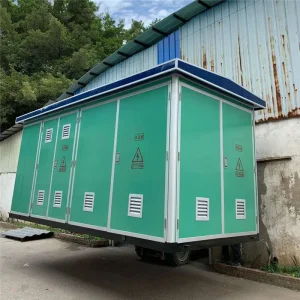
Heavy-gauge Corten steel structural shelters designed for high mechanical impact (up to 25kN/m² floor loading) to support massive oil/dry-type transformers, MV/LV switchgear assemblies, and SCADA control panels. Outfitted with automatic explosion-venting roofs and FM200 fire suppression.
Engineered from modified ISO high-cube shipping containers or modular steel frames specifically for lithium-ion (LFP) battery bank integration. Features active thermal management with dual-redundant precision Inverter HVAC (N+1 redundancy), maintaining ambient temperature tightly at 23°C ± 2°C.
Ultra-secure, electromagnetic-shielded (EMI/RFI protection) prefabricated cabins for smart city nodes and industrial IoT networks. Includes integrated smart rack systems, UPS backup batteries, biometric access control, and environmental telemetry monitored remotely via SNMP/Modbus.
The following pricing table provides estimated factory-direct and delivered budgetary quotes for standard equipment shelters landed at the Port of Cat Lai (Ho Chi Minh City) or delivered directly to industrial sites in Dong Nai, Binh Duong, and HCMC outskirts.
| Shelter Type / Specs | Dimensions (L × W × H) | Wall / Insulation Spec | HVAC & Ingress Grade | Est. Price Range (USD) | Est. Price Range (VND) |
|---|---|---|---|---|---|
| Compact Telecom FRP Node | 2.4m × 2.4m × 2.6m | 50mm FRP + PU Foam (42kg/m³) | Single 9000 BTU / IP55 | $3,800 – $5,200 | 95,000,000 – 130,000,000 ₫ |
| Standard 20ft Industrial Shelter | 6.058m × 2.438m × 2.591m | 75mm Rockwool Sandwich Panel | Dual 12,000 BTU N+1 / IP65 | $7,500 – $11,000 | 187,000,000 – 275,000,000 ₫ |
| Heavy Switchgear Substation Enclosure | 8.0m × 3.0m × 2.8m | 100mm PU + Corten Steel Shell | Precision Industrial AC / IP66 | $14,500 – $21,000 | 362,000,000 – 525,000,000 ₫ |
| 40ft High Cube BESS / Data Shelter | 12.192m × 2.438m × 2.896m | 100mm Rockwool (A1 Fireproof) | Dual 24,000 BTU Inverter / IP65 | $18,000 – $28,500 | 450,000,000 – 712,000,000 ₫ |
| Custom Anti-Corrosive Coastal Shelter | Tailored / Modular | Marine FRP + PVDF Coated Steel | Corrosion-Proof HVAC / IP66 | Custom Quote | Contact for Quote |
* Note: Prices above represent base structure including electrical distribution board (EDB), interior LED lighting, grounding copper busbars, and basic HVAC. Final quotes depend on custom fire suppression systems, rack configurations, and site foundation requirements.
Upgrading from standard Q235B structural steel to Corten-A weathering steel or hot-dip galvanized profiles adds 12-18% to base cost but extends shelter lifespan from 10 to 30+ years in HCMC coastal air.
Rockwool core panels (class A non-combustible) provide superior fire containment for substations compared to standard EPS foam, adding approximately 8-10% to thermal insulation budgeting.
Implementing dual N+1 precision air conditioning with automatic failover control boards increases reliability for mission-critical telecommunications by preventing localized microclimate hotspots.
Deploying modular equipment shelters in Vietnam requires strict adherence to local building codes, electrical safety guidelines, and environmental fire regulations. All equipment shelters manufactured and supplied by our engineering facilities undergo rigorous factory testing and are compliant with Vietnam's key industrial standards:
National Technical Regulation on Fire Safety for Buildings and Structures. Our shelters feature fire-rated wall panels providing EI60 to EI120 fire resistance, auto-closing fire doors, and intumescent cable entry seals to prevent toxic smoke propagation.
Equipped with internal perimeter copper earth bars (30mm × 3mm minimum cross-section) connected to external grounding points, ensuring instantaneous dissipation of surge currents caused by HCMC's frequent lightning strikes during monsoon season.
Structural framing calculated to withstand Category 14 Typhoon wind speeds (up to 160 km/h) and severe rain forces. Wind resistance verified through finite element analysis (FEA) software during the structural design phase.
Utilizes double-lip EPDM rubber gaskets across all door perimeters, waterproof cable gland entry plates (ROXTEC style), and hooded outdoor louver vents to prevent wind-driven rain penetration during severe downpours.
Practical implementations of our modular equipment shelters across diverse commercial and industrial sectors in Greater Ho Chi Minh City:
A leading multinational semiconductor manufacturer required a zero-downtime micro-data cabin. We delivered a customized 20ft insulated steel shelter featuring redundant precision ACs, fire suppression systems, and 45dB sound attenuation to comply with local noise regulations.
An industrial export processing plant installed a heavy-duty Corten steel equipment cabin adjacent to riverways. Designed with anti-corrosive epoxy polyurethane coatings and elevated structural legs to withstand seasonal tidal flooding (triều cường).
To support clean energy grid connection on the outskirts of HCMC, we supplied flat-pack equipment shelters housing 1.5MW central solar inverters and battery management system (BMS) controls with dust-proof IP65 louver systems.
As industrial IoT, artificial intelligence, and green energy transition reshape Vietnam’s infrastructure landscape, modular equipment shelters are evolving beyond passive enclosures into intelligent, self-regulating units.
Embedded IoT sensors feed real-time internal humidity, vibration, and temperature data into edge AI models, predicting HVAC maintenance needs before thermal stress causes hardware shutdown.
Integrating PCMs into shelter sandwich panels allows ambient thermal energy absorption during hot HCMC afternoons, reducing AC energy consumption by up to 28%.
Transitioning to 100% recyclable green steel structural frames and low-GWP (Global Warming Potential) blowing agents in polyurethane insulation foam.
Standardized plug-and-play internal rack and wiring harnesses reduce site commissioning times in Ho Chi Minh City from weeks to less than 48 hours.
Answers to common technical, logistics, and pricing queries regarding equipment shelters in Vietnam.
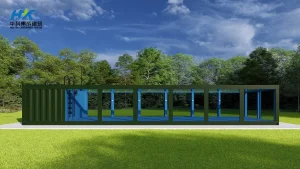
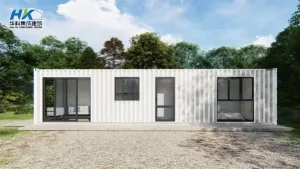
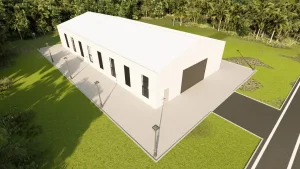
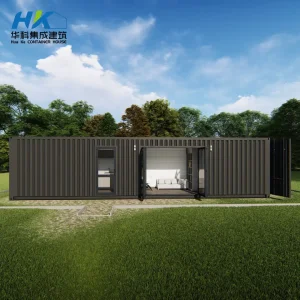
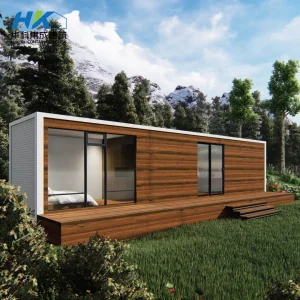
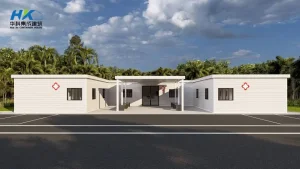
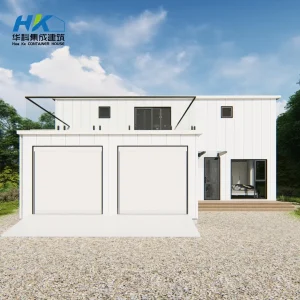
Review our comprehensive range of modular structures, container homes, heavy industrial workshops, and field cabins available for export to Vietnam.
Contact our senior modular engineering team today for technical CAD layout consultation, climate optimization analysis, and precise CIF Cat Lai / DDP site quotes within 24 hours.
Send Inquiry Now