Explore our top-tier engineered modular units manufactured to ISO, EN1090, and AS/NZS compliance standards.
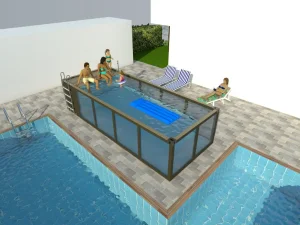
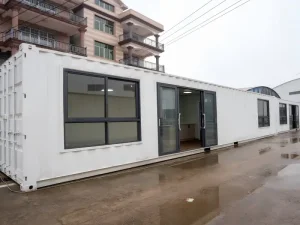
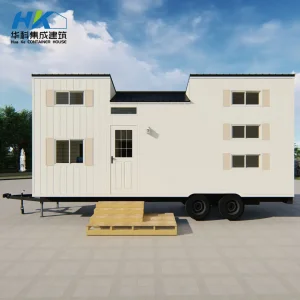
The global construction paradigm is undergoing a fundamental structural transition. Driven by escalating onsite labor overheads, stringent municipal decarbonization mandates, and the imperative for accelerated ROI cycles, institutional developers, industrial EPC contractors, and hospitality conglomerates are rapidly pivoting toward Offsite Modular Construction (OMC). At the forefront of this industrial transformation is the OEM Customized Shipping Container House—an architectural solution engineered from ISO-standard intermodal shipping envelopes or heavy-gauge cold-formed steel frames, offering unprecedented structural resilience, mobility, and spatial adaptability.
According to recent empirical market analyses, the global prefabricated and modular building market is projected to expand at a compound annual growth rate (CAGR) exceeding 7.8%, reaching an estimated valuation of over $160 Billion by 2030. Customized shipping container architectures represent the fastest-growing sub-segment within this domain, moving past primitive temporary site accommodation into highly customized, multi-story commercial complexes, eco-resort space capsules, high-density worker camps, and telecom infrastructure shelters.
Core Enterprise Advantage: OEM customization enables global B2B buyers to bridge the gap between architectural vision and strict structural compliance. By integrating customized engineering directly at the source factory level in China, procurement entities achieve up to 45% reduction in total cost of ownership (TCO) and 60% faster project delivery timelines relative to traditional site-built concrete construction.
A true OEM customized shipping container house is not merely a steel box; it is a meticulously calculated structural module designed to resist compound dynamic dynamic loads, extreme ambient thermal gradients, seismic forces, and aggressive corrosive atmospheres. Structural engineering begins with raw material selection and finite element analysis (FEA).
Industrial container modifications utilize SPA-H Corten Steel (Atmospheric Corrosion Resistant Steel) possessing a yield strength ($\sigma_y$) of minimum 350 MPa. When modified for architectural habitation—incorporating large window fenestrations, structural cantilever cut-outs, and inter-unit mating voids—the primary structural load paths are reinforced with heavy-duty structural hollow sections (HSS) and hot-rolled C/U channel steel frames. For flat-pack and modular tiny homes, high-yield hot-dip galvanized cold-formed steel profiles ($Z275$ zinc coating weight) are specified to prevent micro-structural oxidation over a 30+ year lifespan.
Thermal bridging is the primary engineering challenge in steel-envelope structures. Modern OEM customization mitigates thermal bridging through advanced continuous insulation (CI) systems:
| Insulation Core Material | Density ($\text{kg/m}^3$) | Thermal Conductivity ($\text{W/m}\cdot\text{K}$) | Fire Performance Grade | Primary Application |
|---|---|---|---|---|
| Closed-Cell Spray Polyurethane (PUF) | 35 – 45 | 0.022 – 0.024 | Class B1 / UL 94 V-0 | Cold climate housing, zero-condensation mandates |
| High-Density Hydrophobic Rockwool | 80 – 120 | 0.034 – 0.038 | Class A1 (Non-Combustible) | Commercial labor camps, telecom shelters, escape routes |
| Structural Insulated Panels (PIR/EPS) | 18 – 30 | 0.028 – 0.036 | Class B1 / B2 | Economical flat-pack site offices & rapid-install units |
In a sophisticated OEM manufacturing environment, 80% to 95% of MEP integration occurs on the factory floor. Electrical conduits comply with international standards (UL 746C, IEC 60364, or AS/NZS 3000), featuring flame-retardant LSZH (Low Smoke Zero Halogen) wiring embedded behind pre-finished wallboard matrix systems. Plumbing stacks utilize PEX-a hydronic piping networks combined with sound-dampened HDPE waste disposal lines, pre-tested via hydrostatic pressure checks at 1.5 times working pressure prior to structural encapsulation.
The manufacturing ecosystem in China—specifically anchored within advanced prefabricated industrial hubs such as Jiangxi, Guangdong, and Jiangsu—offers unmatched economic and structural benefits for global procurement teams. Utilizing Industry 4.0 Smart Manufacturing protocols, China's OEM container specialized plants have evolved from manual structural welding workshops into high-precision, automated manufacturing complexes.
Automated fiber laser cutting beds and robotic multi-axis welding arms guarantee dimensional tolerances within $\pm 0.5\text{ mm}$, eliminating variance across multi-unit stackable modules.
Direct spatial proximity to raw steel mills, specialized glass processors, and certified MEP fixture vendors minimizes supply chain lead times by up to 65% relative to Western fabricators.
Every OEM unit undergoes comprehensive factory acceptance testing (FAT), including ultrasonic weld flaw testing, 24-hour flood testing for roof integrity, and dielectric insulation checks.
By leveraging vertical integration—where steel structural fabrication, surface anti-corrosion sandblasting (SA 2.5 grade), automated powder coating, interior joinery fit-out, and pre-shipment containerized packing happen within a single unified footprint—China suppliers eliminate intermediary markup while ensuring standardized quality metrics under ISO 9001:2015 frameworks.
Customized container architecture is highly versatile across diverse global commercial domains. OEM capabilities allow structural engineers to configure specialized modules suited to harsh environmental challenges, localized building codes, and operational demands.
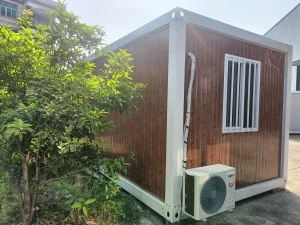
Modular labor accommodations, mess halls, and administrative offices built for remote desert or sub-zero environments. Designed for rapid crane placement, flat-pack logistics efficiency, and high occupancy durability.
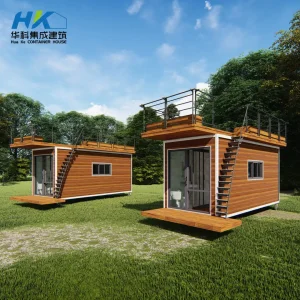
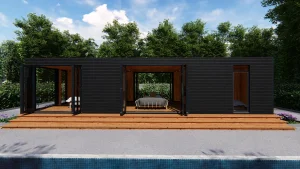
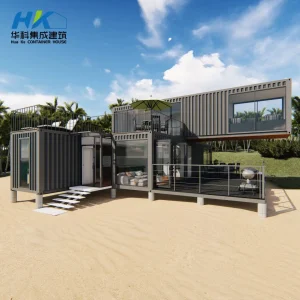
Architecturally striking, futuristic space capsules and modified luxury container villas. Pre-fitted with panoramic double-glazed curved glass, smart IoT home controls, and high-end sanitary fixtures for boutique eco-tourism.
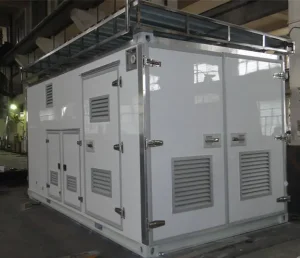
Hermetically sealed, highly insulated fiberglass or steel equipment shelters designed to house sensitive 5G switching gear, off-grid battery arrays, and industrial power generators under extreme weather conditions.
Procuring OEM customized shipping container structures at scale demands a structured vendor selection protocol to ensure structural performance, risk mitigation, and commercial transparency. Commercial buyers should align procurement milestones with the following technical verification framework:
Review 3D Building Information Modeling (BIM/Revit) data. Validate structural deflection calculations, live/dead load capacities, wind uplift resistance ($v_d \ge 250\text{ km/h}$), and thermal insulation U-values.
Enforce precise material specifications: steel grade certificates (EN 10025 S355/S235), paint dry film thickness (DFT gauge verification $\ge 120\mu\text{m}$), glass U-factors, and CE/UL certified electrical fittings.
Execute Factory Acceptance Testing (FAT). Third-party inspectors (SGS, TUV, Bureau Veritas) conduct weld NDT (Non-Destructive Testing), water tightness spray tests, and dimensional verification prior to mass assembly.
Maximize ocean freight density. Convert customized dimensions to standard ISO corner-casting dimensions where possible, or engineer knockdown flat-pack configurations to fit standard 40ft High Cube (HC) sea containers.
A critical barrier in cross-border modular procurement is navigating local municipal building codes. Capable OEM suppliers provide extensive technical documentation packages designed to streamline local engineering sign-offs and AHJ (Authority Having Jurisdiction) approvals.
| Target Region | Governing Code / Standard | OEM Compliance Implementation Strategy |
|---|---|---|
| North America (USA / Canada) | IBC / IRC, US HUD Standards, CSA A277, California Title 24 | UL-listed wiring/breakers, Title 24 energy envelope calculations, structural stamp readiness by US P.E. (Professional Engineer). |
| European Union (EU) | EN 1090-1 / ISO 3834-2, CE Marking, Eurocodes (EC2, EC3) | Factory Production Control (FPC) certified welding, CE marked thermal insulation, low-VOC interior materials complying with REACH. |
| Australia / New Zealand | NCC / BCA, AS/NZS 1170 (Structural Loads), AS 3000 (Electrical) | Cyclonic wind region detailing (Region C/D tie-downs), RBA-compliant insulation values, WaterMark certified plumbing assemblies. |
| Global Offshore / Tropical | ISO 12944 Paint Systems (C4/C5 Corrosivity Category) | Blast cleaning to Sa 2.5, Zinc-rich epoxy primer, intermediate epoxy glass flake, topcoat polyurethane for maximum UV resistance. |
The next decade will redefine containerized modular architecture through the convergence of advanced material science, automation, and distributed energy technology. Enterprise buyers investing in OEM customization must anticipate these upcoming technological shifts:
Next-generation container homes are transforming from energy consumers into micro power plants. Factory-integrated flexible BIPV (Building-Integrated Photovoltaics) solar skins coupled with LiFePO4 battery storage banks deliver full off-grid autonomy in remote operational sectors.
Generative design algorithms allow buyers to input spatial requirements, climatic loads, and budget constraints to instantly yield optimized structural framing profiles, material cut-sheets, and thermal performance simulations.
Transitioning toward bio-based insulation materials (aerogel matrices, hemp-wool blends) and zero-carbon green steel allows modular projects to drastically reduce embodied carbon metrics to meet corporate ESG targets.
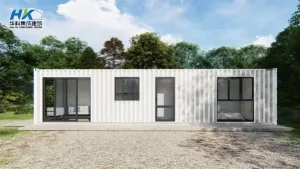
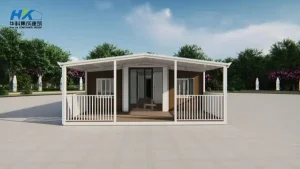
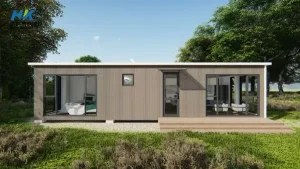
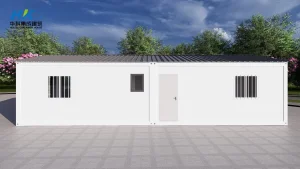
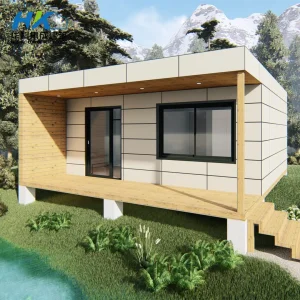
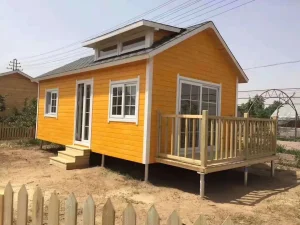
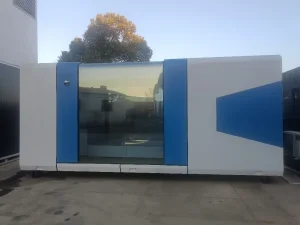
Turnkey prefabricated accommodations, luxury villas, expandable homes, and specialty infrastructure units.
Detailed answers grounded in engineering reality for project owners, architects, and sourcing managers.
Cutting corrugated Corten steel wall panels removes the primary shear diaphragm strength of the container envelope. To restore structural integrity, our engineering team frames all openings with structural steel hollow sections (HSS 100x100x4mm or larger, depending on structural load calculations). When stacking containers multi-story or creating wide-open interior spans, heavy vertical structural columns (H-Beams) and continuous roof perimeter beams are welded to corner posts to ensure full static load transfer down to the foundation points.
Compliance is achieved by engineering a continuous insulation (CI) envelope that prevents thermal bridging. We combine internal or external closed-cell spray polyurethane foam (SPF)—which achieves R-values of R-6.5 to R-7 per inch—with thermal-break sub-framing. In extreme cold climates, we utilize vacuum insulation panels (VIP) or hybrid Rockwool + PIR sandwich assemblies alongside Low-E argon-filled triple-glazed window units, achieving system U-values lower than 0.15 W/m²K.
In high-salinity coastal zones (C5 Corrosivity Category under ISO 12944), standard paint systems degrade rapidly. We specify a marine-grade surface treatment process: abrasive blast cleaning to Sa 2.5 standard, followed by an inorganic zinc-rich primer ($75\mu\text{m}$), an epoxy intermediate barrier coat ($100\mu\text{m}$), and a polyurethane topcoat ($50\mu\text{m}$). Combined with standard SPA-H Corten steel, this system delivers an engineered structural service life exceeding 35 to 50 years with minimal exterior maintenance.
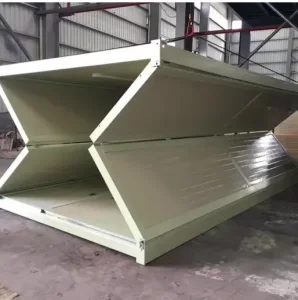
Flat-pack container units are engineered as knockdown modular structures where top frame, floor frame, corner posts, and wall panels ship disassembled in a flat package. Four flat-pack units are bundled together to match the exact external dimensions of a single standard ISO 20ft High Cube container (SOC - Shipper Owned Container). This configuration reduces ocean freight volume by up to 75%, allowing commercial buyers to import 4 to 6 times more usable floor area per freight container slot.
Yes. OEM customization allows full structural pre-wiring and roof load-reinforcement to accept rooftop solar PV mounting racks. Factory MEP integration includes hybrid off-grid solar inverters, lithium iron phosphate (LiFePO4) energy storage battery racks, greywater recycling plumbing loops, and smart energy management systems (EMS). This allows rapid turnkey deployment in off-grid resort areas, remote telecom sites, or emergency disaster recovery sectors.