Direct factory engineered products compatible with advanced waterproof OSB paneling
In modern industrial civil engineering, off-site modular construction, and high-load packaging systems, structural panel integrity under severe moisture stress is a non-negotiable metric. Waterproof Oriented Strand Board (OSB)—specifically engineered under EN 300 Class OSB/3 and OSB/4 standards—represents a profound paradigm shift over traditional veneer-based plywood.
Historically, standard commercial plywood suffered from intrinsic vulnerabilities: cross-laminated wood veneers are susceptible to internal void creation, delamination under hydrostatic pressure, and non-uniform density gradient distributions. When exposed to cyclic wetting and drying or extreme humidity environments, conventional urea-formaldehyde (UF) or basic phenol-formaldehyde (PF) glues undergo hydrolytic degradation. This results in irreversible thickness swelling, structural mechanical loss, and structural warping.
Advanced Waterproof OSB manufacturing neutralizes these failure modes through rigorous material science. By compressing cross-oriented wood strands (typically high-density pine, poplar, or eucalyptus) under immense thermal-hydrodynamic conditions using Polymeric MDI (pMDI) polyurethane resin binders, modern manufacturing lines create a dense, void-free, hydrophobic monolithic wood matrix. This whitepaper provides a comprehensive technical breakdown of waterproof OSB plywood engineering, global market dynamics, advanced factory production ecosystems in China, and regional deployment scenarios.
How molecular-level resin cross-linking and precise thermo-mechanical density profiles deliver absolute waterproof performance.
Unlike water-soluble resins, Polymeric Diphenylmethane Diisocyanate (pMDI) chemically reacts with the active hydroxyl (-OH) groups of wood cellulose and lignin to form covalent urethane linkages. This chemical bond is fully water-insoluble, offering absolute resistance to hydrolytic cleavage even when submerged in water for extended periods.
Advanced flaking machines slice raw logs into long, ultra-thin strands (length 100-150mm, width 5-30mm, thickness 0.6mm). The outer surface layers are precisely oriented parallel to the board panel length, while the core layer strands are aligned perpendicular. This engineered cross-grain configuration eliminates anisotropic shrinkage.
During the high-speed blender blending phase, a micro-emulsion of synthetic paraffin wax is sprayed concurrently with pMDI resin. The wax seals the cellular capillary pores of the wood flakes, imparting surface tension that repels liquid water droplets during construction site weather exposure.
| Performance Parameter | Standard Plywood (MR Glue) | Marine Plywood (BS 1088) | Waterproof OSB/3 | Industrial OSB/4 (pMDI Enhanced) |
|---|---|---|---|---|
| Adhesives System | Urea-Formaldehyde (UF) | Phenol-Formaldehyde (PF) | pMDI Core / Melamine Outer | 100% Polymeric MDI (pMDI) |
| 24h Water Swelling Rate | 18% - 25% (Delaminates) | 10% - 15% | ≤ 12% | ≤ 6% - 8% |
| Bending Modulus of Elasticity (MOR) | 2200 - 2800 N/mm² | 3200 - 3800 N/mm² | 3500 - 4000 N/mm² | 4800 - 5500 N/mm² |
| Internal Bond (IB) Strength | 0.25 - 0.35 N/mm² | 0.45 - 0.55 N/mm² | 0.45 - 0.65 N/mm² | > 0.75 N/mm² |
| Formaldehyde Emission Class | E1 / E2 | E1 | E0 / CARB Phase 2 | NAF (No-Added Formaldehyde) |
| Core Voids & Knots | Frequent internal gaps | Minimal internal gaps | Zero internal voids | Zero internal voids (Monolithic) |
China’s modern engineered wood panel manufacturing ecosystem has undergone massive technological upgrades. State-of-the-art production clusters utilize German-imported continuous press systems (such as Siempelkamp and Dieffenbacher continuous press lines), replacing manual multi-opening presses with high-precision automated control loops.
Key competitive metrics of China-based high-capacity OSB manufacturing hubs include:
Triple-stage disk screeners sort wood flakes to eliminate fines, ensuring only optimal structural strands enter the gluing loop.
In-line laser sensors continuously scan board cross-sections, dynamically adjusting press hydraulic pressure to eliminate density variations.
Automated edge-painting lines apply dual-coat acrylic liquid sealants immediately after panel trimming to prevent moisture uptake in transit.
Analysis of regional preferences, structural standards, and economic drivers shifting global consumption toward waterproof OSB panels.
In the US and Canada (governed by PS 2-10 structural standards), waterproof OSB/3 and OSB/4 dominate light-frame timber construction. Key applications include continuous roof sheathing, Structural Insulated Panels (SIPs), and high-load tongue-and-groove (T&G) single-layer subflooring where jobsite rainfall exposure is unavoidable.
European construction (EN 300 standards) mandates strict environmental and vapor diffusion controls. OSB/4 panels engineered with zero-added formaldehyde pMDI binders act as certified air-tightness layers and vapor retarders in energy-efficient Passive House timber frame assemblies without requiring extra plastic membranes.
Across South East Asia, Australia, and the Middle East, rapid urbanization and export manufacturing drive heavy demand for high-strength OSB packaging boxes, heavy-equipment pallets, and concrete formwork applications. Waterproof OSB delivers superior nail-holding power and edge impact durability.
Integrating waterproof OSB boards across specialized prefab structures, extreme climate housing, and high-load industrial sub-assemblies.
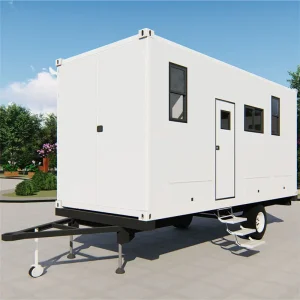
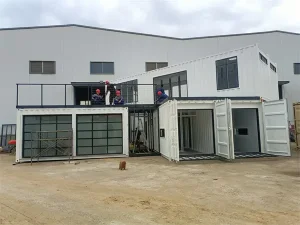
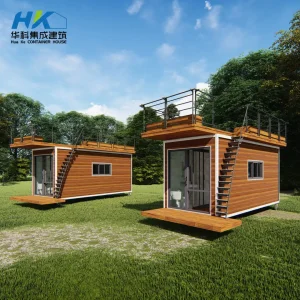
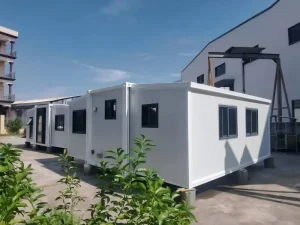
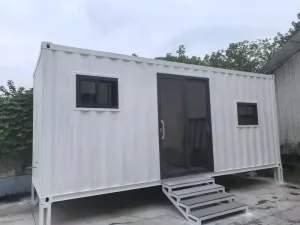
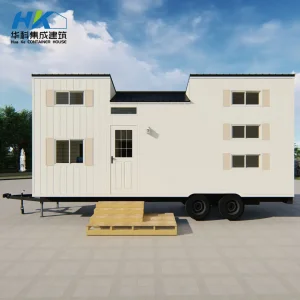
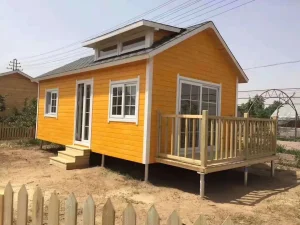
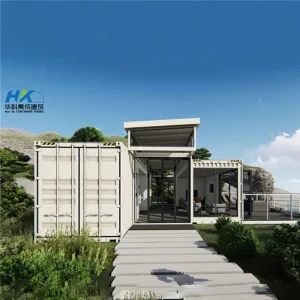
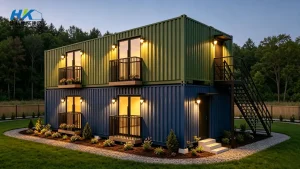
In container house conversions and flat-pack modular cabins, floor sheathing is subjected to harsh ambient humidity from the ground below and potential internal plumbing leaks. Replacing marine plywood with 18mm or 28mm waterproof OSB/4 provides a structural floor base that resists rot, fungi, and moisture-induced dimensional expansion. Its solid internal structure allows secure mechanical anchoring of interior wall partitioning and sanitary hardware.
Light-gauge steel frame structures require rigid shear wall sheathing to resist lateral wind loads and seismic shear forces. Waterproof OSB panels fixed to cold-formed steel studs provide high rack-resistance (diaphragm action). When installed on sloping roofs prior to asphalt shingle or metal roofing installation, waterproof OSB guarantees structural safety even if primary roofing membranes leak over time.
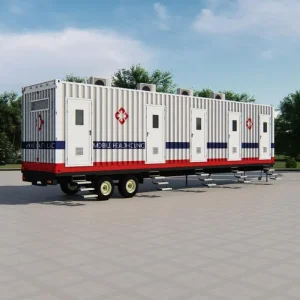
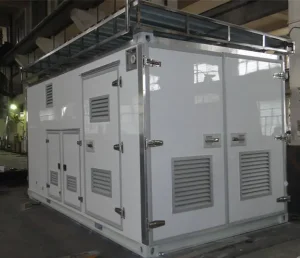
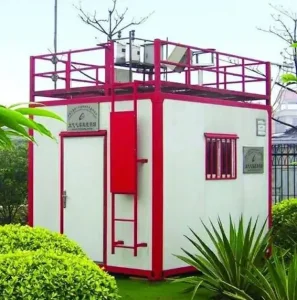
Remote telecommunication equipment shelters, mobile medical cabins, and field power generator enclosures operate under continuous environmental stress. Waterproof OSB panels lined with fiberglass-reinforced plastic (FRP) or aluminum skins form composite sandwich structures that offer acoustic damping, thermal insulation barrier protection, and high structural impact strength under tropical or arctic conditions.
Export transport of heavy machinery requires crate paneling that maintains structural flexural strength in ocean container environments with relative humidity approaching 100%. Waterproof OSB/3 and OSB/4 crates meet ISPM 15 heat-treatment exemptions (as processed engineered wood), eliminating custom clearance quarantine delays while ensuring load support up to several tons.
Our factory manufacturing processes adhere strictly to internationally recognized structural and environmental standards.
Certified for structural use in construction under EN 300 types OSB/3 (load-bearing panels for humid conditions) and OSB/4 (heavy-duty load-bearing panels).
Verified California Air Resources Board Phase 2 and US EPA TSCA Title VI compliance for Zero-Added Formaldehyde (NAF) indoor safety.
Full Chain of Custody certification ensuring timber is harvested from responsibly managed, sustainable commercial forestry operations.
Rigorous Factory Production Control (FPC) systems covering continuous density monitoring, boil-water testing, and dimensional tolerance checks.
Direct structural and chemical technical answers from our wood product engineering team.
Film-faced plywood relies on a surface phenolic paper coating to block water, but if the outer film is scratched or pierced by nails, water penetrates the inner wood veneers glued with phenolic or melamine resins, causing swelling and internal voids. Waterproof OSB/4 utilizes 100% Polymeric MDI (pMDI) resin throughout its entire core mat. Every single wood strand is individually coated in hydrophobic resin prior to high-temperature pressing, making the panel body inherently waterproof throughout its thickness, rather than just on the surface layer.
Under EN 321 accelerate aging test protocols (which involve 24 hours of water immersion at 20°C, freezing at -12°C to -20°C for 24 hours, drying at 70°C for 70 hours, repeated across 3 cycles, followed by boiling tests), high-grade pMDI waterproof OSB/4 maintains over 85% of its original internal bond strength and exhibits a thickness swelling under 8%, outperforming standard commercial MR plywood which completely disintegrates under boiling conditions.
While OSB/4 is rated as structurally waterproof and highly resistant to decay and weather during construction delays (typically 3 to 6 months of direct site weather exposure), long-term architectural durability requires standard cladding, roofing felt, or exterior coating systems to protect against prolonged UV solar degradation, which can break down wood surface fibers over multiple years.
Traditional structural plywood requires large-diameter, high-grade round logs to peel continuous veneers, placing high pressure on old-growth natural forests. OSB is manufactured using small-diameter, fast-growing plantation logs and timber thinnings. Up to 90% of the raw log volume is utilized in the final board product with zero wood waste (wood residue and bark are burned in factory energy plants to power press heating thermal oil), offering a vastly superior carbon sequestration profile.
Because waterproof OSB is compacted under high pressure (density averaging 640-700 kg/m³) without natural knots, internal core voids, or grain weakness lines, it provides uniform, multi-directional fastener holding values. Standard face screw withdrawal resistance exceeds 1200 N, and edge screw withdrawal resistance exceeds 800 N, preventing floor squeaking and panel loosening under heavy dynamic foot traffic.
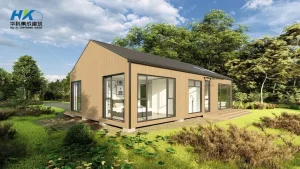
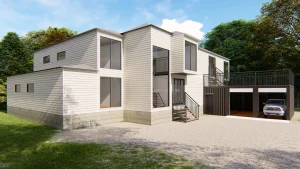
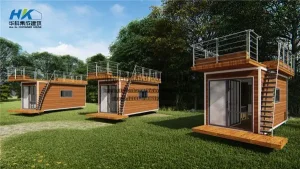
Comprehensive prefabricated cabins, equipment shelters, and luxury villa options