Deploying OEM solar generation modules integrated directly with durable, climate-optimized prefabricated structural units.
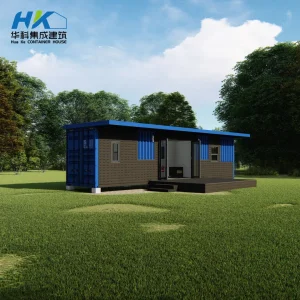
Ethiopia Solar-Ready 40ft Modular Housing Hub Unit
View Product Details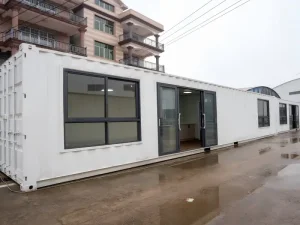
Modified 40ft Commercial Solar Office & Command Center
View Product Details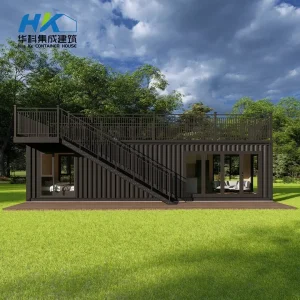
40ft Luxury Off-Grid Solar Modular Villa with Upper Deck
View Product Details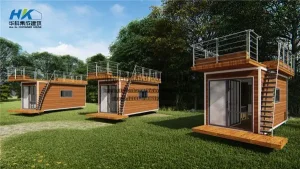
20ft Compact Solar Microgrid Accommodation Unit
View Product DetailsAnalyzing grid deficits, solar irradiance profile, government NEP 2.0 directives, and industrial procurement trends across Horn of Africa.
Ethiopia stands at a pivotal juncture in East Africa’s energy transition. Boasting an average solar radiation of 5.5 to 6.5 kWh/m²/day across its expansive high-plateau geography, the country possesses one of the world's most advantageous solar yield environments. However, despite the massive hydroelectric potential anchored by the Grand Ethiopian Renaissance Dam (GERD), structural transmission bottlenecks and rapid industrialization have left over 45% of the population without reliable grid access, particularly in rural agro-processing hubs and developing regional industrial zones such as Hawassa, Bole Lemi, and Kilinto.
Ethiopia receives over 3,000 hours of peak sunshine annually, delivering high capacity factors (22-26%) for utility-scale and decentralized solar panels.
The National Electrification Program targets 35% off-grid electrification by combining solar mini-grids, industrial rooftop PV, and mobile energy shelters.
Ethiopian Ministry of Finance provides tariff exemptions for imported photovoltaic equipment, solar cells, inverters, and integrated renewable modules.
To overcome grid instability, commercial enterprises, telecommunication networks (Ethio Telecom and Safaricom Ethiopia), agricultural cooperatives, and mining enterprises are actively procuring direct factory-grade solar panels and solar-integrated modular structures. The demand centers around high-durability monocrystalline modules capable of resisting extreme thermal variances, UV radiation at high altitudes (Addis Ababa at 2,350m elevation), and heavy dust accumulation typical of the Great Rift Valley corridor.
Selecting optimal cell architectures, encapsulation coatings, and thermal endurance ratings for highland and arid climates.
When selecting solar panel products for deployment across Ethiopian landscapes, standard commercial modules often suffer accelerated degradation due to elevated ultraviolet exposure, thermal stress during high diurnal temperature shifts, and particulate abrasion. Advanced Chinese PV manufacturing technology has bridged this gap through N-Type TOPCon (Tunnel Oxide Passivated Contact) and Heterojunction (HJT) cell architectures.
| Technology Standard | Efficiency Range (%) | Temperature Coefficient | Bifaciality Factor | Suitability for Ethiopia |
|---|---|---|---|---|
| N-Type TOPCon | 22.5% – 24.2% | -0.30% / °C | 80% – 85% | Optimal: High heat tolerance & low LID (Light Induced Degradation) |
| HJT (Heterojunction) | 23.0% – 25.0% | -0.26% / °C | 85% – 95% | Excellent: Superior performance in extreme thermal variations |
| P-Type PERC | 20.8% – 21.8% | -0.35% / °C | 70% – 75% | Standard: Cost-effective for basic agricultural water pumping |
| Bifacial Dual-Glass PV | 22.0% – 23.8% | -0.31% / °C | 80% – 90% | High Yield: Captures albedo reflection in desert/rocky terrain |
Leveraging direct factory-to-site supply chains, standardized quality testing, and turnkey logistics via the Djibouti Port corridor.
China commands over 80% of global photovoltaic module manufacturing capacity. By sourcing directly from verified Chinese solar panel factories, Ethiopian EPC contractors, commercial project operators, and governmental buyers secure Tier-1 certified modules at minimal Levelized Cost of Energy (LCOE).
Our manufacturing capability integrates high-precision automated soldering, EL (Electroluminescence) double-testing for micro-crack prevention, and rigorous ISO 9001, TÜV Rheinland, CE, and IEC 61215 quality assurance protocols before shipment.
Logistics to landlocked Ethiopia requires dedicated freight planning. Equipment is loaded into heavy-duty containers at major coastal hubs (Shanghai, Ningbo, Shenzhen) and shipped to Port of Djibouti.
From Djibouti, cargo transitions smoothly across the Galafi border post along the Addis-Djibouti economic highway corridor, reaching destination sites in Mojo Dry Port or regional capital cities with end-to-end Customs Clearance documentation support.
From decentralized agricultural pumps to off-grid industrial microgrids and modular solar command centers.
Off-grid solar panels paired with submersed DC pumps empower coffee washing stations in Sidama and agricultural drip irrigation throughout Amhara and Oromia regions without diesel reliance.
Continuous hybrid solar-battery power systems for Ethio Telecom towers in remote Somali and Afar regional states, drastically reducing operational maintenance costs and downtime.
Deployable containerized modular units equipped with integrated rooftop PV panels and battery storage, serving as field offices and staff living quarters for mining and road construction projects.
Expert insights covering customs, technical standards, installation protocols, and factory direct procurement.
Yes. Under current Ethiopian Ministry of Finance renewable energy regulations, solar panels, solar inverters, and deep-cycle solar battery storage systems imported for off-grid power generation qualify for customs duty and import tax exemptions. Procurement teams should work with licensed Ethiopian customs brokers to submit product specifications and Ministry approvals prior to shipment.
At high elevations such as Addis Ababa (2,350m), intense solar ultraviolet radiation accelerates degradation in standard P-type PERC panels. N-Type TOPCon panels feature zero Light-Induced Degradation (LID) and a lower temperature coefficient (-0.30%/°C vs -0.35%/°C), enabling higher output efficiency under midday heat and extreme sun exposure.
Modules are packed vertical-on-edge inside reinforced, moisture-sealed export wooden pallets with corner cushions, then loaded into standard 40ft High Cube containers. Freight travels via sea to Djibouti Port, followed by flatbed container trucks along the Djibouti-Addis corridor directly to your project site or Mojo Dry Port.
Absolutly. Factory-direct procurement allows customization of panel dimensions, frame colors, junction box connectors (MC4 compatible), cable lengths, custom branding logos, and custom voltage profiles designed to sync seamlessly with off-grid inverters or hybrid battery energy storage systems (BESS).
Solar-integrated prefabricated structures combine insulated modular living/office space with a pre-engineered rooftop PV solar system. Solar panels generate power during daylight hours, storing excess energy in lithium iron phosphate (LiFePO4) batteries housed inside the insulated shelter, delivering complete 24/7 off-grid energy self-sufficiency.
Explore high-performance prefabricated units, expandable energy hubs, and solar-integrated structures manufactured for global export.
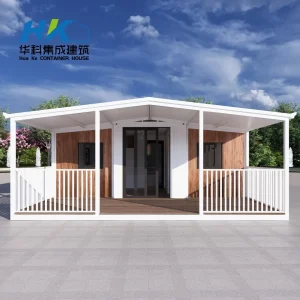
Ethiopia Luxury Expandable Solar Living Container Unit
View Product Details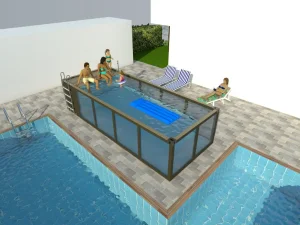
Modular 20ft Solar Heating SPA Container Facility
View Product Details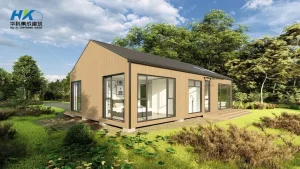
Architectural 3*40ft Green Roof Solar Villa Complex
View Product Details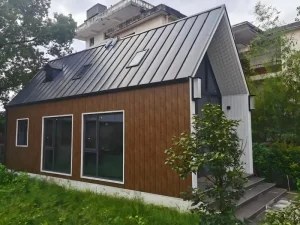
Light Steel Structure Prefab Modular Solar Facility
View Product Details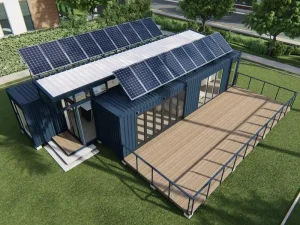
Spray Foam Insulated Solar Panel Container Home
View Product Details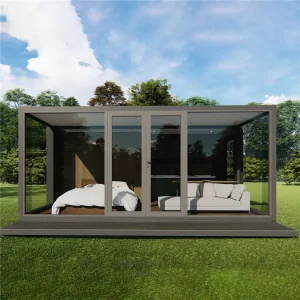
OEM One-Bedroom Solar Off-Grid Modular Residence
View Product Details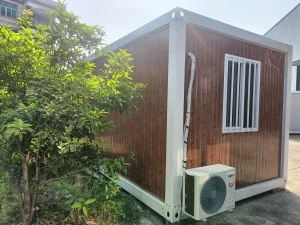
Temporary Solar Powered Labor Camp Accommodation Unit
View Product Details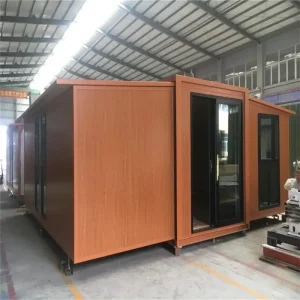
1 Expand 3 Prefab Solar House with Kitchen & Bath
View Product DetailsWhether you are procuring Tier-1 solar panel modules for an commercial installation in Addis Ababa or building an off-grid industrial park, our engineering team provides full OEM support, LCOE optimization, and CIF Djibouti delivery.
Send Inquiry Now