Direct-from-factory modular enclosures engineered for remote telecommunications, edge compute, and monitoring hubs across Greater Seattle.
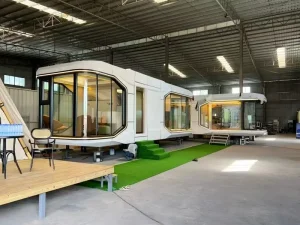
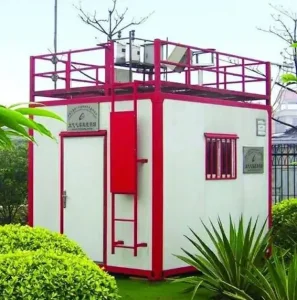
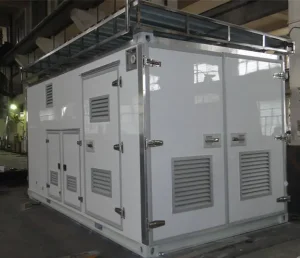
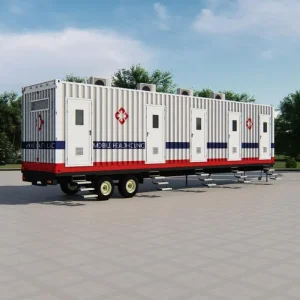
Analyzing the demand drivers for climate-resilient, factory-fabricated equipment shelters across King, Snohomish, and Pierce Counties.
The Greater Seattle metropolitan area—spanning Bellevue, Redmond, Renton, Kent, and the Port of Seattle—represents one of North America’s most concentrated hubs for enterprise cloud compute, subsea fiber-optic landings, commercial aerospace engineering, and automated maritime logistics. As hyperscale technology providers, telecom carriers (5G C-band expansion), and public utilities (such as Puget Sound Energy and Seattle City Light) scale their physical footprint, the demand for high-reliability equipment shelters has shifted dramatically toward factory-prefabricated modular units.
Deploying critical hardware in the Pacific Northwest (PNW) presents a unique dual-challenge: meeting stringent municipal structural building codes (including Seattle Department of Construction and Inspections - SDCI compliance) while standing resilient against severe regional environmental stressors. Seattle experiences an average of 152 atmospheric precipitation days per year, high marine air humidity (Puget Sound salt spray exposure), continuous winter dampness, and seismic zone dynamics driven by the Cascadia Subduction Zone (IBC Seismic Design Category D2/E).
Continuous vapor barrier seal designs and non-corroding Fiber-Reinforced Polymer (FRP) skin option prevents micro-rust and wall cavity mold caused by PNW dampness.
Optimized for Washington State Energy Code (WSEC) commercial envelope minimums, achieving total thermal resistance ratings exceeding R-24 to R-40 insulation values.
Reinforced cold-formed galvanized steel framing rated for up to 70 PSF roof snow loads in foothill sub-stations and high ground acceleration seismic events.
Industrial-grade structural engineering, materials science, and climate isolation standards built into direct-factory supply chains.
To guarantee uninterrupted operation of sensitive electronics—such as cell tower base transceiver stations (BTS), edge AI compute nodes, SCADA power grid controllers, and maritime radar repeaters—a modern equipment shelter must act as a fully autonomous, environmental fortress.
Below is the baseline engineering breakdown comparing key shelter construction methodologies supplied to B2B general contractors, telecom engineering firms, and municipal procurement teams in Washington State:
| Specification Parameter | Fiberglass Sandwich (FRP) | Modified Corten Container | Light Steel Prefab Cabin |
|---|---|---|---|
| Primary Wall Core | Gel-coated FRP + Polyurethane Core | Corrugated Corten Steel + Rockwool | Galvanized Steel Frame + EPS/PU Panel |
| Thermal Insulation (R-Value) | R-24 to R-34 (Zero Thermal Bridge) | R-19 to R-30 (Spray Foam/R-wool) | R-16 to R-28 (Sandwich Panel) |
| Corrosion Resistance | Impervious (100% Non-Metallic Outer) | High (Marine Anti-Rust Epoxy Paint) | Moderate-High (Galvanized Coatings) |
| Seismic Rating (IBC 2021) | Category D2 / E Compliant | Category E (ISO Corner Cast Structural) | Category C / D Compliant |
| NEMA / IP Rating | NEMA 4X / IP66 Sealing | NEMA 3R / IP65 Sealing | NEMA 3R / IP54 Sealing |
| Lifespan in PNW Weather | 35+ Years Minimal Maintenance | 25+ Years (Periodic Paint Recoat) | 20+ Years Standard Field Life |
In coastal regions like Puget Sound, thermal bridging isn't merely an energy-efficiency concern; it causes internal condensation, leading to premature board corrosion or short-circuiting in high-voltage distribution racks. Factory-laminated FRP sandwich panels with tongue-and-groove joint locks eliminate all metallic paths from exterior to interior.
Transparent benchmark pricing for factory-direct production versus local Pacific Northwest job-site construction.
Purchasing prefabricated shelters directly from qualified Chinese manufacturing hubs (such as Jiangxi HK Prefab / Hua Ke) provides significant capital expenditure (CapEx) relief compared to traditional stick-built or local US-assembled enclosures. Below is an estimated benchmark pricelist for standard dimensions landed at the Port of Seattle / Port of Tacoma.
| Shelter Type & Footprint | Dimensions (L × W × H) | FOB Factory Price (USD) | Est. Freight to Seattle (CIF) | Est. Landed Seattle Cost |
|---|---|---|---|---|
| Compact FRP Telecom Shelter | 10ft × 8ft × 9ft (3.0m × 2.4m × 2.7m) | $4,200 – $6,500 | $1,800 – $2,400 | $6,000 – $8,900 |
| Medium Edge Data Cabin | 20ft × 8ft × 9.5ft (6.0m × 2.4m × 2.9m) | $7,500 – $11,800 | $2,500 – $3,400 | $10,000 – $15,200 |
| High-Cube Corten Power Enclosure | 40ft × 8ft × 9.5ft (12.1m × 2.4m × 2.9m) | $13,500 – $19,800 | $3,800 – $5,200 | $17,300 – $25,000 |
| Flat-Pack Modular Site Shelter | 20ft × 10ft × 9ft (6.0m × 3.0m × 2.7m) | $3,200 – $5,400 | $1,200 – $1,800 (Multi-pack) | $4,400 – $7,200 |
How Jiangxi HK Prefab Building Co., Ltd. delivers high-precision OEM shelter manufacturing with fast global logistics turnaround.
Operated out of Shangrao City, Jiangxi Province, utilizing automated laser steel-cutting, robotized structural welding, and continuous panel lamination lines for defect-free execution.
ISO9001 and ISO14001 certified operations. Every shelter undergoes factory acceptance testing (FAT), including 100% water spray leak testing and electrical hipot insulation testing prior to export.
Streamlined logistics via ocean freight routes directly connecting Shanghai / Ningbo ports to the Port of Seattle & Tacoma within 14–18 days shipping transit windows.
Custom-built modular units tailored to specific industrial, telecommunication, and maritime environments in Washington State.
Positioned along the interstate transport corridors (Seattle, Bellevue, Tacoma), these shelters house high-density fiber racks, battery backup systems (LiFePO4 banks), and dual HVAC units with automated failover systems to maintain uninterrupted cellular data capacity.
Near maritime connection points in Mukilteo, Edmonds, and Harbor Island, non-conductive FRP equipment cabins protect fiber-optic landing equipment against ultra-high salinity atmospheric conditions and moisture degradation.
Deployed in Snoqualmie Pass, North Bend, and rural utility districts, structural shelters are rated for high snow loading (up to 70 PSF) and sub-zero thermal retention, protecting SCADA automation relays and grid monitoring systems.
Custom containerized monitoring stations at port docks monitor automated crane power lines, container yard cameras, and refrigerated container power feeds under severe industrial weather exposure.
Navigating structural, electrical, and environmental building standard approvals across local Pacific Northwest jurisdictions.
Deploying an equipment shelter within King County or under Seattle Department of Construction and Inspections (SDCI) oversight requires strict adherence to both statewide and local codes. Sourcing directly from an experienced factory like Jiangxi HK Prefab ensures that all structural, mechanical, and electrical drawings can be tailored to meet:
Expert answers addressing customization, shipping logistics, site prep, and environmental durability.
Fiberglass sandwich shelters are ideal for the Puget Sound region. Unlike steel enclosures which can suffer from edge rust or paint breakdown under constant rain and salt fog, gel-coated FRP exterior panels are 100% immune to metallic corrosion. They require virtually zero exterior maintenance over a 30+ year service life.
Yes. We provide complete OEM pre-integration. We can install dual wall-mounted redundant HVAC units (such as Bard or Marvair style), interior cable ladders, automatic transfer switches (ATS), fire suppression systems, and grounding copper buses directly in our factory, drastically reducing expensive local field labor rates in Seattle.
Standard production time for customized equipment shelters ranges from 15 to 25 days depending on specification complexity. Ocean freight transit from Shanghai/Ningbo directly to the Port of Seattle or Port of Tacoma takes approximately 14 to 18 days. Total door-to-door project delivery is usually achieved within 45 to 60 days.
For sub-station or telecom sites located in mountain passes, we increase structural steel column thickness and incorporate heavy-duty roof purlins engineered to handle up to 70–90 PSF snow loads, far exceeding standard city municipal codes.
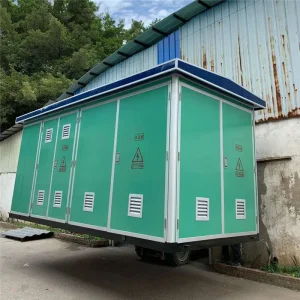
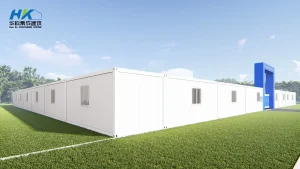
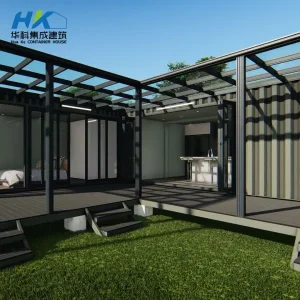
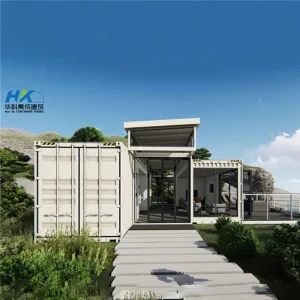
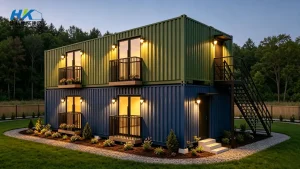
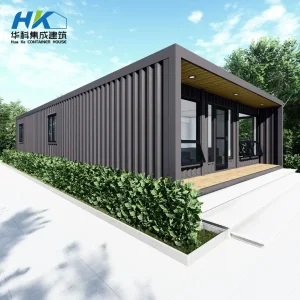
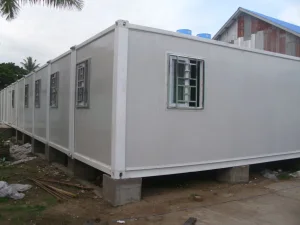
Explore our extended series of equipment shelters, container structures, and modular cabins available for wholesale import to Washington State.
Get direct factory pricing, structural CAD drawings, and custom thermal engineering configurations within 24 hours.
Send Inquiry Now