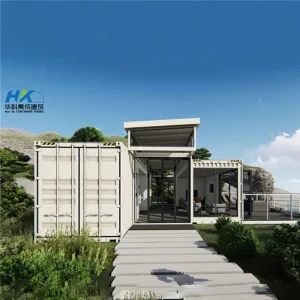
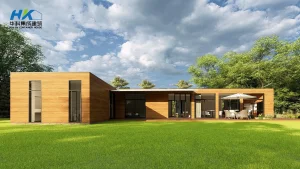
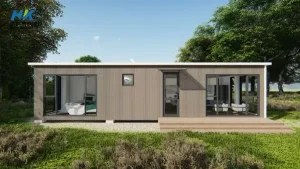
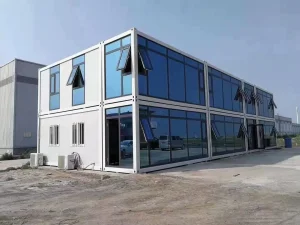
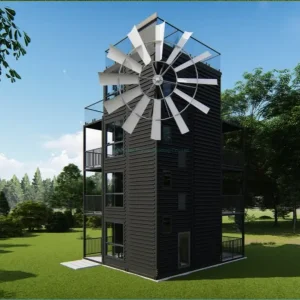
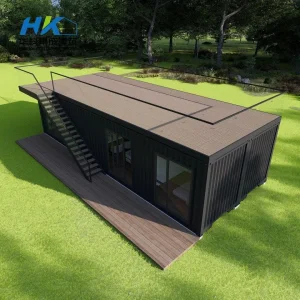
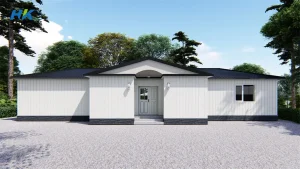
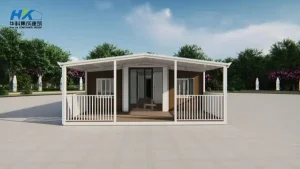
Factory-engineered photovoltaic-ready modular housing units and solar integration architectures optimized for Mexico's climatic zones.
Mexico stands as one of the world's most strategically positioned solar energy corridors. Situated within the global "Solar Belt," over 85% of Mexico’s national territory exhibits daily solar irradiance levels ranging from 5.0 kWh/m² to over 6.8 kWh/m². Regions such as the Sonoran Desert, Baja California, Chihuahua, and the Bajío industrial belt experience peak sun-hour metrics that consistently rank among the top tier globally. Driven by the massive wave of nearshoring—where international automotive, electronics, aerospace, and advanced manufacturing conglomerates are re-locating supply chains to Mexican industrial parks—demand for clean, cost-effective, and highly reliable power has reached an inflection point.
Industrial manufacturing facilities in northern hubs like Monterrey, Saltillo, Tijuana, and Querétaro face strict environmental, social, and governance (ESG) mandates alongside increasing grid reliance challenges. Consequently, commercial and industrial (C&I) solar photovoltaic (PV) deployments, alongside solar-integrated prefabricated infrastructure, have transformed from optional sustainability measures into essential operational risk mitigation strategies.
Navigating Mexico’s energy sector requires deep expertise in the regulatory framework managed by the Comisión Reguladora de Energía (CRE) and the state utility, Comisión Federal de Electricidad (CFE). Under current distributed generation (DG) regulations, solar photovoltaic projects below 500 kWp benefit from streamlined net metering and net billing frameworks that do not require complex generation licenses. This 500 kW threshold makes on-site industrial solar roofs, carport PV arrays, and off-grid modular solar setups incredibly lucrative for commercial buyers.
Furthermore, all solar panel installations and power conversion equipment must strictly adhere to the NOM-001-SEDE (Electrical Installations Standard) and receive certification from accredited Verification Units (UVIE). Equipment imported into Mexico must pass customs compliance backed by NOM-003-SCFI or international equivalents including IEC 61215, IEC 61730, and UL 61730 standards. High-quality manufacturing standards ensure that solar modules operate without micro-cracking or thermal degradation even under Mexico’s severe desert heat cycles and coastal humidity.
Zero Light-Induced Degradation (LID) and lower temperature coefficient (-0.30%/°C) optimized for high ambient heat in Mexican desert regions.
Dual-glass encapsulation with anodized aluminum alloy frames engineered to resist salt mist and wind-blown dust in coastal industrial zones.
Direct architectural integration with prefabricated structural steel roofs, containerized offices, and off-grid remote camp accommodations.
Selecting the right solar module architecture for industrial installations in Mexico dictates long-term Levelized Cost of Energy (LCOE) performance. The comparison table below outlines key technical parameters that engineering, procurement, and construction (EPC) contractors must evaluate:
| Technical Parameter | Next-Gen N-Type TOPCon Dual-Glass | Standard P-Type PERC Monocrystalline | Impact on Mexico Projects |
|---|---|---|---|
| Module Efficiency | 22.5% – 23.2% | 20.1% – 21.3% | Requires 8% less roof space in space-constrained industrial zones. |
| Temperature Coefficient | -0.30% / °C | -0.35% / °C | Generates up to 3.8% more yield under +40°C Mexican summer heat. |
| Bifaciality Factor | 80% ± 5% | 70% ± 5% | Delivers extra rear-side yield on bright concrete or white roof coatings. |
| First-Year Degradation | ≤ 1.0% | ≤ 2.0% | Protects initial CAPEX investment with higher guaranteed year-1 revenues. |
| Annual Degradation (Yr 2-30) | ≤ 0.40% / year | ≤ 0.55% / year | Delivers over 87.4% rated output at Year 30 vs 80.7% on legacy panels. |
| Encapsulation Material | POE (Polyolefin Elastomer) | EVA (Ethylene Vinyl Acetate) | Prevents Potential-Induced Degradation (PID) in high-humidity climates. |
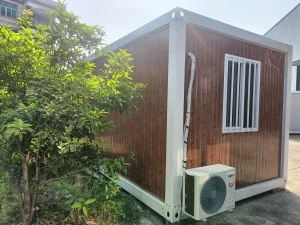
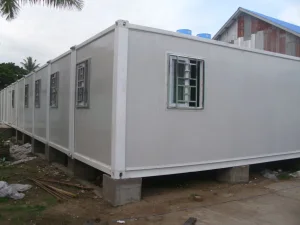
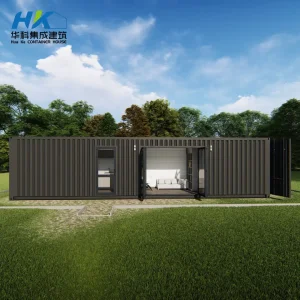
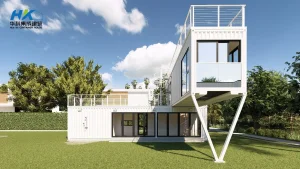
A critical operational bottleneck for expanding companies in Mexico is the lead time required to establish permanent concrete buildings alongside traditional rooftop solar infrastructure. Modern modular construction solves this dilemma through Solar-Integrated Prefabricated Modular Units. Standardized shipping containers, flat-pack camp units, and light-steel villas can be manufactured with structural pre-drills, optimized mounting rails, and factory-installed solar microgrid packages.
Whether deploying remote mining camps in Sonora, agricultural processing offices in Michoacán, or fast-track warehousing complexes along the US-Mexico border, integrating high-efficiency solar panels directly with modular structural steel enclosures cuts overall deployment timelines by over 60%. Micro-inverters and battery storage energy systems (BESS) fit directly inside pre-insulated modular equipment shelters, delivering plug-and-play off-grid electricity from Day 1 of site establishment.
Importing high-efficiency solar modules and solar-integrated modular buildings into Mexico requires navigating international maritime freight routes and localized customs procedures. Primary ports of entry include Manzanillo (Colima) and Lázaro Cárdenas (Michoacán) on the Pacific Rim, alongside Veracruz and Altamira on the Gulf Coast.
International corporations operating under the IMMEX Program (Maquiladora Industry) enjoy significant tariff benefits, including tax-deferred temporary importation of production inputs and capital goods. Working with an experienced OEM/ODM factory supplier ensures that shipping containers are loaded to maximum volumetric capacity, with custom export packaging that protects sensitive solar glass and structural frames during transpacific transit.
To safeguard long-term financial returns, procurement teams must enforce stringent factory audit protocols prior to dispatch. Factory quality controls include 100% Dual-EL (Electroluminescence) Inspection to identify micro-cracks before lamination, flash testing under Standard Test Conditions (STC: 1000W/m², AM1.5, 25°C), and mechanical load testing designed to withstand hurricane-force winds up to 2400 Pa and snow loads up to 5400 Pa.
Our manufacturing partners back every commercial delivery with a 12-Year Workmanship Warranty and a 25 to 30-Year Linear Power Warranty, supported by third-party insurance re-underwriting options for bankability in project financing.
Explore specialized industrial housing, modular camps, and solar-integrated structures ready for shipping to Mexican ports.
In-depth technical answers regarding regulations, logistics, performance warranties, and integration parameters for commercial solar solutions in Mexico.
Partner with a trusted solar and modular building manufacturer. Contact our engineering and procurement desk today for custom project sizing, bill of materials (BOM) estimates, and factory-direct pricing.
Send Inquiry Now