Factory-engineered, turn-key containerized pool units optimized for Midwest sub-zero thermal stability and rapid site integration.
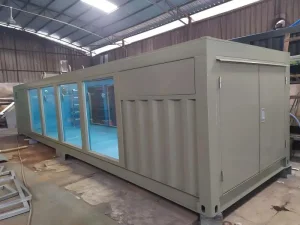
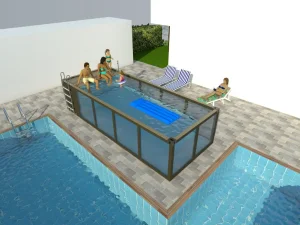
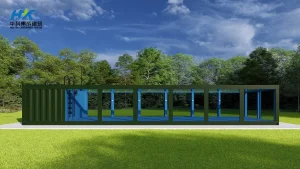
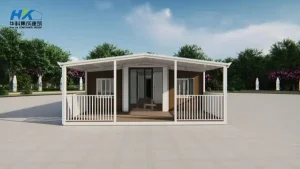
Analyzing urban density, extreme freeze-thaw dynamics, and commercial real estate demands across Cook County and the Greater Chicago Metropolitan Area.
The Greater Chicago real estate sector—encompassing urban commercial developments in Fulton Market and the Loop, upscale residential estates in Lincoln Park and Evanston, and expansive hospitality properties in the outer suburbs—is experiencing a structural shift toward rapid-deployment, high-durability amenities. High-density commercial residential projects, boutique hotels, and luxury multi-family developments increasingly utilize shipping container swimming pools as a high-ROI, architecturally distinct alternative to traditional in-ground concrete (shotcrete) installations.
USDA Hardiness Zone 5b/6a imposes severe stress on aquatic infrastructure. With winter temperatures dropping below -15°F (-26°C) and soil frost lines reaching depths of up to 42 inches, traditional poured concrete pools suffer high rates of structural shear, micro-cracking, and heave. Modular container pools utilize structural steel framing and specialized elastomer thermal breaks to absorb frost heave without structural degradation.
Furthermore, Chicago’s dense urban topography presents severe spatial and logistical constraints. Narrow access alleys, tight municipal setback requirements, and stringent zoning rules enforced by the Chicago Department of Buildings (DOB) make month-long excavation and concrete pours financially unviable for many developers. Prefabricated container pools engineered off-site reduce on-site construction schedules from 6 months down to 3 days, minimizing traffic disruption and municipal noise code friction.
Detailed breakdown of material science, hydrostatic pressure distribution, and anti-corrosion defense mechanisms.
Fabricated using heavy-gauge ISO Corten-A weathering steel. The self-passivating oxide layer prevents subsurface oxidation even when exposed to high-humidity chloride environments and Midwest road salts.
Choice of premium, seamless molded marine fiberglass shell inserts or heavy-duty 60-mil reinforced co-polymer liners. Eliminates seam leaks and withstands extreme water movement.
Closed-cell high-density polyurethane (PU) spray insulation (up to 3.5 inches) applied directly to the outer corrugated steel wall cavities. Prevents heat loss and lowers operational energy costs by up to 60%.
| Engineering Attribute | Container Swimming Pools | In-Ground Shotcrete / Concrete | Traditional Vinyl Liner |
|---|---|---|---|
| Installation Timeline | 2 to 5 Days (On-Site) | 3 to 6 Months | 4 to 8 Weeks |
| Freeze-Thaw Resistance | Superior (Steel absorbs movement) | Poor (High crack risk in Chicago) | Moderate (Liner damage risk) |
| Structural Frame Strength | Cor-Ten Marine Steel Shell | Steel Reinforced Concrete | Galvanized Steel / Polymer Wall |
| Relocatability (Asset Mobility) | 100% Relocatable (Crane/Flatbed) | 0% (Permanent fixture) | 0% (Permanent fixture) |
| Thermal Energy Retention | High (Closed-cell R-24 to R-32) | Very Low (Concrete absorbs cold) | Low (Uninsulated ground contact) |
How real estate developers, glamping operators, and commercial contractors evaluate capital expenditure against lifetime operational value.
For enterprise procurement officers and commercial developers across North America and Europe, containerized swimming pools represent a standardized, scalable architectural module. Sourcing directly from certified international manufacturing facilities yields substantial cost advantages without compromising structural integrity.
In high-cost municipal markets like Chicago, labor overhead accounts for up to 65% of traditional pool installation costs. By shifting structural fabrication, plumbing manifold assembly, electrical wiring (UL/CSA compliant components), and insulation application to a controlled factory setting, buyers achieve a 40% to 55% CapEx reduction.
Integrating artificial intelligence, solar thermal capture, and smart IoT control systems into modern modular pool manufacturing.
Real-time algorithmic water chemistry balance monitoring. Integrated sensors auto-inject dosing agents, reducing chemical usage by 35% and providing remote diagnostics via mobile applications.
Hybrid photovoltaic-thermal (PVT) solar covers and integrated thermal skin panels capture ambient solar energy to maintain water warmth during cold Chicago autumn and spring months.
Engineered motorized, load-bearing acrylic and insulated steel security covers that slide seamlessly into hidden container deck vaults, enhancing thermal retention and child safety.
Navigating local building codes, structural engineering calculations, and door-to-door delivery across Illinois.
Deploying a modular swimming pool in Chicago requires strict adherence to both municipal zoning ordinances and Illinois state building codes. Our manufacturing workflow supports local architects, general contractors, and developers with comprehensive technical documentation packages designed for rapid permit approval.
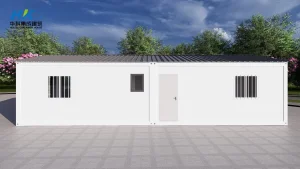
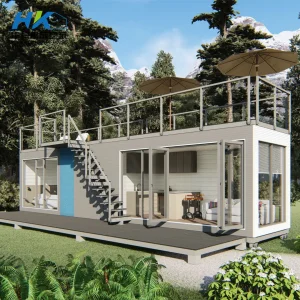
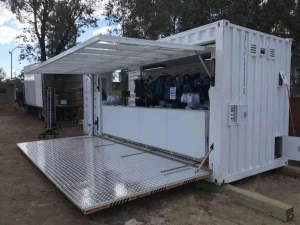
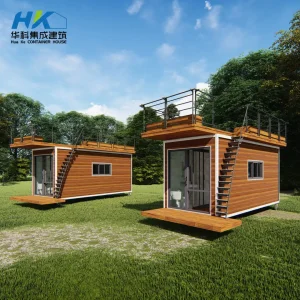
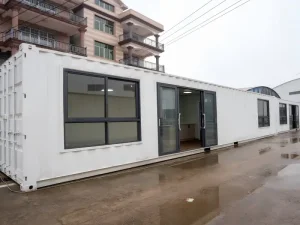
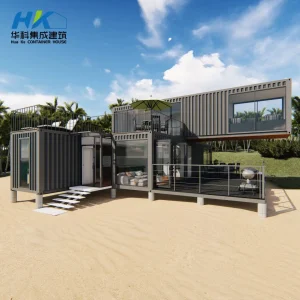
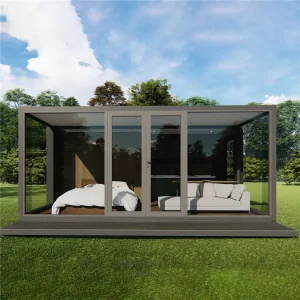
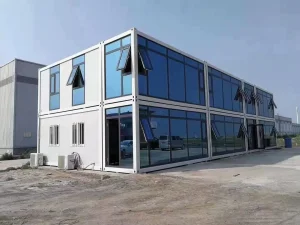
Explore our full line of factory-direct modular structures, container homes, and aquatic engineering units available for Chicago and global delivery.
Direct answers regarding installation, winterization, permits, and engineering specifications for Midwest buyers.
Our container pools engineered for the Midwest utilize a dual-layer winterization protocol. Closed-cell high-density polyurethane (PU) spray insulation (R-24 to R-32 value) coats the exterior steel hull, retaining ambient thermal energy. Additionally, an automatic freeze-recirculation loop combined with integrated electric line heaters prevents plumbing lines from freezing even when temperatures drop to -20°F.
Container pools distribute weight evenly along their structural corner castings and bottom frame. Standard site preparation requires either a 6-inch reinforced concrete slab engineered for local soil bearing capacity, or engineered concrete piers placed below Chicago’s 42-inch frost line. A level compacted gravel base with adequate drainage perimeter is also required.
Yes. All electrical pumps, heaters, and filtration skids are built using UL/CSA listed components adhering to NEC Article 680 standards. We provide fully stamped structural calculations, architectural CAD drawings, and MEP schematics to streamline permit submittals with local municipal building departments across Illinois.
Factory fabrication, custom shell fitting, and testing take approximately 25 to 35 days. Ocean freight and intermodal rail transport from our manufacturing base to the Port of Chicago or local logistics yards typically takes 30 to 40 days. Total door-to-site delivery lead time averages 60 to 75 days from final engineering approval.