High-Performance Thermal Envelope Systems

Wholesale Thermal Insulation Quotes & Factory Supplier Solutions

Architectural whitepaper on structural thermal efficiency, rigid polyurethane (PIR/PUR), hydrophobic rock wool sandwich panels, and modular building insulation procurement for B2B global importers.

Factory Direct Supply

Featured Prefab Units & Insulated Modules

Explore high-spec thermal envelope modular systems direct from our Jiangxi manufacturing base.
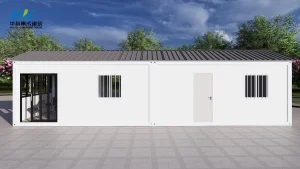
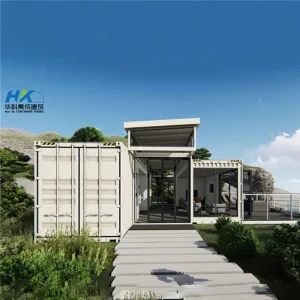
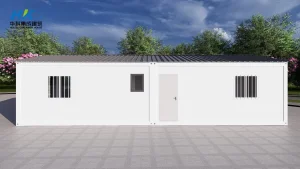
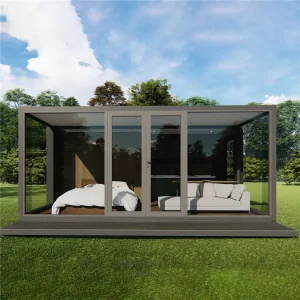
Custom Easy Install Quick Assembly Flat Pack Assembly Container Guard Security Rooms

Custom Easy Install Quick Assembly Flat Pack Guard Security Rooms

Get Wholesale Quote
Wholesale Light steel structure modular prefabricated house

Wholesale Light Steel Structure Modular Prefabricated House

Get Wholesale Quote
Custom Two bedroom prefabricated house Product

Custom Two Bedroom Prefabricated Thermal-Efficient House

Get Wholesale Quote
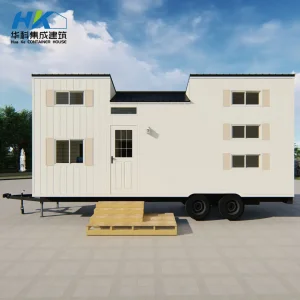
Custom Comfortable modern nature trailer house caravan

Custom Comfortable Modern Nature Mobile Trailer Caravan House

Get Wholesale Quote
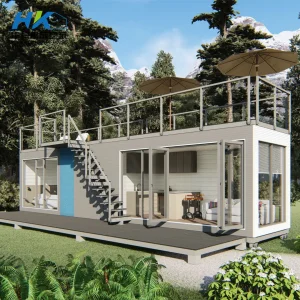
OEM New Luxury 4*40ft Villa Customizable Prefabricated building Container House

OEM New Luxury 4*40ft Modular Container Villa Structure

Get Wholesale Quote
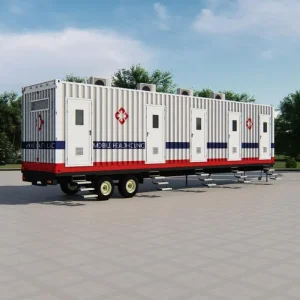
OEM Cheapest Price Emergency Shelter Modular prefab container clinic

OEM Emergency Shelter & Modular Prefab Container Clinic

Get Wholesale Quote
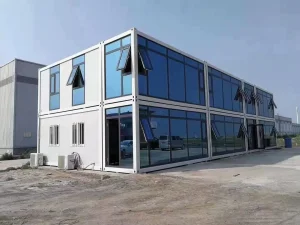
Wholesale Modern prefab flat pack container house office dorm

Wholesale Modern Prefab Flat Pack Container Office & Dormitory

Get Wholesale Quote
Wholesale Factory living in a container home America market

Luxury Comfortable Prefab Living Container Home (US Spec)

Get Wholesale Quote
0.022
W/m·K PIR Conductivity ($\lambda$)
A1 / B1
Fire Safety Class (EN 13501-1)
12,000m²
Jiangxi Manufacturing Hub
65%
HVAC Energy Reduction Impact
Executive Whitepaper

Strategic Procurement of Industrial Thermal Insulation & Modular Envelopes

In contemporary industrial, commercial, and residential construction, thermal insulation is no longer merely a passive building element; it is the fundamental core of building thermodynamics, energy conservation economics, and decarbonization compliance. As global energy mandates grow increasingly stringent—driven by regulatory frameworks such as the European Union’s Energy Performance of Buildings Directive (EPBD), ASHRAE 90.1 in North America, and the National Construction Code (NCC) in Australia—sourcing high-performance thermal insulation materials at wholesale scale requires a rigorous understanding of thermal resistance ($R$-value), thermal transmittance ($U$-value), material chemistry, and structural integration.

When procurement managers, civil engineering contractors, and modular housing developers search for wholesale thermal insulation quotes and suppliers, their underlying user intent encompasses far more than simple per-square-meter unit costs. They require comprehensive technical validation regarding fire retardancy ratings, moisture vapor transmission rates, structural compressive strength, long-term aging thermal conductivity ($\lambda$), and global supply chain resilience. This technical guide provides an exhaustive engineering breakdown to assist commercial buyers in evaluating thermal insulation core materials—specifically Polyisocyanurate (PIR), Polyurethane (PU), Hydrophobic Rock Wool, Expanded Polystyrene (EPS), Extruded Polystyrene (XPS), and Aerogel composites—for pre-engineered modular buildings, cold-storage facilities, and modern architectural envelopes.

Information Gain Insight: The thermal performance of a modular container building or industrial envelope is dictated by thermal bridging coefficients ($\Psi$). Using high-density continuous insulation (CI) cores eliminates linear heat losses across corten steel structural posts, improving overall HVAC efficiency by up to 65% compared to conventional uninsulated or retrofitted framing systems.

Material Science & Thermodynamics

Technical Roadmap: Thermal Insulation Material Comparison

Engineered data matrix comparing key physical properties of wholesale core insulation materials.

Insulation Core Material Thermal Conductivity ($\lambda$) Density Range ($kg/m^3$) Fire Classification Moisture Resistance Optimal Application Scenario
PIR (Polyisocyanurate) 0.022 - 0.024 W/m·K 38 - 45 kg/m³ B-s1, d0 / Class 1 High (>95% Closed Cell) High-efficiency modular walls, refrigerated transport, roof decks
PUR (Polyurethane Foam) 0.024 - 0.028 W/m·K 32 - 40 kg/m³ B2 / B3 Class High (>90% Closed Cell) Field-injected cavities, residential modular units, cold rooms
Hydrophobic Rock Wool 0.035 - 0.040 W/m·K 80 - 140 kg/m³ Class A1 Non-Combustible Vapor Permeable (Water Repellent) High-rise facades, fire-rated labor camp modules, industrial plants
Graphite EPS (Neopor) 0.030 - 0.032 W/m·K 18 - 25 kg/m³ B1 Flame Retardant Moderate (Requires Vapor Barrier) Cost-effective flat pack containers, EIFS wall systems
XPS (Extruded Polystyrene) 0.028 - 0.032 W/m·K 28 - 45 kg/m³ B1 / B2 Class Excellent (<0.5% Absorption) Sub-floor insulation, high-load foundations, coastal structures
Silica Aerogel Blankets 0.015 - 0.018 W/m·K 150 - 200 kg/m³ Class A1 Non-Combustible Hydrophobic Ultra-thin high-tech space constraints, thermal bridge break strips

PIR/PUR Trimerization Chemistry

Polyisocyanurate (PIR) exhibits superior thermal stability over standard polyurethane due to its ring-like trimer structure formed at high index ratios (>250). This chemical formulation delivers extreme fire resistance and lower smoke emission density while providing the industry's lowest lambda values for slim-profile structural panels.

Hydrophobic Rock Wool Engineering

Our industrial mineral wool cores undergo specialized organosilicone hydrophobic treating during spin fiber formation. The resulting material achieves absolute non-combustibility (Euroclass A1) while actively repelling liquid water ingress, maintaining structural mechanical integrity and R-value even in humid oceanic transport conditions.

Vapor Barrier Integration

Thermal insulation effectiveness relies heavily on psychrometric dew-point control. Factory-laminated aluminum foil facings, steel skin seals, and interstitial vapor barrier membranes prevent interior water vapor condensation from degrading thermal core performance and causing internal rust across modular frames.

Climatic Adaptation

Localized Application Scenarios & Environmental Deployment

Engineered insulation configurations optimized for regional climate challenges across major global markets.

1. Sub-Zero Arctic & Nordic Zones (Scandinavia, Canada, Alaska)

In extreme cold climates where ambient temperatures drop below -40°C, structural thermal envelopes require continuous insulation thickness ranging from 100mm to 150mm (PIR or dual-density Rock Wool). The primary engineering objective is eliminating cold bridges across structural floor beams and roof trusses. Modified shipping container homes and flat-pack offices destined for Northern Europe utilize internal spray-foam PUR polyurea seals combined with triple-glazed Low-E argon windows to achieve overall wall $U$-values as low as $0.15\ W/m^2K$.

2. Arid High-Heat Desert Environments (GCC Region, Middle East, Australia Outback)

High solar radiation spikes ambient surface temperatures on metal roof panels up to 85°C. To prevent thermal radiation gain, our wholesale insulation sandwich panels incorporate reflective PVDF exterior coil coatings alongside high-density PIR cores. This thermal barrier prevents heat flux intrusion, slashing air conditioning power demand by up to 55%. Integrated solar panels paired with 75mm PIR wall panels allow off-grid container clinics and accommodation camps to run reliably under harsh desert conditions.

3. High-Humidity Coastal & Tropical Belts (Southeast Asia, Caribbean, West Africa)

Warm, moisture-laden air poses severe risks of interstitial condensation and mold proliferation inside wall cavities. In these regions, closed-cell extruded polystyrene (XPS) and PIR panel systems are deployed due to their non-hygroscopic cellular structure. Heavy-duty galvanized steel framing combined with anti-corrosion fluorocarbon coatings ensures structural modular units maintain thermal performance despite 98% relative humidity and saline marine environments.

4. Industrial Cold Chain & Emergency Medical Shelters

Relocatable medical storage units, pharmaceutical mobile clinics, and walk-in cold rooms require exact temperature retention ($\pm 0.5^\circ\text{C}$). Factory-engineered cam-locking PIR sandwich panels with food-grade stainless steel or antibacterial PVC cladding deliver airtight thermal seals, enabling seamless temperature regulation for critical emergency response and food distribution networks globally.

Supply Chain Advantage

China Factory Supply Chain Resilience & Manufacturing Efficiency

Why sourcing wholesale thermal insulation and prefabricated modular structures from Jiangxi offers unmatched scale and quality assurance.

Jiangxi HK Prefab Building Co., Ltd. leverages the unmatched raw material ecosystem and advanced industrial cluster advantages of Eastern China. By integrating raw chemical polyol/MDI blending, continuous double-belt lamination, and automated structural steel fabrication within our modern 12,000m² facility, we eliminate intermediate supply chain markups while maintaining rigorous quality control.

Continuous Double-Belt Lamination

Our state-of-the-art continuous laminating lines apply high-pressure polyurethane foaming under controlled ambient temperatures. This guarantees uniform cell distribution, precise core density, zero delamination, and ultra-flat surface aesthetics across 12-meter panel spans.

Economies of Scale & Bulk Purchasing

Through strategic bulk contracts with global raw chemical manufacturers (such as Wanhua and BASF) and top-tier steel mills (BaoSteel, AnSteel), we secure premium raw materials at competitive rates, allowing us to pass significant wholesale savings directly to project importers.

Freight-Optimized Flat-Pack Shipping

Freight cost is a critical component of landed B2B pricing. Our engineered flat-pack modular container systems collapse structural insulation panels into compact units, allowing up to 4 complete 20ft modular cabins or 800m² of wall panels to fit into a single 40ft High Cube container.

Regulatory Compliance

Global Regulatory Compliance & Testing Standards

Ensuring full alignment with international building codes and fire safety standards.

To support smooth customs clearance and local building authority approval across North America, Europe, Australia, and the Middle East, our insulation products and modular building panels undergo comprehensive physical and chemical testing by accredited third-party laboratories (SGS, Intertek, TUV).

Thermal & Physical Standard Compliance

  • ASTM C518 / EN 12667: Standard test methods for steady-state thermal transmission properties using heat flow meter apparatus.
  • ISO 8301: Thermal insulation determination of steady-state thermal resistance and related properties.
  • ASTM D1621: Compressive properties measurement for rigid cellular plastics ensuring core structural load bearing.
  • ASTM E96: Water vapor transmission testing evaluating desiccant and water vapor permeance ratings.

Fire Safety & Environmental Protocols

  • EN 13501-1 / ISO 1182: Fire classification of construction products (Achieving Class A1 for Rock Wool, B-s1,d0 for PIR).
  • ASTM E84 (UL 723): Surface burning characteristics testing (Flame Spread Index <25, Smoke Developed Index <450).
  • Zero ODP & Low GWP Blowing Agents: Polyurethane blowing formulations utilize Solstice/cyclopentane technologies, fully complying with Montreal Protocol and EU F-Gas regulations.
  • LEED & BREEAM Credits: Supporting green building points via recycled steel content and low volatile organic compound (VOC) emissions.
Modular Architecture Catalog

Insulated Modular Building & Prefab Solutions

Review our complete range of customized modular structures and insulated container quotes.
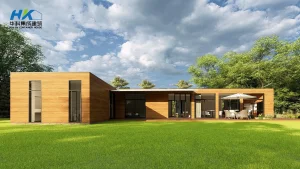
High-Quality Customized Modern Design Prefabricated Luxury Modular Container Villa

High-Quality Custom Prefabricated Luxury Modular Container Villa

Get Wholesale Quote
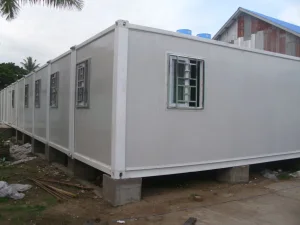
Custom Prefabricated Container Labor Camp and Office

Custom Prefabricated Container Labor Camp & Site Office Complex

Get Wholesale Quote
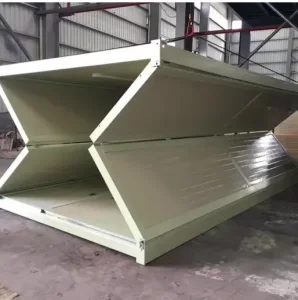
Wholesale Fast Install Prefab Economic Expandable Modular Flat Pack Folding Container

Wholesale Fast Install Expandable Prefab Folding Container House

Get Wholesale Quote
Custom Long Lasting Modular Amazing Luxury Modified Two Story Container House

Custom Long-Lasting Luxury Modified Two-Story Container Home

Get Wholesale Quote
Wholesale Modular Steel Structure Sandwich panel Labor Camp Prefab Home

Modular Steel Structure Insulated Sandwich Panel Prefab Home

Get Wholesale Quote
Wholesale 3X40FT Luxury Modified Container House

Wholesale 3X40FT Luxury Modified Multi-Container Villa

Get Wholesale Quote
OEM One bedroom container house Factory Products

OEM Compact One-Bedroom Insulated Container Home

Get Wholesale Quote
Custom Two bedrooms prefabricated container beautiful homes Quotes

Custom Two Bedrooms Prefabricated Container Beautiful Homes

Get Wholesale Quote
Engineering Knowledge Base

Wholesale Thermal Insulation & Prefab Procurement FAQ

Technical solutions and commercial answers curated by our senior insulation engineers and export specialists.

How do I calculate the required insulation thickness for a container home project to satisfy regional building codes?
Required thermal insulation thickness is dictated by the target overall heat transfer coefficient ($U$-value) established by local building energy codes (e.g., IECC in the US, Part L in the UK, or Section J in Australia). The formula is $U = 1 / R_{\text{total}}$, where $R_{\text{total}}$ is the sum of thermal resistances of all material layers ($R = d / \lambda$, where $d$ is thickness in meters and $\lambda$ is thermal conductivity). For instance, to achieve a wall $U$-value of $0.24\ W/m^2K$ using PIR ($\lambda = 0.022\ W/m·K$), a core thickness of approximately 85mm to 100mm is required, accounting for surface air film resistances and steel framing thermal bridge adjustments.
What is the structural performance difference between PIR core and Rock Wool core sandwich panels?
PIR sandwich panels offer superior thermal insulation per millimeter ($\lambda \approx 0.022\ W/m·K$) and ultra-lightweight structural properties with high flexural rigidity due to chemical bonding with steel facings. Hydrophobic Rock Wool panels have a slightly higher thermal conductivity ($\lambda \approx 0.038\ W/m·K$), making them thicker for equivalent insulation performance. However, Rock Wool provides absolute Non-Combustible Class A1 fire protection and higher sound attenuation ($R_w \ge 32\ dB$). Projects with strict fire code requirements (such as multi-story labor camps or industrial plants) prioritize Rock Wool, whereas residential modular homes often utilize PIR.
How does HK Prefab ensure zero thermal bridging in modified shipping container houses?
Corten steel in shipping containers has a very high thermal conductivity ($\lambda \approx 50\ W/m·K$). To prevent thermal bridging, we apply a continuous insulation barrier inside or outside the steel corrugations. We use structural thermal break gaskets (aerogel strips or high-density XPS spacers) between steel studs and interior wallboards, combined with seamless closed-cell spray polyurethane foam or engineered interlocking PIR panels, completely decoupling the interior living space from the external steel shell.
What are the shipping container loading capacities for wholesale flat pack thermal insulation panels?
For standalone sandwich panel shipments, a single 40ft High Cube container accommodates approximately 750 m² to 900 m² of 50mm PIR panels, or 450 m² to 550 m² of 100mm panels. When purchasing complete flat pack container houses, one 40ft HC container comfortably fits 4 complete modular units inclusive of integrated floor, roof, insulated wall panels, doors, and electrical components, maximizing freight density.
Can customized OEM fire-rated insulation panels be produced under custom brand specifications?
Yes. We offer comprehensive OEM/ODM manufacturing. Commercial buyers can specify steel coil thickness (0.4mm to 0.8mm), skin profiles (micro-rib, flat, corrugated), surface treatments (PVDF, HDP, PE, stainless steel), core densities, panel widths (950mm, 1000mm, 1150mm), and protective film branding. Full mill test reports and batch compliance certificates are provided with each export shipment.
What is the expected service lifespan of PIR and Rock Wool insulation cores under humid conditions?
Both closed-cell PIR foam and silicone-treated hydrophobic Rock Wool cores are engineered for a design lifespan exceeding 30 to 50 years. Closed-cell PIR resists moisture absorption (<1% by volume), preventing hydrothermal degradation. When combined with hot-dip galvanized steel facings (AZ150 zinc-aluminum coating), the composite insulation system maintains over 90% of its initial thermal resistance over decades of continuous operation.

Ready to Request Wholesale Thermal Insulation Quotes?

Connect directly with our engineering team in Jiangxi, China. We provide complete technical proposals, thermal calculation sheets, custom drawings, and competitive direct-from-factory pricing within 24 hours.

Request B2B Wholesale Pricing