In an era defined by macro-economic volatility, rapid e-commerce expansion, dynamic nearshoring initiatives, and stringent ESG (Environmental, Social, and Governance) targets, traditional brick-and-mortar commercial warehouses no longer satisfy the operational agility required by modern global enterprises.
Traditional industrial construction is plagued by multi-year planning permits, volatile contractor costs, weather disruptions, and sunk capital lock-in. Custom versatile warehouse factories disrupt this dynamic by delivering fully pre-engineered modular structural frameworks that can be deployed in a fraction of the time.
By transitioning building assets into modular, relocatable, and scalable hardware, multi-national corporations convert heavy long-term CapEx burdens into adaptable operational assets that align perfectly with dynamic demand cycles.
Whether responding to extreme arctic thermal loads, humid equatorial logistics hubs, coastal saline environments, or high-seismic industrial zones, modern versatile container and prefab warehouses are precision-engineered. Utilizing cold-formed light steel structures (LGS), structural Corten-A steel, high-density polyurethane (PU), and rock-wool sandwich cladding panels, these systems ensure multi-decadal longevity.
B2B buyers, procurement executives, and EPC (Engineering, Procurement, and Construction) contractors evaluate suppliers of custom versatile warehouse factories based on key operational vectors.
Global procurement teams reject one-size-fits-all options. Demand centers on bespoke dimensional spans, multi-story structural stacking capacities (2-4 levels), integrated mezzanine floors, custom overhead crane bridge rails, and automated rack-supported warehouse integration.
Leading enterprises require structural verification against stringent international standards including Eurocodes (EN 1993 for steel structures), US ASCE 7 seismic/wind load criteria, Australian AS/NZS standards, and CE/UL/ISO certifications for electrical, fire (Class A), and thermal insulation systems.
Transportation logistics often represent up to 25% of total project costs. B2B buyers mandate flat-pack knocked-down design ratios (e.g., packing 4-6 flat-pack container office/warehouse modules into a single 40ft High-Cube container) to dramatically compress sea freight metrics.
How advanced Chinese manufacturing hubs—exemplified by state-of-the-art facilities in Jiangxi—deliver unprecedented cost efficiency, material precision, and global delivery reliability.
From raw steel processing to automated sandwich panel production, China’s industrial ecosystem eliminates intermediary markups. Direct access to high-yield steel mills, specialized coating facilities (hot-dip galvanization up to 275g/m²), and advanced composite resin suppliers ensures uncompromised quality control at baseline factory prices.
Modern versatile warehouse factories leverage automated fiber laser cutters, 6-axis robotic welding cells, and continuous PU sandwich panel rolling lines. Dimensional tolerances are held within ±0.5mm, ensuring seamless field bolt-assembly without on-site re-drilling or modification.
Detailed comparative evaluation between Custom Versatile Modular Warehouses, Traditional Concrete Construction, and Standard Pre-Engineered Buildings (PEB).
| Performance Vector | Custom Versatile Modular Warehouse | Traditional Concrete / Masonry | Standard Heavy Steel PEB |
|---|---|---|---|
| Fastest (15–30 Days Factory Fabrication) | Slowest (8–18 Months Site Work) | Moderate (3–6 Months) | |
| Minimal (Point Piers, Slab, or Concrete Strip) | Heavy Deep Excavation & Piling | Substantial Reinforced Slab | |
| 100% Modular, Re-locatable & Expandable | Permanent (Zero Relocatability) | Low (Complex Disassembly) | |
| High (Factory PU / Rock-Wool Sandwich Panels) | Requires Additional External EIFS Insulation | Requires On-Site Insulation Layering | |
| Seismic Zone 8+ / Wind Load up to 180 km/h | Vulnerable to Shear Cracking | High Resistance (Requires Bracing) | |
| Low Carbon Footprint, 95% Recyclable Steel | Extremely High Cement Carbon Intensity | Moderate to High Carbon Impact |
Discover how custom versatile warehouse factories serve specialized commercial and industrial use-cases across distinct global sectors.
Positioned near metropolitan centers, modular expandable warehouse units provide last-mile fulfillment capacity. Fast assembly allows logistics providers to lease land temporarily and deploy hubs within 48 hours.
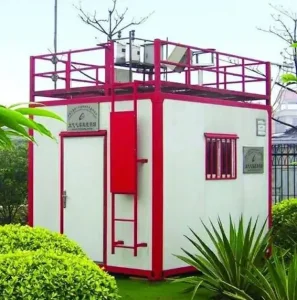
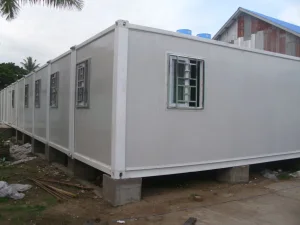
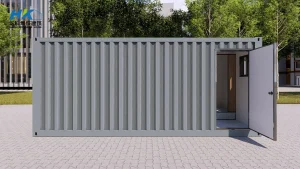
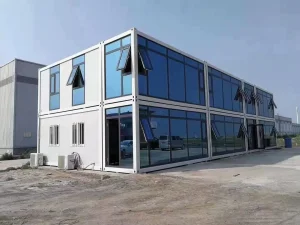
Heavy-duty modified shipping containers and flat-pack modules serve as secure equipment shelters, field monitoring cabins, housing, and maintenance workshops in harsh off-grid environments.
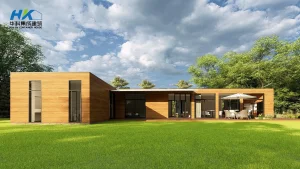
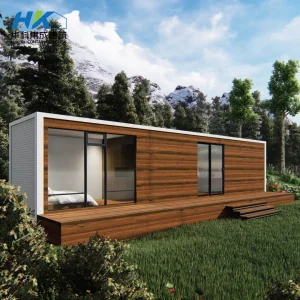
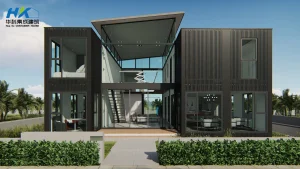
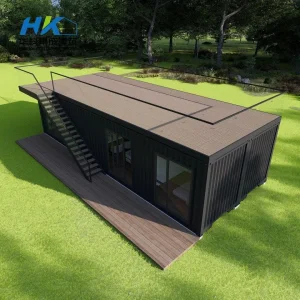
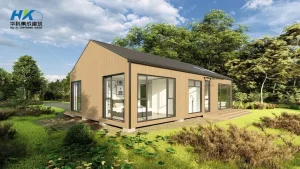
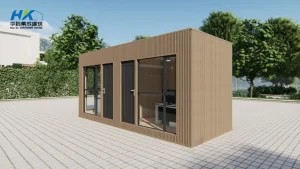
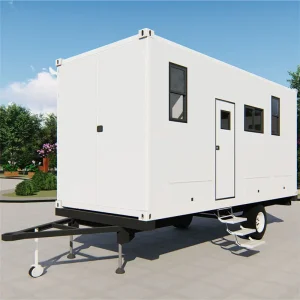
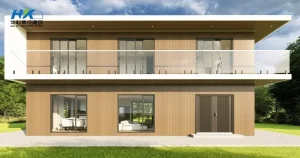
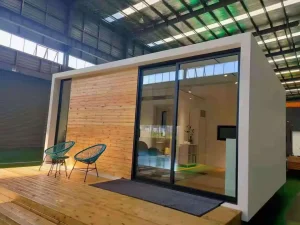
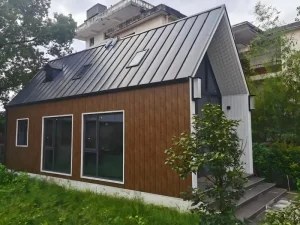
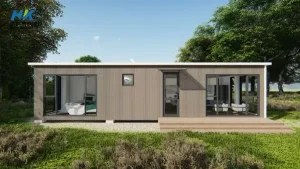
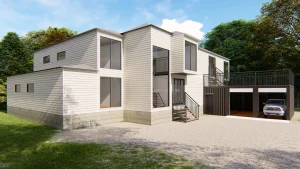
Combining customized luxury modular container villas, 20ft container offices, and trailer blocks into vibrant commercial parks, pop-up retail hubs, and resort staff accommodations.
Integrated with high-density polyurethane (PU) insulation cores and seamless joint locking mechanisms, creating airtight, temperature-controlled facilities for perishables and medical supplies.
Technical and commercial clarity for industrial buyers, developers, and supply chain directors.