Engineered specifically for rapid deployment across Aichi Prefecture, offering structural resilience and flexible land utility.
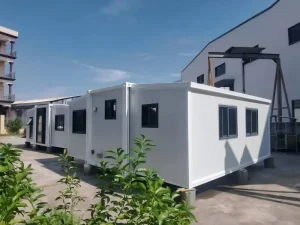
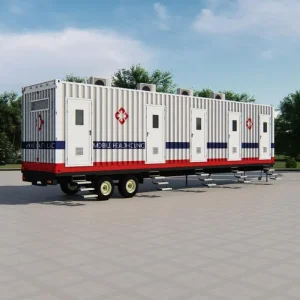
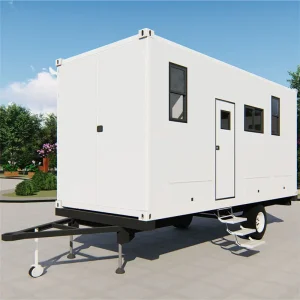
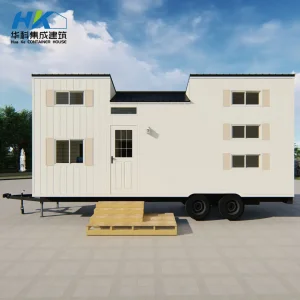
Navigating land constraints, strict building codes, and high-velocity manufacturing expansions across Greater Nagoya and the Chubu Economic Zone.
Nagoya serves as the beating heart of Japan's automotive, aerospace, and precision engineering sectors. With major hubs around Meieki, Sakae, and the industrial corridors of Toyota City and Komaki, land valuation remains exceptionally high. Traditional commercial construction requires length permits under the Japanese Building Standard Law (Kenchiku Kijun-hō, Article 6). Trailer houses engineered as certified mobile assets (Sharyō-keishiki) bypass long municipal zoning delays, providing corporate entities with an instant operational footprint on leased or temporary parcels.
As Japan’s largest port by total cargo throughput, the Port of Nagoya provides a key gateway for imported modular structures. Our trailer house series is optimized for standard flat-pack ocean shipping or roll-on/roll-off (Ro-Ro) vessel transportation directly into Tobishima or Minato Pier. Local logistics links via the Ise-Wangan Expressway enable rapid transport to construction yards, temporary corporate headquarters, or leisure sites throughout Mie, Gifu, and Aichi prefectures within hours of customs release.
Transparent cost breakdowns, FOB vs. CIF Nagoya estimates, and technical asset depreciation benefits for corporate buyers.
| Model Series | Structural Footprint | FOB Base Rate (USD) | Est. CIF Nagoya Port (USD) | Primary Target Application | Depreciation Asset Class |
|---|---|---|---|---|---|
| Expandable Compact Series | 20ft / 37 m² Expanded | $11,500 – $14,800 | $13,200 – $16,900 | Remote Industrial Offices / Micro Housing | 4-Year Vehicle Asset |
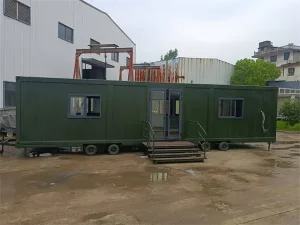
| Mobile Clinic / Emergency Shelter | 20ft Modular Cabin | $9,800 – $13,200 | $11,400 – $15,100 | First-Aid Sites / Disaster Readiness | 4-Year Depreciable Unit |
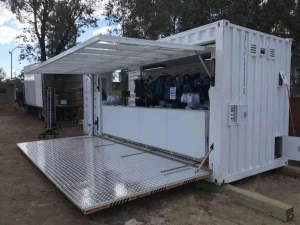
| Commercial Pop-Up / Coffee Shop | 20ft Custom Glazing | $12,400 – $17,500 | $14,100 – $19,600 | Retail Outlets / Sakae Event Kiosks | 4-Year Vehicle Asset |
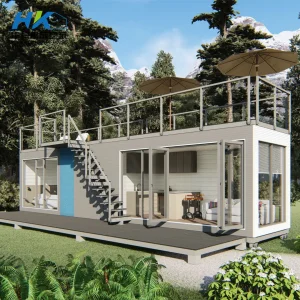
| Luxury Resort Caravan Series | 40ft Custom Trailer | $22,000 – $31,000 | $24,800 – $34,200 | Glamping Resorts / Executive Retreats | 4-Year Depreciable Unit |
| Commercial Food Trailer Unit | 40ft Catering Spec | $18,500 – $26,000 | $21,000 – $29,100 | High-Capacity Catering / Events | 4-Year Mobile Equipment |
Because trailer houses mounted on dual or triple-axle chassis with tow-hitch mechanisms are legally classified as non-fixed assets in Japan, corporate procurement avoids fixed asset tax (Kotei Shisan-zei) typically levied on real estate. This drastically lowers total cost of ownership (TCO).
Units are engineered to fit precisely into standard 40ft High-Cube (HC) ISO containers or shipped as self-contained towable units on Ro-Ro vessels. This ensures zero space wastage, reducing ocean freight costs per square meter.
All documentation—including Bill of Lading, Certificate of Origin, structural steel test certificates (JIS specifications), and material safety data sheets (MSDS)—is synchronized with Nagoya Customs brokers for immediate clearance.
Precision structural design calibrated to withstand Typhoon winds, seismic shifts, and Nagoya's hot, humid summers paired with cold winter winds.
The chassis and main frame utilize JIS G3101 SS400 structural steel with high-velocity zinc-rich epoxy anti-corrosion coating. Hot-dip galvanizing options provide resistance to marine air corrosion around Nagoya Port and coastal Aichi regions.
Walls feature high-density Polyurethane (PU) injection or fire-resistant Rockwool sandwich panels achieving thermal conductivity as low as 0.022 W/m·K. Double-glazed Low-E argon-filled windows reflect high solar thermal radiation in summer while maintaining internal thermal efficiency in winter.
Electrical pre-wiring follows Japanese Electrical Appliance and Material Safety Law (PSE) standards. Units include quick-connect external hookups for 100V/200V dual voltage power, municipal water lines, and greywater discharge manifolds.
Full alignment with Japanese Road Transport Vehicle Act directives and non-fixed structure exemptions.
For a trailer house to remain legally classified as a vehicle in Japan, it must remain fully transportable at all times. Our engineering ensures that integrated axles, mechanical brake systems, and heavy-duty towing drawbars are permanently attached. Utility lines utilize quick-release flexible couplers, ensuring the structure can be moved without specialized site dismantling.
While trailer houses do not utilize fixed concrete foundations (which would trigger standard building code requirements), stability against Japan's severe typhoon winds is essential. We supply heavy-duty mechanical screw-jack outriggers and ground anchor tie-down systems rated for wind loads up to 45 m/s, matching local Aichi meteorological thresholds.
Explore our complete range of specialized commercial, residential, and industrial modular solutions available for direct export to Nagoya.
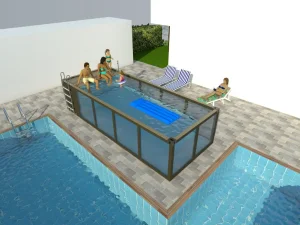
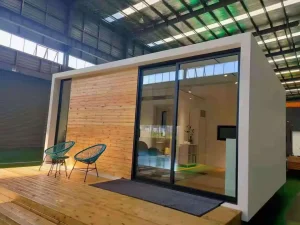
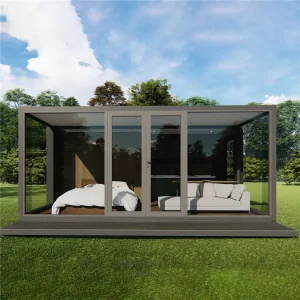
Addressing future challenges in urban agility, disaster mitigation, and net-zero carbon operations across Japan.
Aichi Prefecture actively prepares for seismic contingencies. Trailer houses provide rapidly deployable emergency command centers, field hospitals, and temporary residential hubs that can be towed to unaffected staging zones immediately following an earthquake event.
Future iterations incorporate Battery Energy Storage Systems (BESS) combined with rooftop monocrystalline solar arrays. Operating off-grid, these mobile units generate up to 48 kWh daily, ensuring power independence for remote commercial operations.
Integrated micro-climate sensors monitor internal humidity and air quality, automatically adjusting HVAC parameters tailored to Nagoya's distinct seasonal shifts. Centralized telemetry allows corporate owners to manage nationwide mobile fleets remotely.
In-depth technical and logistical clarity for procurement teams, project developers, and site owners in Nagoya.
Connect with our senior prefab structural engineers. Receive custom architectural CAD layouts, structural calculations, and exact CIF Nagoya Port quotes within 24 hours.
Send Inquiry Now