A Portable Toilet is more than a temporary seat beside a construction site or outdoor event. It is a compact sanitation system designed for places without permanent plumbing. Sanitation and toilet-industry expert Jack Sim, founder of the World Toilet Organization, said, “The toilet is the most important invention in human history.” His point gives this practical subject wider meaning. A clean, accessible toilet protects dignity, comfort, and public hygiene.
Most Portable Toilet units use a molded enclosure, a seat, a waste-holding tank, and a ventilation system. Some include a handwashing station, mirror, lighting, or accessibility features. When a person uses the unit, waste falls into the sealed tank below. A measured treatment solution helps control odor and supports easier servicing. It does not magically make waste disappear. That misunderstanding is common.
A trained service team later connects a vacuum hose and removes the tank contents. The unit is then cleaned, inspected, restocked, and returned to service. Good placement matters too. The ground should be stable, the door should open safely, and users should find soap or sanitizer nearby. High-traffic locations require more frequent maintenance. Weather changes the experience. Heat intensifies odors, while cold can affect liquids and fittings.
The process sounds simple. It is not always simple. Small oversights, such as an empty sanitizer dispenser or poor ventilation, quickly become noticeable. This article will explain what a Portable Toilet is, how each component works, and why regular servicing determines its real performance.
What Defines a Portable Toilet and What Is It Used For?
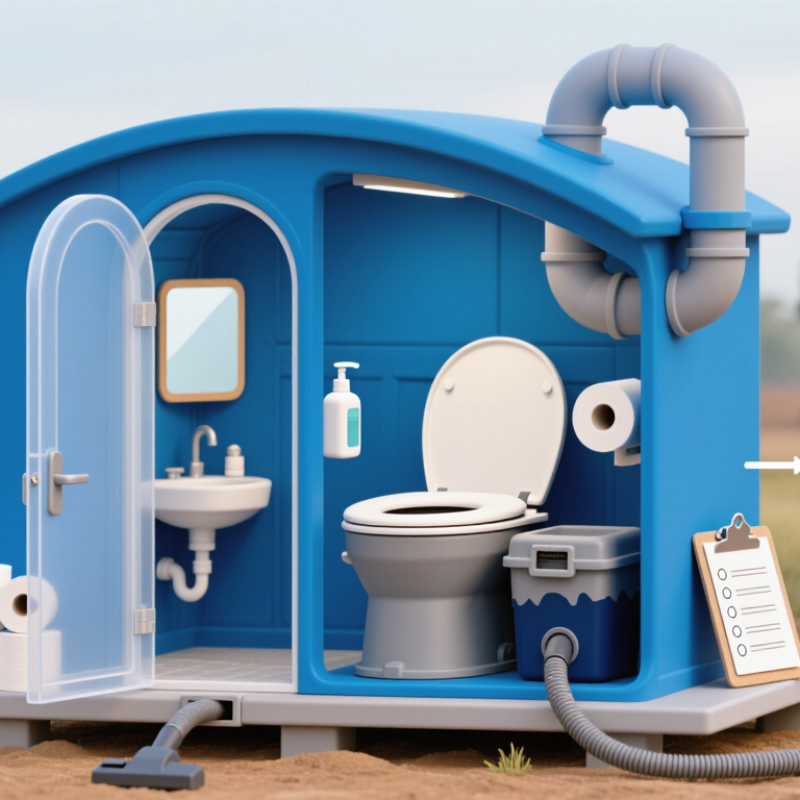
A portable toilet is a self-contained sanitation unit that can be moved between locations. It usually includes a seat, waste-holding tank, ventilation pipe, and hand-cleaning area. That is the key definition. It does not need a permanent sewer connection. Waste drops into the sealed tank below the seat, where deodorizing liquid helps control odors and slows bacterial activity. A service team later pumps out the tank, cleans the unit, and replenishes the treatment fluid.
Portable toilets are used where permanent restrooms are unavailable or impractical. Common settings include outdoor events, construction sites, parks, emergency response areas, and temporary facilities. Their purpose is simple: provide private, accessible sanitation close to where people work or gather. However, placement matters more than many users expect. A unit should stand on firm, level ground, away from flood-prone areas and heavy vehicle traffic. Poor positioning can cause tipping, unpleasant odors, or difficult servicing. The system is practical, but it is not maintenance-free.
Tips: Keep the door closed when unused. Do not place bulky waste inside. Check the tank level regularly. Provide lighting at night. A handwashing station should be nearby. Accessibility also deserves attention; a narrow path can make a usable toilet difficult to reach. Small oversights matter.
Key Components and Their Functions
What Is a Portable Toilet and How Does It Work?
A portable toilet is a self-contained sanitation unit for sites without fixed plumbing. Its main component is the waste tank beneath the seat. This sealed tank receives waste and limits contact with soil. A toilet seat and lid provide a stable, cleaner user surface. Many units also include a urinal, ventilation pipe, and service door. The vent reduces trapped odors, although it cannot remove every smell in hot weather.
Inside the tank, a measured treatment liquid helps control odor and slows bacterial activity. Vacuum service later removes the contents through the access port. Reliable servicing matters because poor cleaning can create hygiene risks around handles, floors, and splash areas. The WHO/UNICEF Joint Monitoring Programme reported in 2023 that 3.5 billion people lacked safely managed sanitation in 2022. Portable units cannot solve that global gap, but they provide practical sanitation where permanent systems are unavailable.
Tips: Check tank levels, ventilation, door locks, and hand-cleaning supplies daily. Place units on firm, level ground away from food preparation areas. Keep service records, even when the unit appears clean. A common weakness is assuming deodorizer equals hygiene. It does not. Industry guidance and occupational sanitation standards emphasize access, cleaning frequency, and safe servicing rather than fragrance alone. Some users also overlook accessibility: clear entry space and interior turning room can determine whether the unit is genuinely usable.
How Waste Is Collected and Contained
A portable toilet is a self-contained sanitation unit. Its waste does not enter a sewer line. Instead, it drops through the bowl into a sealed holding tank beneath the floor. Many standard units hold about 60 gallons of waste, although capacity varies by design and servicing schedule. The tank usually contains a small amount of treatment fluid, which helps control odor, reduce surface buildup, and slow biological activity.
Waste stays contained until a trained service worker empties the tank with a vacuum hose. The hose connects through an exterior access point, limiting direct contact and reducing spills. The collected material then moves to an approved wastewater treatment facility. This process matters because the WHO and UNICEF Joint Monitoring Programme reported that 3.5 billion people lacked safely managed sanitation in 2022. Portable systems cannot solve that global gap, but they provide controlled collection where permanent infrastructure is unavailable.
Use affects containment more than many people expect. Heavy traffic fills tanks quickly. Paper, wipes, and foreign objects can block the outlet or overload treatment fluid. Odor is not proof of immediate danger, but it signals that cleaning or pumping may be overdue. Industry servicing guidance often recommends more frequent visits for crowded events, heat, or extended use. Weekly service may work in moderate conditions. It is not a universal rule. Site managers should track users, temperature, tank levels, and complaints instead of relying on assumptions.
What Is a Portable Toilet and How Does It Work? — How Waste Is Collected and Contained
| Component or Feature |
What It Does |
How It Works |
Waste Collection and Containment |
| Enclosure and door |
Provides privacy and shelter around the toilet. |
A lightweight, molded enclosure is placed over a base and typically includes a door, ventilation openings, and a roof. |
It keeps the user separate from the waste tank; it does not itself process or dispose of waste. |
| Seat and toilet opening |
Provides a familiar place to sit and directs waste into the tank below. |
The seat is positioned over an opening connected directly to the holding tank. |
Waste falls into the sealed tank by gravity. In most standard units, there is no connection to a sewer line. |
| Holding tank |
Stores human waste and treatment liquid between service visits. |
The tank is integrated into the base of the unit and is designed to contain liquid and solid waste. |
The tank remains closed during normal use. Its capacity and fill rate vary by unit, number of users, and frequency of service. |
| Deodorizing and treatment liquid |
Helps control odors and supports hygienic servicing. |
A service provider may add a measured amount of treatment liquid to the tank. Formulations vary; some use biological agents, while others use chemical treatments. |
The liquid mixes with tank contents. It does not make waste safe to dispose of in the environment. |
| Ventilation pipe |
Allows air and odors to move out of the tank and enclosure. |
A vent pathway carries gases upward, helping reduce odor inside the user area. |
Ventilation does not empty the tank or replace scheduled waste removal. |
| Hand-washing station (when fitted) |
Provides water and soap or sanitizer for hand hygiene. |
Some units include a separate water reservoir, pump, basin, and wastewater container. |
Hand-washing wastewater is collected in its own container or tank and is handled during servicing. |
| Service access and pump-out |
Allows trained personnel to empty and clean the unit. |
A vacuum hose is connected to a service opening to remove the tank contents into a suitable waste-collection vehicle. |
Collected waste is transported for treatment or disposal at an authorized facility, in accordance with applicable local requirements. |
| Routine servicing |
Keeps the unit usable and helps prevent overflow and unsanitary conditions. |
Service generally includes waste removal, cleaning and disinfecting touch surfaces, replenishing treatment liquid, and restocking supplies where provided. |
Service frequency should reflect usage, tank capacity, site conditions, and applicable health or sanitation guidance. |
How Servicing, Cleaning, and Waste Disposal Work
A portable toilet is a self-contained sanitation unit with a seat, holding tank, ventilation pipe, and hand-cleaning station. Waste drops into the tank and remains there until trained service workers remove it. Service frequency depends on usage, temperature, and event length. Busy sites may need attention every day. Smaller locations may require less frequent visits.
During servicing, workers wear suitable protective equipment and secure the unit before opening the tank. They pump out liquid and solid waste with a vacuum hose. Then, they rinse the tank and inspect the seat, door latch, ventilation system, and floor. The interior receives an approved cleaning solution, followed by careful wiping of high-touch areas. Clean water and fresh supplies matter. A missed latch or blocked vent can quickly create unpleasant problems.
Waste is transported in a sealed service vehicle to an authorized treatment facility. Disposal procedures must follow local sanitation requirements. Workers should record the service time, waste volume, cleaning actions, and any damage found. These records support accountability and reveal recurring issues. Experienced crews also check the area around the unit for spills, unstable ground, or poor access. Even careful work can be imperfect. A rushed visit may leave odors behind, while excessive chemicals may harm equipment or complicate treatment. Good servicing depends on consistency, inspection, and honest reporting.
Conclusion
A Portable Toilet is a self-contained sanitation unit designed for places where permanent plumbing is unavailable or impractical. It is commonly used at outdoor events, construction sites, and temporary work areas. Its main parts typically include an enclosed cabin, a toilet seat, a holding tank, ventilation, and a handwashing or sanitizer station. Together, these features provide privacy, help control odors, and make the unit suitable for temporary use.
When someone uses the toilet, waste passes into the sealed holding tank, where it is contained until the unit is serviced. The tank’s design helps limit leaks and odors, while ventilation allows air to circulate. Regular servicing involves pumping out the collected waste, cleaning and disinfecting the interior, and replenishing supplies such as sanitizer. The waste is then transported for appropriate treatment and disposal. Consistent maintenance keeps the unit hygienic, comfortable, and ready for the next user.