How to Find Reliable Building Material Suppliers in 2026?

Time:2026-10-18 Author:Isabella
0%

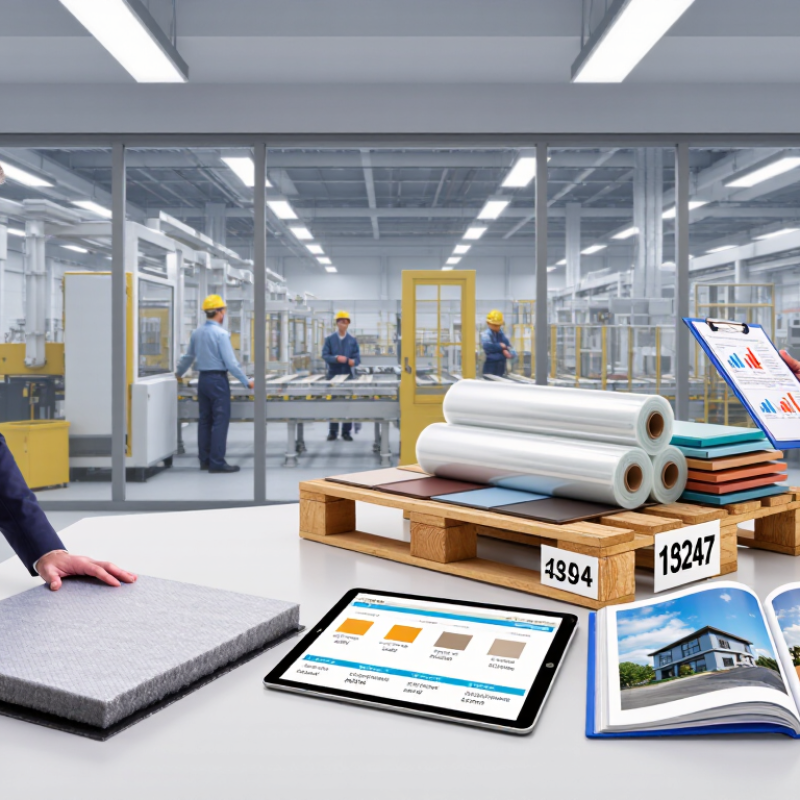
Finding reliable Building Material suppliers in 2026 requires more than comparing online prices. A polished website can hide inconsistent quality, unclear sourcing, or weak after-sales support. Experienced buyers inspect samples, request test reports, and verify production capacity before signing contracts. They also compare lead times, packaging quality, payment terms, warranty coverage, and landed costs. Small details matter.

Dr. Joseph Lstiburek, a respected building-science expert, has said, “The perfect wall is an environmental separator.” His point is practical: every material must perform within a complete building system. A supplier should therefore explain how its insulation, cladding, membranes, or structural products work together. Ask for documented thermal, moisture, fire, and durability performance. Check whether independent laboratories issued the reports. Do not rely on certificates that cannot be verified.

Look closely at the factory process. Are batch numbers printed clearly? Are pallets protected from rain? Can the supplier provide recent project references in similar climates? Speak with those customers, not only the sales representative. Reliable companies usually welcome technical questions and admit limitations. That is a useful sign.

The process is not flawless. A sample may perform well while later batches vary. Even a trusted supplier can face transport delays or raw-material shortages. Build inspection points into the purchase agreement. Keep written records, approved samples, and replacement procedures. In 2026, responsible sourcing also means checking recycled content, energy use, labor practices, and traceability. The cheapest quote may become the most expensive decision. Verify carefully. Then decide.
How to Find Reliable Building Material Suppliers in 2026?

Define Project Requirements Using UNEP’s 34% Building-Energy Baseline

In 2026, finding a reliable building material supplier should begin with measurable project requirements. UNEP identifies buildings as responsible for about 34% of global energy demand. This baseline changes the purchasing conversation. A low purchase price may hide higher cooling, heating, or replacement costs. Define the building’s climate zone, floor area, operating hours, insulation target, and expected service life. Put them in one written brief. Keep it practical.

For each material, request verified thermal conductivity, recycled content, moisture resistance, fire performance, and maintenance data. Ask suppliers for test reports from competent, independent laboratories. Check dates, testing methods, and product batches. A credible supplier should explain limitations without vague promises. Request samples, then inspect edges, density, finish, and packaging before a large order. On active projects, I have found that sample approval prevents expensive substitutions later. It also exposes differences between catalogue language and delivered goods.

Use UNEP’s 34% baseline as a screening question: will this material reduce energy demand during the building’s actual use? Compare whole-life performance, not only factory energy or upfront cost. Model two or three options with an engineer, including installation waste and replacement intervals. Keep invoices, declarations, inspection records, and corrective-action notes. These records support traceability and fair supplier comparison. Still, no checklist guarantees a perfect decision. Local labor quality, transport delays, and poor installation can weaken a strong specification. Revisit assumptions after the first delivery, and record what proved wrong.

Screen Suppliers Through ISO 9001 and Independent Product-Test Records

Reliable building material suppliers in 2026 should pass more than a price comparison. Start by requesting an ISO 9001 certificate and checking its scope, issuing body, validity, and covered production site. ISO 9001 shows a quality management system exists. It does not prove that every batch meets project specifications. That distinction is easy to miss.

Ask for independent product-test records from an accredited laboratory or another technically qualified facility. Review the report date, sample identification, test method, measured values, and acceptance criteria. The material name alone is not enough. Match the report with the proposed product, factory, grade, and production process. Request chain-of-custody evidence when performance is critical. A scanned report without traceable samples deserves careful questions.

I have seen purchasing teams accept impressive documents too quickly. The supplier had ISO 9001, yet its test report covered an older formulation. That mistake could have been prevented by comparing batch numbers and production dates. Request recent reports for strength, fire performance, moisture resistance, or other relevant properties. Contact the laboratory through independently verified details, not only through supplier links. Also inspect how the supplier handles nonconforming materials, complaints, and corrective actions. Their answers reveal daily practice. Documents can look perfect. Operations may not. A short factory visit, sample inspection, and small trial order can expose gaps before a large shipment is approved.

Verify Capacity and Lead Times Against Regional Construction Demand

How to Find Reliable Building Material Suppliers in 2026?

Verify Capacity and Lead Times Against Regional Construction Demand

Reliable sourcing begins with a capacity check, not a polished catalog. Ask suppliers for current monthly output, stocked quantities, and production slots for the next ninety days. Request dated records, such as dispatch logs, inventory counts, or recent delivery schedules. Numbers should match the materials you actually need. A supplier may produce 10,000 units monthly, but only 2,000 may suit your specification. That difference matters.

Compare those figures with construction activity in your region. Public permit data, housing starts, infrastructure tenders, and seasonal weather patterns reveal likely pressure on supply. A dense urban market can absorb standard cement rapidly, while remote projects may face trucking delays. Ask how many active orders share your requested delivery window. The answer may be approximate, and that is a useful warning. Overconfident precision deserves scrutiny.

Test lead times with a small, documented order before committing to a large project. Record the quotation date, promised dispatch date, transit route, and arrival condition. Then compare performance against the written schedule, not informal assurances. I have seen estimates fail when a regional road closure changed a two-day shipment into nine. That experience taught me to add realistic buffers, especially during peak building months. Still, buffers should not excuse vague planning. Require escalation contacts and updated forecasts when demand shifts. Review the evidence every week.

How to Find Reliable Building Material Suppliers in 2026?

Verify supplier capacity and lead times against regional construction demand. In 2024, the South represented the largest share of U.S. residential building permits, followed by the West, Midwest, and Northeast. Suppliers serving high-demand regions should provide documented production capacity, inventory levels, logistics coverage, and confirmed lead times before being approved.

Data source: Rounded regional shares based on the U.S. Census Bureau Building Permits Survey, 2024 annual regional data. The figures represent construction demand signals, not company or brand performance.

Compare Total Costs with World Bank Material-Price Indicators

How to Find Reliable Building Material Suppliers in 2026?

A supplier’s quoted price rarely shows the project’s true cost. Compare it with World Bank material-price indicators before approving an order. These indicators help reveal unusual price gaps for steel, timber, cement inputs, and energy-sensitive products. They are useful benchmarks, not exact invoices.

Request dated quotations, product specifications, test certificates, payment terms, and delivery schedules. Then calculate the full landed cost, including freight, insurance, handling, storage, taxes, currency changes, and expected waste. A low unit price may become expensive after delays or inconsistent quality. In my project reviews, delivery reliability often mattered more than a small discount. I still misjudged storage costs once.

Tips: Record the indicator value and quotation date. Adjust for grade, location, volume, and delivery timing. Ask suppliers to explain major differences. Keep two qualified alternatives.

Use a simple comparison sheet for every supplier. Add inspection costs and replacement risks, not only purchase prices. World Bank data may not match local markets perfectly, especially for specialized finishes or remote sites. That limitation deserves attention. Compare monthly movements instead of reacting to one unusual figure. Verify the supplier’s production capacity through samples, references, and clear quality records. A professional supplier should answer specific questions without avoiding written commitments. Small warning signs can become large budget problems.

Validate EPDs Against Buildings’ 37% Share of Global Emissions

How to Find Reliable Building Material Suppliers in 2026?

Validate EPDs Against Buildings’ 37% Share of Global Emissions

When buildings and construction contribute about 37% of global emissions, supplier selection becomes a carbon-data decision. A low price means little if product impacts are unclear, outdated, or impossible to compare. Reliable suppliers provide product-specific Environmental Product Declarations, not vague sustainability brochures. Check the declaration’s publication date, product scope, declared unit, PCR, and third-party verifier. Not enough.

For structural steel, insulation, concrete, or glass, match the EPD to the exact grade, thickness, factory, and delivery route. A regional product may still carry higher impacts if its electricity mix or recycled content differs. Ask suppliers to explain modules A1-A3, transport assumptions, recycled inputs, and end-of-life scenarios. Request supporting evidence, such as utility records, mass-balance calculations, or audit statements, when claims seem unusually low. Numbers need context.

Procurement teams should record version numbers and preserve EPD files with tender documents. Then compare products using the same functional unit and service life, rather than choosing the smallest headline figure. Independent review matters, especially when an EPD uses generic datasets or broad manufacturing averages. I would also score supplier responsiveness, because missing answers often predict construction-stage delays. That is an imperfect test. Still, it helps.

How to Find Reliable Building Material Suppliers in 2026? - Validate EPDs Against Buildings’ 37% Share of Global Emissions

Use this evidence-based screening framework to compare suppliers without relying on brand names. An Environmental Product Declaration (EPD) communicates a product’s life-cycle environmental impacts, but reliability depends on its scope, verification, product coverage, and data quality.

Validation Dimension What Reliable Supplier Evidence Should Show Quantitative or Formal Check Common Red Flag Recommended Procurement Action Reference Framework Status
Global emissions context Supplier disclosures should address both operational energy and embodied emissions from materials, manufacturing, transport, construction, maintenance, and end-of-life. The buildings and construction sector accounted for approximately 37% of global energy- and process-related CO2 emissions in 2022. Marketing focuses only on operational energy and excludes product manufacturing or construction impacts. Request product-level life-cycle data before approving sustainability claims. UNEP Global Status Report for Buildings and Construction 2023 Required Context
EPD existence A published EPD is available for the exact product, manufacturing location, and declared or functional unit being purchased. Confirm the EPD document number, publication date, validity period, product reference, and manufacturing facility. A supplier provides a generic carbon statement, certificate image, or corporate sustainability report instead of a product EPD. Reject generic claims as a substitute for product-specific evidence. ISO 14025; ISO 21930 Required
Independent verification The EPD has been independently verified under the rules of a recognized EPD programme operator. Check for the verifier’s name, verification date, programme operator, and statement that the EPD conforms to the applicable standard and PCR. The document is self-declared, unverifiable, or missing the verifier’s statement. Request the complete EPD and verification page; do not rely on a supplier summary. ISO 14025; EN 15804+A2 where applicable Verify
Product Category Rules (PCR) The EPD uses current, product-relevant PCRs so that the life-cycle calculation follows defined rules. Record the PCR title, version, publication date, and validity. Confirm that the PCR matches the material category. Two products are compared using different PCRs, system boundaries, or calculation rules. Compare products only after aligning PCR, life-cycle modules, declared unit, and data year. ISO 14025; EN 15804; ISO 21930 Review
Life-cycle modules The EPD clearly reports the included modules, such as product stage, construction process, use stage, and end-of-life. Check whether modules A1–A3, A4–A5, B1–B7, C1–C4, and module D are included or declared as not applicable. A low result is presented for A1–A3 while transport, installation, replacement, or disposal impacts are omitted from the decision. Use the same module scope for all shortlisted products and document exclusions. EN 15804+A2 module structure Required
Climate-change indicators The EPD reports global warming potential using clearly identified indicator categories. Record GWP-total and, where available, separately record fossil, biogenic, and land-use-change contributions in kg CO2 equivalent. One “carbon-neutral” number is shown without units, life-cycle stage, biogenic carbon treatment, or calculation method. Use unit-normalized results and preserve separate indicator values in the bid comparison. EN 15804+A2; applicable PCR Verify
Declared or functional unit The EPD’s measurement basis matches the design quantity and service function required by the project. Examples include 1 m3, 1 tonne, 1 m2 at a stated thickness, or a defined service unit. Confirm density, thickness, strength, coverage, and service life. Products are compared per tonne even though different densities, strengths, thicknesses, or service lives are required. Convert all candidates to the project’s required performance and installed quantity. ISO 21930; applicable PCR Required
Geographic and facility relevance Manufacturing, raw-material, electricity, and transport assumptions reflect the actual supply route. Check manufacturing country or facility, electricity mix, transport distance or mode, and the EPD’s geographic scope. An EPD from another region is used without checking energy mix, feedstock, logistics, or production technology. Request a project-specific transport calculation or adjust the EPD data transparently. EN 15804; ISO 14044 principles Review
Data quality and recency Primary manufacturing data and transparent background-data sources are identified. Record the data reference year, data sources, allocation rules, electricity data, and EPD expiry date. Prefer current, valid documents. The EPD is expired, lacks a data year, or uses undisclosed assumptions that materially affect results. Obtain a current EPD or written confirmation that the published EPD remains valid for procurement. ISO 14044; ISO 14025 programme requirements Required
Recycled and secondary content Recycled, reused, or secondary material claims are quantified and linked to the product calculation. Verify the percentage by mass, pre-consumer or post-consumer classification, source, allocation method, and consistency with the EPD. “Contains recycled content” is stated without a percentage, material source, or supporting calculation. Request chain-of-custody or mass-balance documentation where the claim affects project credits. ISO 14021; applicable PCR Review
Supply-chain capacity The supplier can deliver the specified product, quantity, quality, and documentation throughout the project schedule. Confirm production capacity, lead time, minimum order quantity, delivery location, lot consistency, and contingency plan. A supplier offers a low-impact product but cannot confirm volume, delivery dates, or consistent specification. Make sustainability approval conditional on technical, commercial, and delivery verification. Project procurement requirements; product technical specification Required
Performance compliance The product meets the project’s structural, fire, moisture, thermal, acoustic, durability, and health requirements. Check applicable product standards, test reports, declarations of performance, safety documentation, and required service life. A lower-emission product is selected without confirming equivalent technical performance or durability. Do not trade verified safety or service-life performance for an unverified carbon claim. Applicable national and international product standards; project specification Required
Comparability record The procurement team retains a transparent comparison showing assumptions, units, modules, and adjustment factors. Maintain a comparison sheet containing EPD version, PCR, declared unit, GWP indicators, modules, transport, quantity, and service-life assumptions. A supplier ranking is based on a single headline number copied from different EPD formats. Approve only comparisons that can be independently reproduced from the source documents. ISO 14040 and ISO 14044 life-cycle assessment principles Document

Note: The 37% figure refers to the buildings and construction sector’s share of global energy- and process-related CO2 emissions reported for 2022; it is not a claim that every building material contributes the same percentage. EPD results are product-specific and should be compared only when their declared or functional units, PCRs, system boundaries, geographic assumptions, and life-cycle modules are aligned.

FAQS

What should a project brief include before contacting suppliers?

Record the climate zone, floor area, operating hours, insulation target, and expected service life. Keep the brief practical. A clear brief prevents vague quotations and costly substitutions.

Which technical details should suppliers provide?

Request thermal conductivity, recycled content, moisture resistance, fire performance, and maintenance data. Ask for test reports from independent laboratories. Check dates, methods, samples, and production batches.

How can buyers check whether a test report is reliable?

Match the report with the exact product, grade, factory, and production process. Review sample identification and measured values. A scanned document is not enough.

Why should buyers inspect samples before placing large orders?

Inspect edges, density, surface finish, labels, and packaging. Small samples can reveal weak corners or inconsistent texture. Sample approval reduces later substitution risks.

How should suppliers be compared beyond purchase price?

Compare energy use, installation waste, service life, maintenance, transport, and replacement intervals. Model two or three options with an engineer. Cheap materials may cost more over time.

What information should an environmental product declaration contain?

Check the publication date, product scope, declared unit, assessment rules, and independent verification. Match the declaration to the exact thickness, grade, factory, and delivery route.

How can buyers detect questionable environmental claims?

Ask for electricity data, recycled-content evidence, transport assumptions, and calculation records. Compare products using the same functional unit and service life. Low figures need context.

Can a supplier pass every document check and still fail?

Yes. A strong file cannot fix poor installation, delivery delays, or inconsistent batches. Visit the factory when possible, place a small trial order, and record what proved wrong. A checklist is not magic.

Conclusion

Finding reliable Building Material suppliers in 2026 requires a structured, evidence-based process. Start by defining project needs, including technical specifications, sustainability targets, quantities, and delivery schedules. Since buildings account for a significant share of global energy use, selecting materials that support energy efficiency should be part of the initial assessment. Next, screen suppliers through quality-management certifications, documented production controls, and independent product-test records. These documents can help confirm whether materials consistently meet required performance and safety standards.

Supplier capacity and lead times should also be compared with regional construction demand to reduce the risk of delays. When evaluating quotations, consider total cost rather than purchase price alone, including transportation, installation, maintenance, waste, and potential replacement expenses. Independent market indicators can provide useful context for judging whether prices are reasonable. Finally, review environmental product declarations carefully and check whether their data is complete, comparable, and relevant to the project. This approach helps buyers balance quality, reliability, cost, availability, and environmental performance.


Isabella

Isabella

Isabella is a dedicated marketing professional with a sharp focus on driving brand growth and engagement through strategic content creation. With an extensive background in digital marketing, she combines her passion for storytelling with her keen understanding of industry trends to deliver......