The 2026 Top Good Quality Foldable Container House Manufacturers deserve careful evaluation, not simple popularity rankings. Global housing pressure is increasing. UN-Habitat reports that approximately 1.6 billion people live in inadequate housing worldwide. This situation strengthens demand for faster, adaptable, and cost-conscious building solutions. Foldable container houses can support temporary accommodation, worker housing, emergency response, and remote-site facilities. However, speed alone does not prove quality.
Industry evidence also supports the broader modular construction opportunity. McKinsey’s report, Modular Construction: From Projects to Products, estimated that modular methods could create more than 130 billion dollars in annual real estate value across Europe and the United States. That potential depends on repeatable factory production, reliable logistics, and consistent site installation. A strong Good Quality Foldable Container House manufacturer should therefore demonstrate material traceability, welding inspection, insulation performance, electrical safety, and resistance to repeated folding. Certifications matter. Independent test records matter more.
Look beyond attractive renderings.
This overview compares manufacturers through practical criteria. These include steel-frame thickness, corrosion protection, panel composition, waterproofing details, load calculations, delivery experience, and after-sales support. Factory visits, sample inspections, and customer references can reveal problems that brochures conceal. Some suppliers may offer impressive prices but provide limited technical documentation. Others may have strong engineering teams but weaker international service. No ranking is perfect. Local climate, transport routes, foundation conditions, and building requirements can change the final choice. Buyers should verify current certificates and project records before signing contracts. That extra step may feel slow, yet it often prevents expensive failures later.
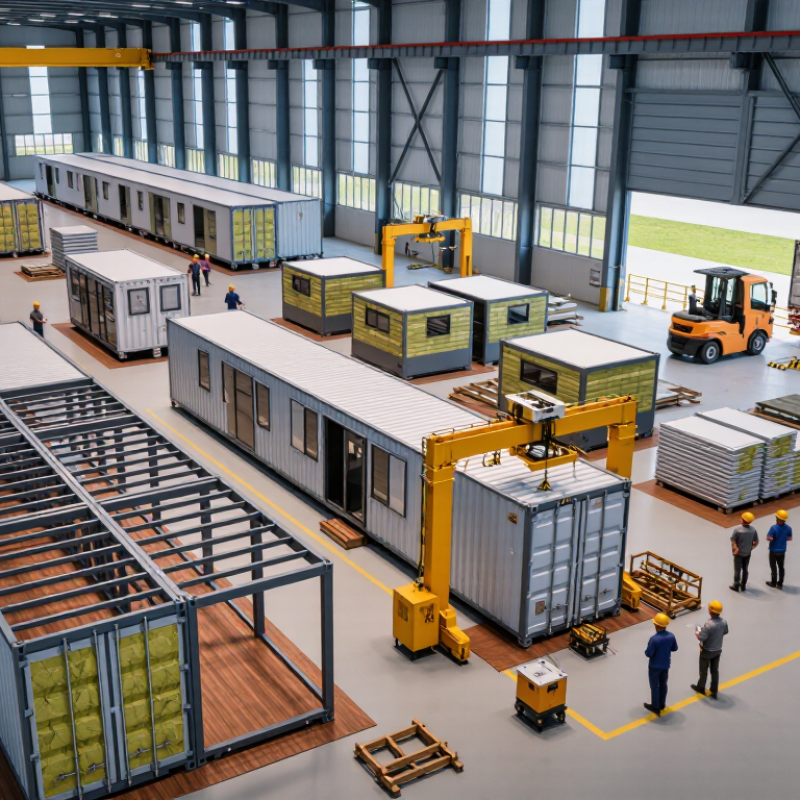
The 2026 market for foldable container houses is shaped by more than purchase price. Buyers compare transport volume, setup time, insulation, and the availability of replacement parts. UNCTAD’s Review of Maritime Transport 2024 reports that global container port throughput reached about 858 million TEUs in 2023. That scale highlights the importance of efficient logistics, though it does not measure demand for foldable homes directly. A manufacturer’s quality claims should therefore be checked against sample inspections, documented load tests, and clear packing dimensions.
Market scope also depends on where and how units will be used. The United Nations Environment Programme’s Global Status Report for Buildings and Construction 2024/2025 states that buildings account for 32% of global energy use and 34% of energy-related CO₂ emissions. Those figures make thermal performance more than a comfort detail: buyers should request insulation specifications and test results suited to local climates. Check roof joints after rain. Small gaps matter. Manufacturers serving broader markets need adaptable layouts, consistent components, and practical after-sales support. Yet published specifications can look better than real installation conditions. That gap deserves scrutiny.
ISO 668 dimensions provide a useful starting point when comparing foldable container houses. Standardized length and width help buyers check transport fit, site access, and layout compatibility. But folded units may differ in height, connection details, and deployed footprint. Check the manufacturer’s dimension drawings, not just a product title. A tape measure at the delivery site can prevent an expensive mismatch.
Design life needs the same careful reading. A stated 20–30-year benchmark is meaningful only when its assumptions are clear. Ask what climate, maintenance schedule, corrosion protection, and occupancy level the estimate covers. Inspect hinge assemblies, roof joints, floor edges, and sealant details; these often reveal more than a polished brochure. Real performance also depends on installation and upkeep. That part is easy to underestimate.
Tips: Request test records and a written maintenance schedule. Confirm whether the design-life claim refers to the structural frame or the complete unit. Look for practical details, such as replaceable seals and drainage paths. A small omission in the documents may deserve a second question.
For 2026 buyers, a foldable container house is only as safe as its frame, welds, and site-specific load design. EN 1090-1 covers conformity assessment for structural steel and aluminium components; ISO 3834 sets quality requirements for fusion welding. Ask for current certificates, traceable material records, and weld inspection documents—not just a brochure claim. Small details matter. Check hinge plates, corner castings, and locking pins for clear inspection access.
Wind and snow ratings should state the design values, units, and assumptions. Eurocode EN 1991-1-4 uses a 50-year return period for its basic wind velocity framework, while EN 1991-1-3 addresses snow actions. These are design references, not universal product ratings: local terrain, altitude, roof shape, and exposure can change the required loads. Request calculations for the intended site and confirmation that the folded joints remain secured in the deployed configuration.
Tips: Compare declared wind speed with the engineer’s design wind pressure; they are not interchangeable. Ask for snow load in kN/m² and the roof span used. A rating without these details is hard to verify. One practical check: inspect a sample unit after repeated deployment, because wear at joints can be easy to overlook. I would not treat a certificate alone as proof of safe installation.
| Structural Safety Dimension | What to Verify | Relevant Standard or Design Basis | Evidence to Request from the Manufacturer |
|---|---|---|---|
| Steel fabrication conformity | Confirm that structural steel components are fabricated under a documented quality-control system appropriate to their intended use. | EN 1090-1 addresses conformity assessment for structural steel and aluminium components. The applicable execution requirements depend on the product and project. | Applicable certificates and scope, factory production control documentation, product identification, and traceability records. Check that the certificate covers the relevant manufacturing site and product scope. |
| Welding quality management | Check how welding procedures, personnel qualifications, inspection, and non-conforming work are controlled. | ISO 3834 specifies quality requirements for fusion welding of metallic materials. The appropriate part depends on the required quality level and application. | Valid certification scope where applicable, qualified welding procedures, welder qualification records, inspection and test plans, and weld inspection reports. |
| Wind resistance | Request a design wind action for the actual site, building height, exposure, opening configuration, and installation condition. | Wind actions are commonly determined using EN 1991-1-4 and its applicable National Annex in Eurocode-based projects. There is no single wind rating suitable for every location. | Project-specific design calculations stating the assumed wind speed or pressure, terrain category, internal pressure assumptions, load combinations, and anchorage requirements. |
| Snow resistance | Verify roof design for the site’s ground snow load, roof shape, drift conditions, and any applicable local requirements. | Snow actions are commonly determined using EN 1991-1-3 and its applicable National Annex in Eurocode-based projects. Required design loads vary by location and roof geometry. | Design calculations that identify the adopted snow load, roof shape coefficient, drift assumptions where relevant, load combinations, and limits for roof use. |
| Foldable joints and locking points | Assess the load path through hinges, pins, locks, and connections in both transport and deployed configurations. | Connection design should follow the structural design basis selected for the project, including applicable material and connection rules. | Connection drawings, component specifications, locking instructions, inspection criteria, and calculations or test evidence for the deployed configuration. |
| Anchorage and foundation interface | Confirm that uplift, sliding, and overturning forces can be transferred from the structure to a suitable foundation. | Design depends on site-specific actions, ground or foundation conditions, and the project’s governing structural codes. | Base connection details, required anchor type and capacity, installation tolerances, and a clear statement of foundation design responsibilities. |
| Material and corrosion control | Check steel grades, protective coatings, drainage details, and corrosion assumptions for the intended environment. | Material specifications and corrosion protection should be selected for the exposure conditions and project requirements. | Material certificates, coating specifications, surface-preparation records, coating inspection results, and maintenance guidance. |
| Design documentation and independent review | Ensure the design covers the complete assembled unit, including openings, connections, transport restraints, and the intended use. | The applicable structural design codes depend on the country, building classification, and contract requirements. | Signed design calculations, structural drawings, declared design assumptions, inspection records, and independent review where required by the project. |
Important: EN 1090 and ISO 3834 relate to fabrication conformity and welding quality; they do not, by themselves, establish a building’s wind or snow load capacity. Wind and snow ratings must be supported by project-specific calculations and verified against the applicable local codes, National Annexes, site conditions, and installation details.
A dependable foldable container house begins with controlled factory checks. Inspectors verify the 20-foot module’s length, width, height, and diagonal measurements before folding tests. Small alignment errors can become serious during transport or installation. Each steel frame should be checked against approved drawings and material records.
Welding receives close attention. Trained inspectors examine weld width, continuity, undercutting, and visible cracks. Critical joints may require ultrasonic or magnetic particle testing, depending on the structure and project specification. Coating thickness is also measured after surface preparation. A clean weld is not automatically a strong weld. Procedure records, welder qualifications, and repair logs matter.
Folding cycles test the design under repeated movement. The factory should record the cycle count, hinge condition, bolt tightness, and frame deformation. Technicians should listen for unusual friction. They should measure gaps after testing. Door and window seals need practical checks, including compression, water spray, and low-temperature flexibility where relevant. Poor seals often reveal themselves at corners first. It happens.
Factory reports should include photographs, test dates, instrument identification, and acceptance limits. Independent inspection can improve confidence, especially for large orders. Still, paperwork may hide rushed workmanship. One overlooked hinge or uneven gasket can create trouble later. That weakness deserves review before shipment.
Choosing a foldable container house manufacturer in 2026 requires evidence, not polished factory photos. The ISO Survey 2023 recorded 1,265,216 ISO 9001 certificates worldwide. That figure shows certification is common, not conclusive. Ask for current certificates, issuing bodies, scope, and factory address. For steel frames, verify welding, corrosion, fire, and local building-code approvals. ISO 14001 and ISO 45001 provide useful evidence of environmental and workplace controls. Still, documents need checking.
Capacity should be measured in shipped units, not claimed annual output. Request twelve months of production records, batch numbers, inspection reports, and delivery dates. Compare monthly capacity with actual peak-season utilization. A factory making 500 units monthly may struggle when orders double. Visit the cutting, welding, folding, sealing, and loading areas if possible. Photograph serial plates and water-test procedures. The UNEP 2024 Global Status Report says buildings use 32% of global energy and produce 34% of energy-related emissions. Therefore, check insulation values, thermal bridges, and environmental data, not merely price.
Warranty comparison needs a table. Separate structural frames, roof leaks, windows, finishes, appliances, and installation labor. Check duration, coverage, response times, spare-part availability, and exclusions. A ten-year frame warranty can hide a one-year waterproofing term. That is easy to miss. Request two completed customer references and one unresolved claim example. Manufacturers may resist the last request. That resistance is information, though not proof. My checklist is imperfect; local engineering review still matters before signing.
Standard length and width help check transport fit and site access. Measure gates, roads, and foundations before delivery. Folded height may differ. Always request full dimension drawings.
No. The estimate depends on climate, maintenance, corrosion protection, and occupancy. Ask whether it covers the frame or the complete unit. Inspect hinges, roof joints, floor edges, and seals. The brochure may omit details.
Check hinge assemblies, roof connections, drainage paths, and replaceable seals. Look for water-test records and clear installation instructions. A small gap around a seal can cause large trouble. Details matter more.
Request current certificates, issuing bodies, certification scope, and factory address. For steel frames, verify welding, corrosion, fire, and local building-code approvals. Environmental and workplace certificates can provide useful evidence. Documents still need checking.
Ask for twelve months of shipment records, batch numbers, and inspection reports. Compare claimed monthly output with actual peak-season deliveries. A factory may produce 500 units monthly but struggle with doubled demand. Capacity claims can be optimistic.
Inspect cutting, welding, folding, sealing, and loading areas. Photograph serial plates when permitted. Ask to observe water-testing procedures. A clean showroom is not enough.
Separate coverage for frames, roofs, windows, finishes, appliances, and installation labor. Check duration, exclusions, response times, and spare-part availability. A ten-year frame warranty may cover waterproofing for only one year. That is easy to miss.
Ask for insulation values, thermal-bridge details, and relevant environmental data. Energy performance depends on design, installation, and local climate. Inspect roof and wall junctions carefully. Price alone says little.
Yes. Request two completed customer references and one unresolved claim example. Some manufacturers may resist the last request. That resistance is information, but not proof. Local engineering review remains important.
The 2026 market for Good Quality Foldable Container House solutions is increasingly focused on reliable construction, efficient transportation, and long-term value. Leading manufacturers should design modules around ISO 668 dimensions while targeting a practical 20–30-year service life through durable materials, corrosion protection, and weather-resistant finishes. Structural safety is equally important, with production systems aligned to EN 1090 and ISO 3834, plus clearly documented wind and snow load ratings for different regions.
A trustworthy manufacturer should maintain detailed factory quality checks for 20-foot modules, including dimensional accuracy, welding consistency, folding-cycle performance, frame stability, and door and roof seal integrity. When comparing manufacturers in 2026, buyers should review certification validity, production capacity, inspection procedures, customization capability, delivery reliability, and warranty coverage. Transparent technical documentation and responsive after-sales support can help ensure that each foldable container house performs safely and consistently throughout its intended service life.